Goal
Replace gasoline with water-derived hydrogen/oxygen as fuel for internal-combustion engines.
Problem
Dependence on petroleum fuels and associated fire-hazard and emissions concerns.
Concept Summary
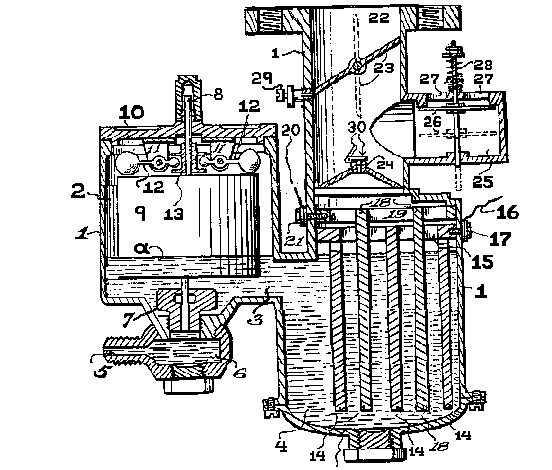
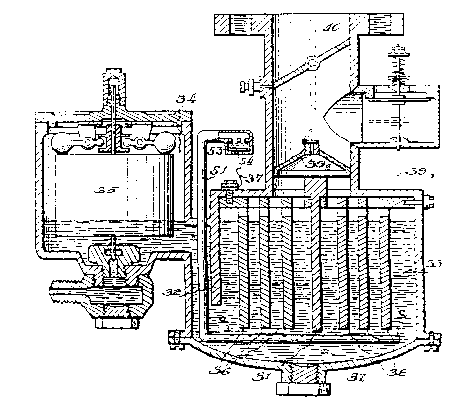
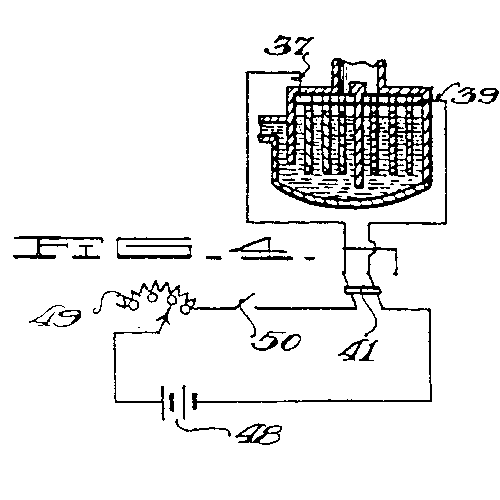
An electrolytic carburetor uses an onboard electrolysis chamber to split water into hydrogen and oxygen gases on-demand. The gases are mixed with air and fed directly into the engine cylinders, eliminating the need for a separate fuel tank. A larger-capacity generator supplies the electricity required for electrolysis.
Principles
- Electrolysis of water
- On-demand gas generation
- Direct injection of hydrogen/oxygen into combustion chamber
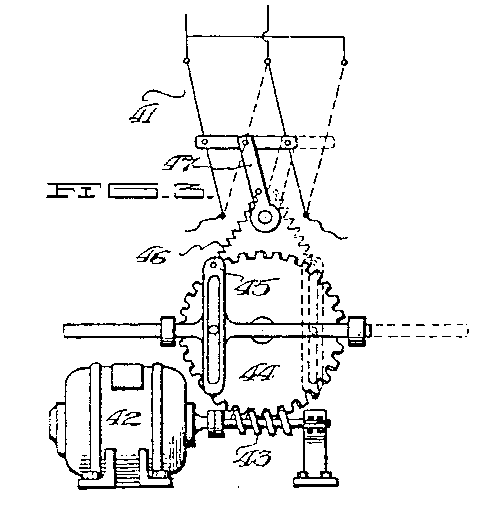
- Pole-reversal to alternate gas evolution
Scientific Domains
Materials
- Bakélite (insulating housing)
- Lead plates
- Weak sulphuric acid solution
- Water
- Metal electrodes (plates)
- Rubber/metal seals
Mechanisms of Action
- Passage of electric current through water containing weak sulfuric acid electrolyte
- Hydrogen evolves at the cathode plates, oxygen at the anode plates
- Generated gases are drawn into a gas passageway and mixed with intake air
- Mixture is introduced directly into engine cylinders for combustion
Energy Sources
Applications
- Automotive propulsion
- Portable power generators
Claimed Performance
Instantaneous engine start in any weather, cooler operation, no fire hazards, sufficient power and speed; demonstrated continuous operation for over 48 hours and several-minute runs in public demonstrations.
Experimental Evidence
The inventor reported that a four-cylinder engine ran for several minutes in a private demonstration, with varying speeds and multiple starts/stops, and that the engine operated continuously for more than forty-eight hours.
Limitations
- Requires substantial electrical power from a generator, reducing overall efficiency
- Hydrogen handling poses explosion risk
- No independent verification of net energy balance
- Electrolyte degradation and component corrosion over time
Red Flags
- Claims of "instant start" and "no fire hazards" without quantitative data
- No peer-reviewed publications or independent replication
- Safety concerns due to on-board hydrogen generation and storage
- Potential for over-unity claims without rigorous testing