Goal
Demonstrate that 6-shogaol, a ginger constituent, can inhibit cancer growth, invasion and metastasis.
Problem
Cancer cell proliferation, tumor formation and metastasis.
Concept Summary
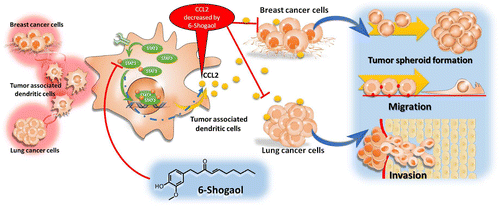
6-Shogaol is a natural phenolic compound from ginger that induces apoptosis, autophagy, and inhibits multiple signaling pathways (NF-kappaB, MMP-9, STAT3, CCL2) in cancer cells, leading to reduced tumor size and metastasis in vitro and in mouse models.
Principles
- Apoptosis induction via reactive oxygen species
- Autophagy activation
- NF-kappaB pathway inhibition
- MMP-9 down-regulation
- STAT3 signaling inhibition
- CLL2 cytokine suppression
- Microtubule damage and mitotic arrest
Scientific Domains
Materials
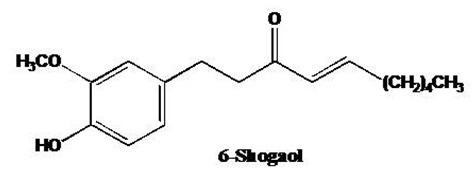
- 6-Shogaol (C17H24O3)
Mechanisms of Action
- Induces ROS-mediated apoptosis
- Triggers autophagy in cancer cells
- Blocks NF-kappaB phosphorylation and nuclear translocation
- Reduces MMP-9 gene expression and secretion
- Inhibits STAT3 phosphorylation
- Suppresses TADC-derived CCL2 production
- Damages microtubules leading to mitotic arrest
Applications
- Cancer therapy
- Anticancer drug development
- Immunotherapeutic agent for metastasis control
Claimed Performance
56% reduction of mouse prostate tumor size; 10,000-fold greater efficacy than Taxol against cancer stem cells in vitro.
Experimental Evidence
Multiple peer-reviewed studies report apoptosis induction, MMP-9 inhibition, NF-kappaB suppression, STAT3 inhibition, and in-vivo tumor size reduction and metastasis inhibition in mouse models.
Replication Status
Several independent studies (Georgia State University, other labs) have reproduced anticancer effects of 6-shogaol in vitro and in mice.
Limitations
- Lack of human clinical trial data
- Stability issues (unstable at room temperature, oxygen, light)
- Potential metabolism to less active or unknown metabolites
Red Flags
- Insufficient clinical evidence