Goal
Create a durable, ocean-degradable plastic that prevents microplastic pollution while maintaining mechanical strength.
Problem
Conventional plastics are non-degradable in seawater, leading to microplastic accumulation in oceans and soils.
Concept Summary
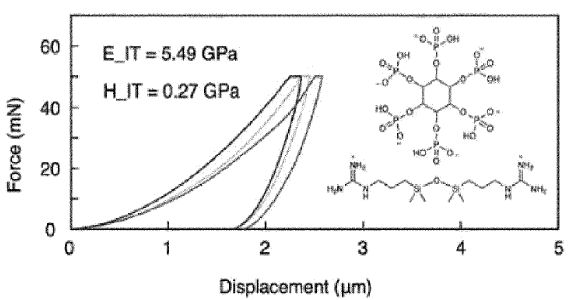
A supramolecular polymer is formed by mixing sodium hexametaphosphate with guanidinium-based ionic monomers, creating cross-linked salt bridges that are stable in dry form but dissolve in seawater electrolytes, allowing the material to be strong, recyclable, and biodegradable.
Detailed Description
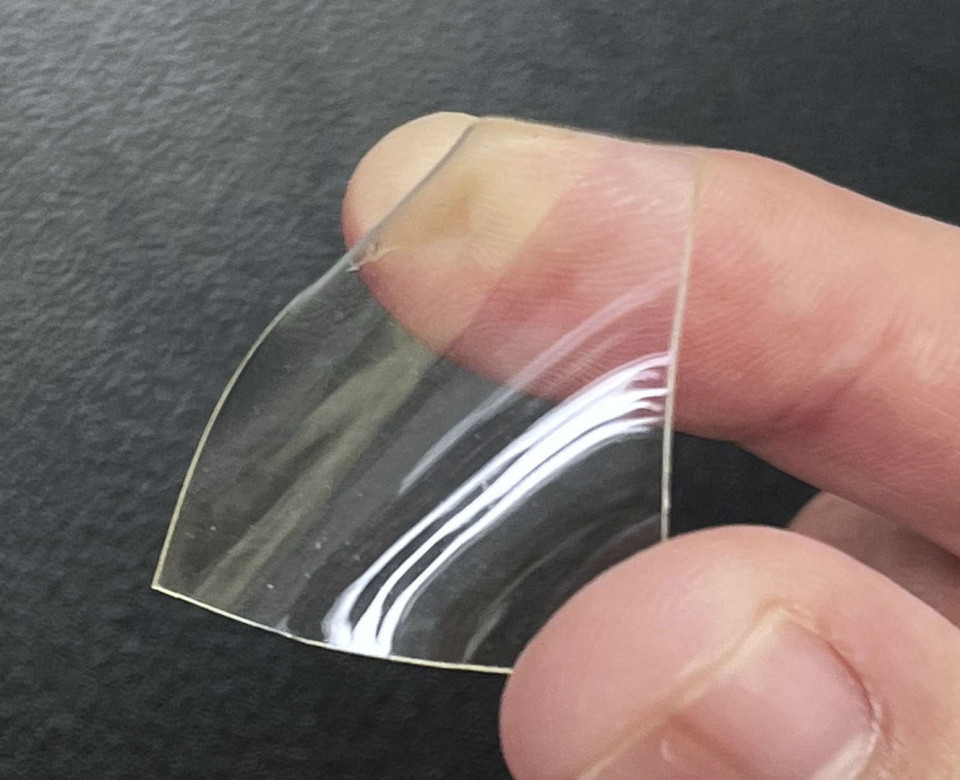
The researchers mix two ionic monomers in water, causing liquid-liquid phase separation. The viscous phase contains the salt-bridge network (e.g., sodium hexametaphosphate + alkyl diguanidinium sulfate) which, after drying, yields a glassy thermoplastic (alkyl SP2). The material can be reshaped above 120 deg C, exhibits tensile strength comparable to conventional plastics, and degrades rapidly when exposed to salt water, reverting to metabolizable components (phosphate, nitrogen). Recycling is achieved by re-salting and recovering up to 91 % of hexametaphosphate and 82 % of guanidinium. Soil degradation completes within ten days, providing nutrients.
Principles
- Non-covalent ionic bonding
- Reversible salt-bridge cross-linking
- Liquid-liquid phase separation
- Desalting-induced dissolution
Scientific Domains
Materials
- Sodium hexametaphosphate
- Alkyl diguanidinium sulfate
- Other guanidinium-based monomers
- Polysaccharides (optional)
- Water
- Sodium sulfate (by-product)
Mechanisms of Action
- Salt-bridge formation between sodium hexametaphosphate and guanidinium ions
- Ionic and hydrogen bond network stability in dry state
- Electrolyte (seawater) disruption of salt bridges leading to polymer dissolution
- Phase separation expels sodium sulfate to a water-rich phase
Applications
- Packaging
- Medical devices
- 3D printed components
- Agricultural soil amendment
Claimed Performance
Mechanical strength comparable or superior to conventional plastics; rapid dissolution in seawater (hours); 91 % recovery of hexametaphosphate and 82 % of guanidinium after recycling; complete soil degradation in 10 days.
Experimental Evidence
Laboratory tests reported in Science (Nov 2024) showing tensile strength, degradation rates in seawater and soil, and recycling recovery percentages.
Limitations
- Requires seawater or saline environment for degradation
- Specific monomer availability and cost not addressed
- Long-term environmental impact of degradation products not fully studied