Goal
Generate hydrogen (HHO) gas efficiently for use as a fuel source.
Problem
Low efficiency and high energy consumption of conventional water electrolysis; need for a more powerful, on-demand hydrogen supply.
Concept Summary
A multi-frequency, pulsed-drive electrolysis cell that uses resonant excitation of steel plates to produce mono-atomic hydrogen and oxygen, claimed to increase energy output severalfold compared with normal di-atomic gas production.
Detailed Description
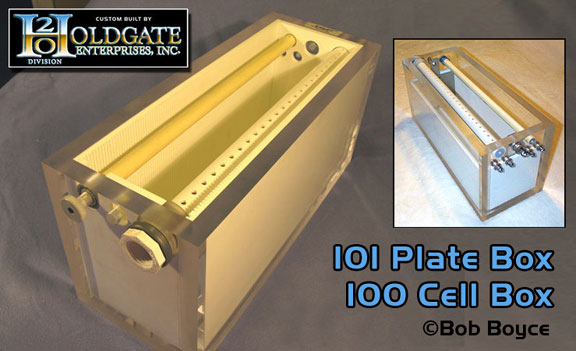
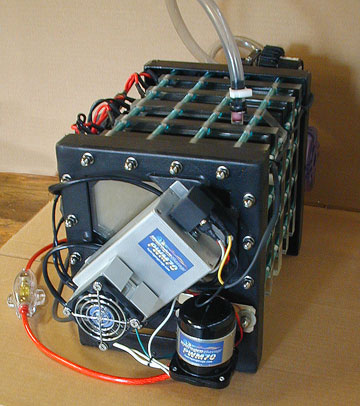
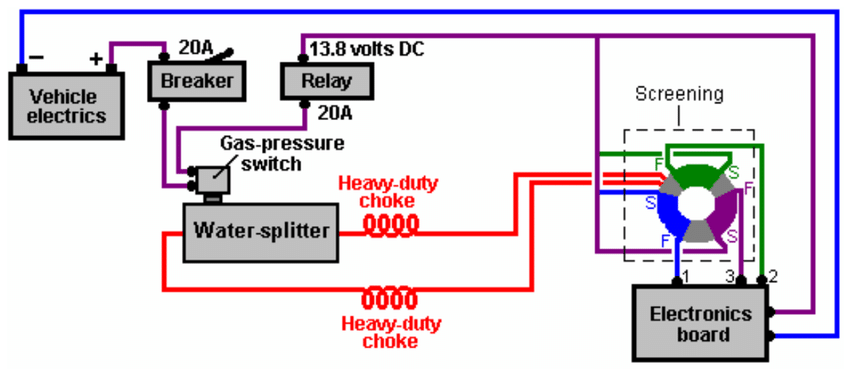
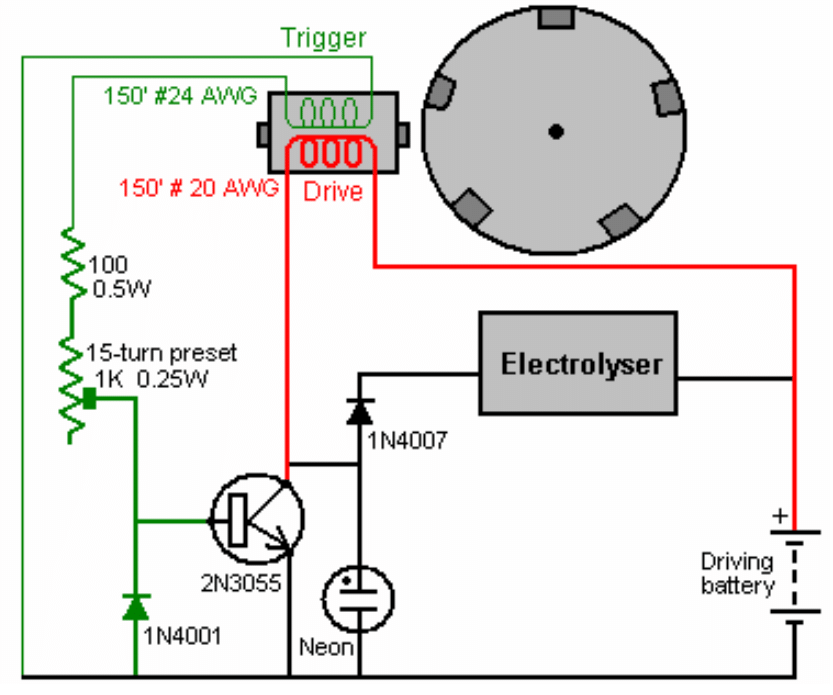
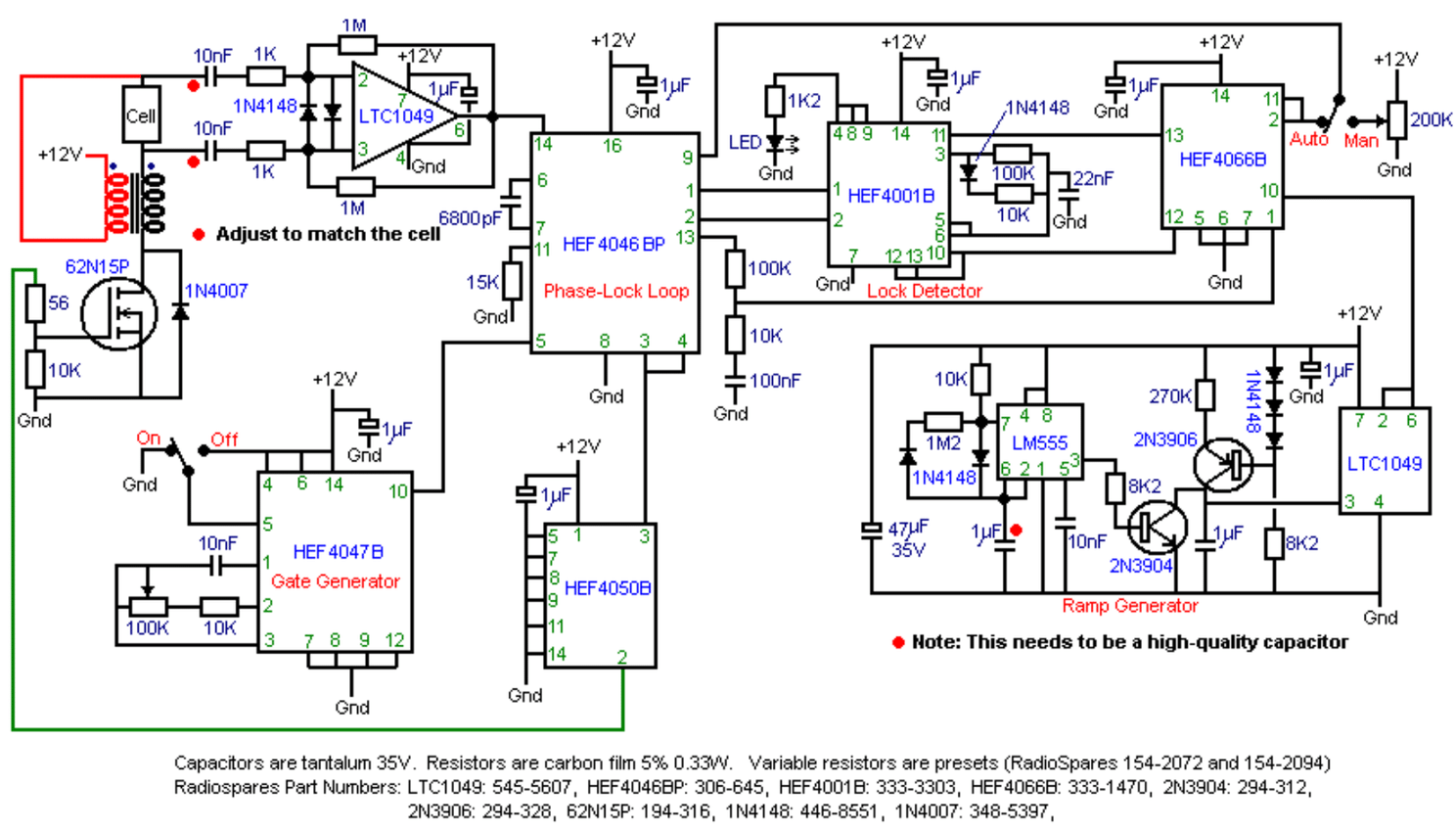
Bob Boyce's system consists of a 101-plate steel cell with 1/8" (3 mm) plate spacing, driven by a triple-frequency generator IC (42.8 kHz, 21.4 kHz, 10.7 kHz in a 4:2:1 ratio). The three frequencies are mixed in a toroidal transformer and applied to IRL540 MOSFETs (or a ULN2803 driver) to create pulsed square-wave excitation that resonates the plates. The resonance is said to cause the water-electrolyte mixture to produce mono-atomic hydrogen (H) and oxygen (O) rather than the usual H_2/O_2 di-atomic gases. The device is claimed to run on ordinary DC power (~=55-160 W) and to supply enough "hydroxy" gas to idle or run a small internal-combustion engine, with a reported four-fold increase in energy density. The design is marketed with a downloadable PDF, a DVD set, and a commercial triple-frequency IC. Independent testing by the Association for Climate Technology Solutions reported no remarkable gas production, casting doubt on the claimed performance.
Principles
- Resonant frequency excitation
- Pulsed multi-frequency electrolysis
- Mono-atomic hydrogen generation
- Catalytic electrolyte enhancement
Scientific Domains
Materials
- Steel plates
- Distilled water
- Electrolyte (unspecified)
- Toroidal transformer
- IRL540 MOSFETs
- ULN2803 driver
- Copper wiring
Mechanisms of Action
- Electrolysis of water
- Resonance-induced plasma-like dissociation
- High-frequency square-wave driving of electrodes
Energy Sources
Applications
- Fuel for internal-combustion engines
- Vehicle propulsion
- Portable on generator
Claimed Performance
Mono-atomic hydrogen allegedly yields ~4x the energy output of normal di-atomic H_2/O_2. Reported power use: 55-60 W to generate enough gas to idle a small engine, 160 W to run the engine at ~60 MPH. Claims of a noticeable horsepower boost when resonance occurs.
Experimental Evidence
The article provides anecdotal reports of increased gas volume and reduced current draw during resonance, and a description of a test where 55-60 W produced idle-level hydroxy gas and 160 W powered a Chrysler 170 CID engine at 60 MPH. No peer-reviewed data or independent measurements are presented.
Replication Status
Independent testing by the Association for Climate Technology Solutions found no remarkable gas production, indicating a lack of successful replication.
Limitations
- No independent verification of claimed efficiency
- Requires precise frequency tuning and specific plate geometry
- Hydrogen handling safety concerns
Red Flags
- Claims of over-unity or dramatically increased energy density
- Lack of peer-reviewed experimental data
- Reliance on anecdotal testimony