Goal
Provide a self-sustaining mechanical output (free energy) without an external power source.
Problem
Lack of inexpensive, continuous energy source; desire for perpetual-motion-type power generation.
Concept Summary
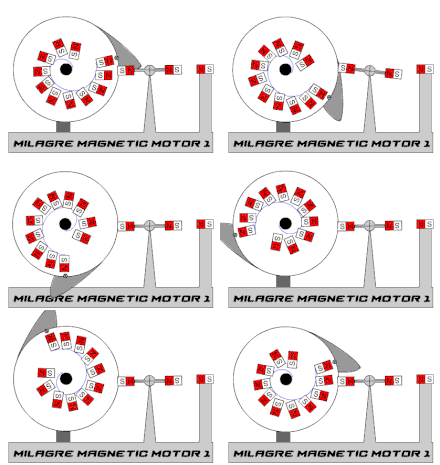
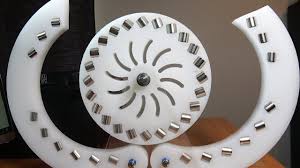
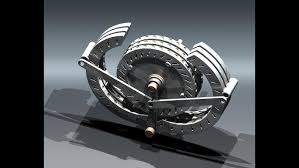
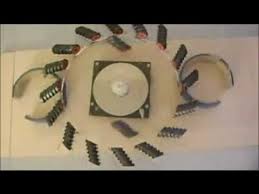
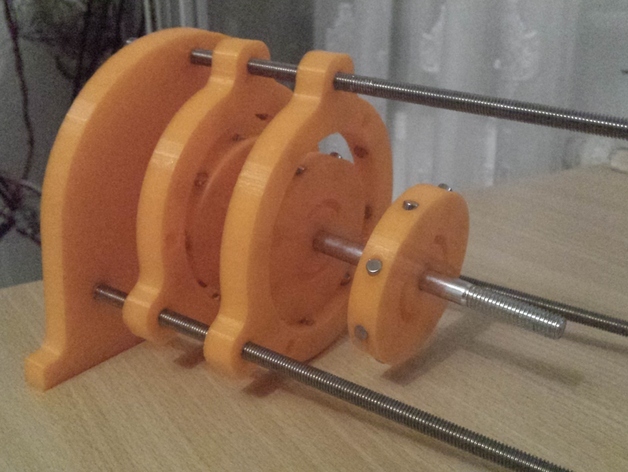
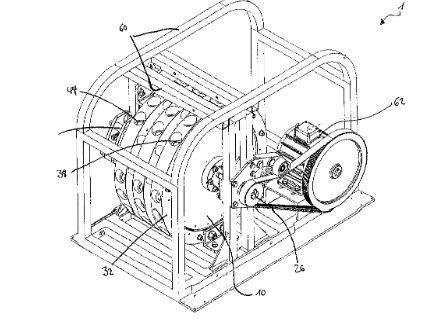
A magnetic repellent motor consisting of a rotor with permanent magnets and a surrounding stator with opposing permanent magnets. The magnetic fields are partially screened to concentrate flux in the gap, allegedly causing continuous rotation without external energy.
Detailed Description
The patent describes a shaft rotating about its longitudinal axis, a first set of magnets mounted on the rotor and a second set mounted on the stator. The two sets interact magnetically, with partial magnetic shielding (e.g., PTFE or air gaps) to focus the magnetic field across the rotor-stator gap. The inventor marketed the device as a "Permanent Magnet Machine" claiming it could operate as a perpetual-motion motor, but the European Patent Office rejected the claim and the inventor was later convicted of fraud.
Principles
- Magnetic repulsion
- Partial magnetic shielding
- Permanent magnet interaction
Scientific Domains
Materials
- Permanent magnets
- Ferrous core
- PTFE
- Air gap
Mechanisms of Action
- Repulsive force between rotor and stator magnets
- Concentration of magnetic flux in the rotor-stator gap
Applications
- Energy generation
- Mechanical drive
Claimed Performance
Perpetual motion / free-energy operation without external power.
Limitations
- No independent verification of operation
- Violates established thermodynamic principles
Red Flags
- Inventor convicted of fraud
- Patent rejected by European Patent Office
- Claims of perpetual motion lack scientific support