Goal
Convert mechanical shaft power into electrical alternating current (or reverse) using a paired variable-capacitor system.
Problem
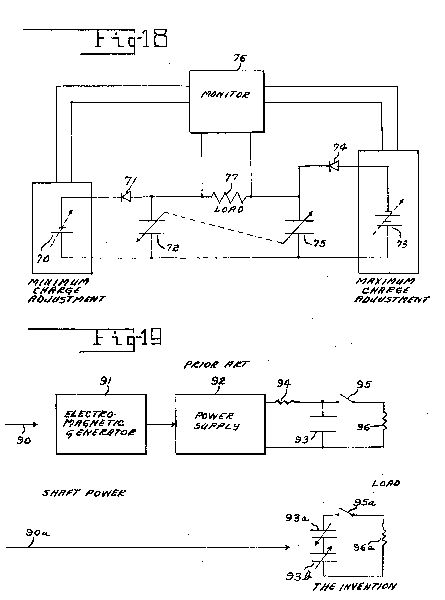
Provide an alternative method for generating electrical power without reliance on conventional electromagnetic generators.
Concept Summary
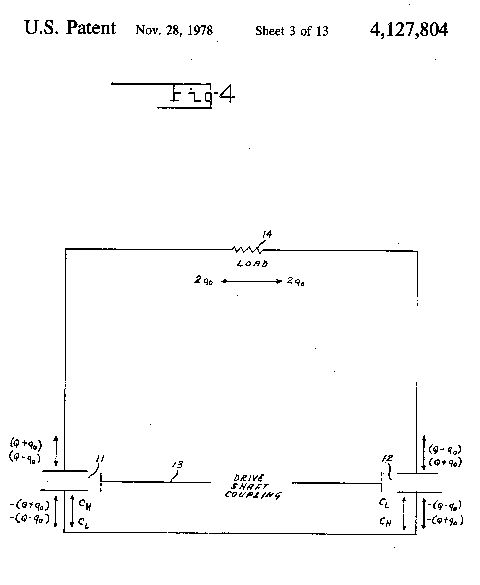
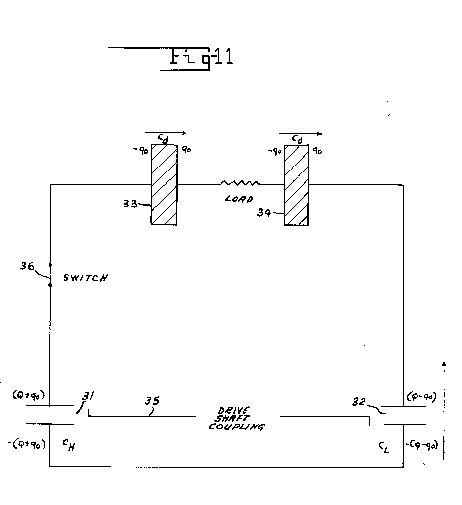
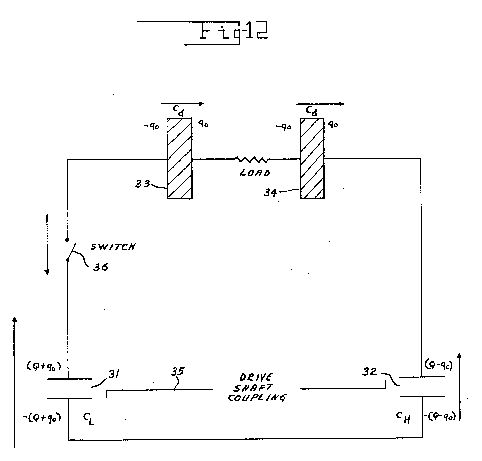
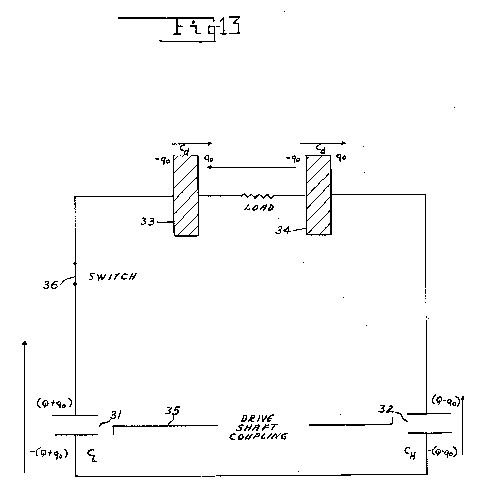
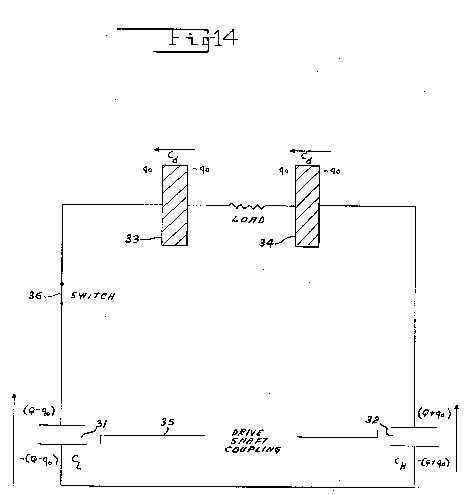
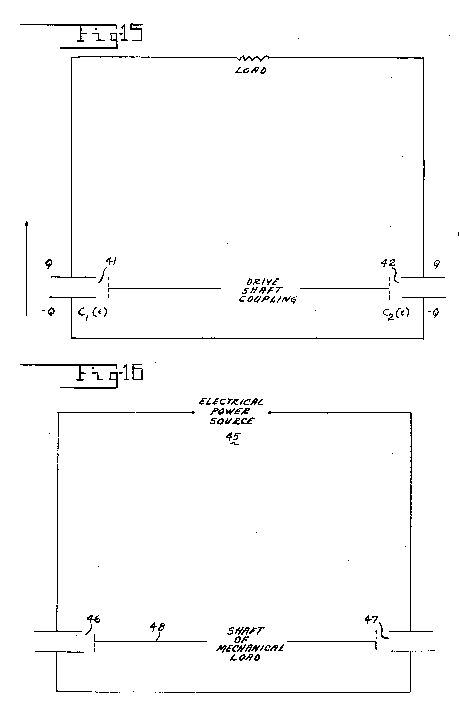
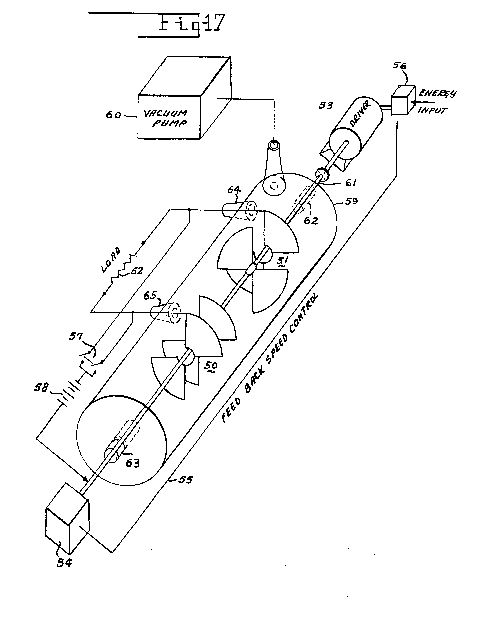
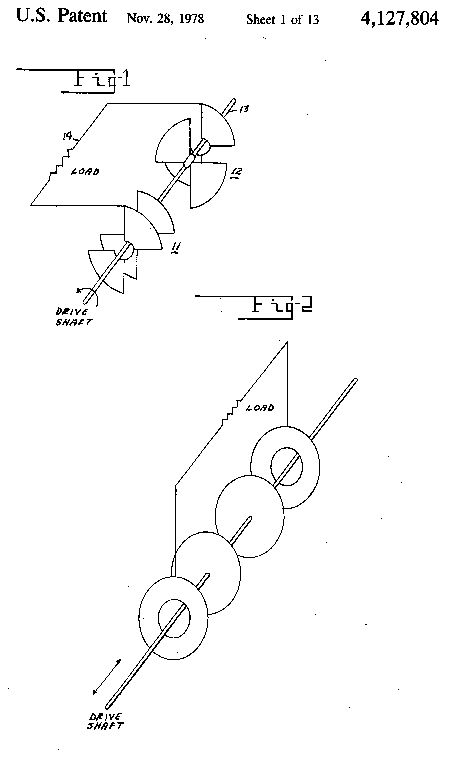
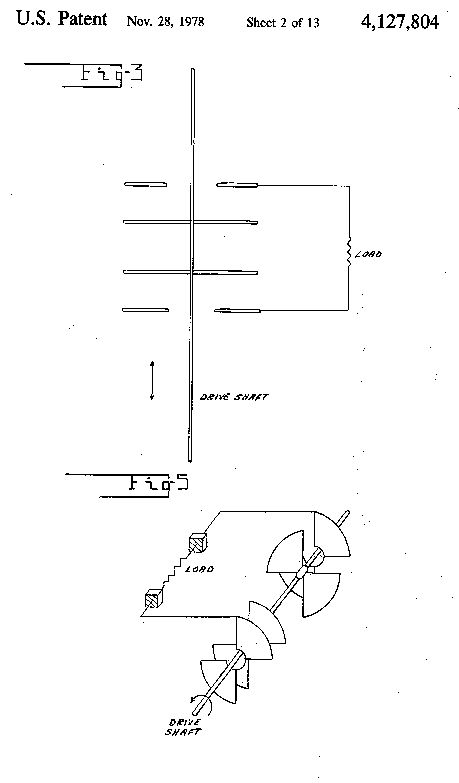
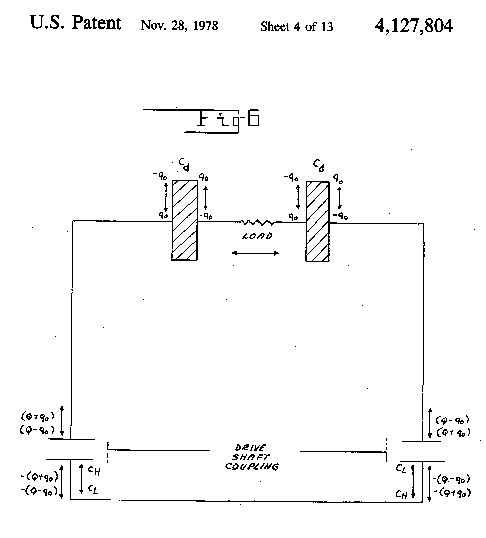
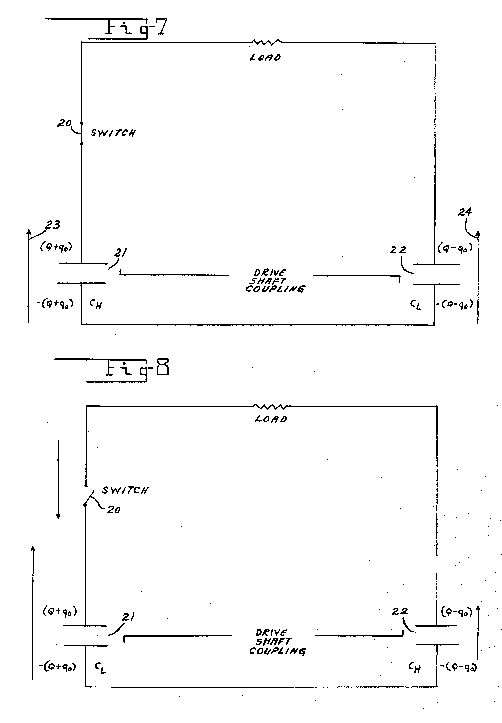
Two inversely ganged variable capacitors share a common movable element. When one capacitor is at maximum capacitance the other is at minimum, trapping a constant total charge. Mechanical motion varies the capacitances, creating a potential difference between the fixed plates. Connecting these plates to a load transfers charge, delivering AC power. The system can also operate as a motor when driven electrically.
Principles
- Variable capacitance
- Electrostatic energy conversion
- Contained (trapped) charge
- Mechanical-to-electrical energy transfer
- Reciprocal operation of paired capacitors
Scientific Domains
Materials
- Metal plates (capacitor electrodes)
- Dielectric insulating material
Mechanisms of Action
- Relative motion of capacitor plates changes capacitance
- Charge redistribution between paired capacitors creates voltage across load
- Mechanical work on movable plates is converted to electrostatic field energy
- Switching synchronised with shaft position controls charge transfer
Energy Sources
Applications
- Small-scale power generation
- Mechanical-to-electrical energy conversion devices
Claimed Performance
Provides a substantially constant trapped charge and generates alternating current when the movable plates are cycled; no quantitative efficiency or power level is given.
Limitations
- No experimental data or quantified performance
- Requires precise mechanical motion and high-voltage dielectric materials
- Potential dielectric breakdown at high voltages
Red Flags
- Claims of free energy from the ionosphere without supporting data
- Absence of peer-reviewed experimental results
- Potential overunity implication