Goal
Provide static and dynamic stability for a single-track rail vehicle using gyroscopic action.
Problem
Inherent instability of balancing a vehicle on a single rail, which limits speed, curvature and load capacity.
Concept Summary
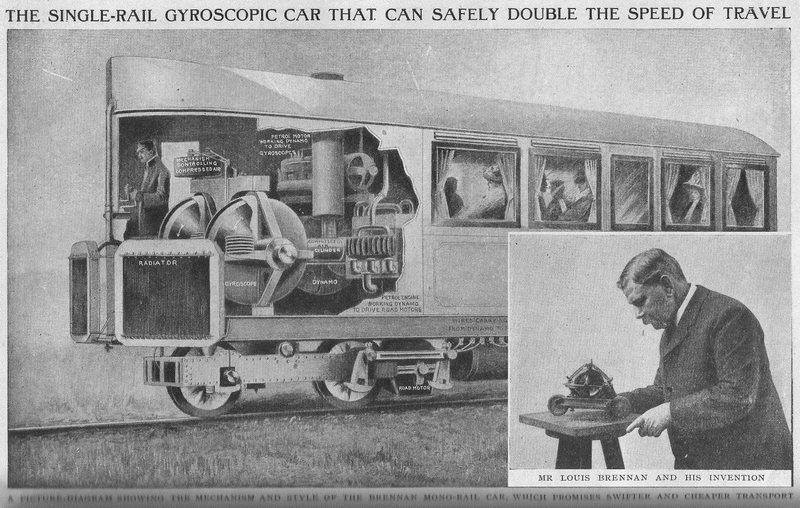
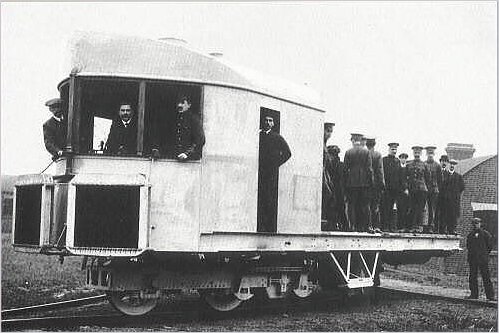
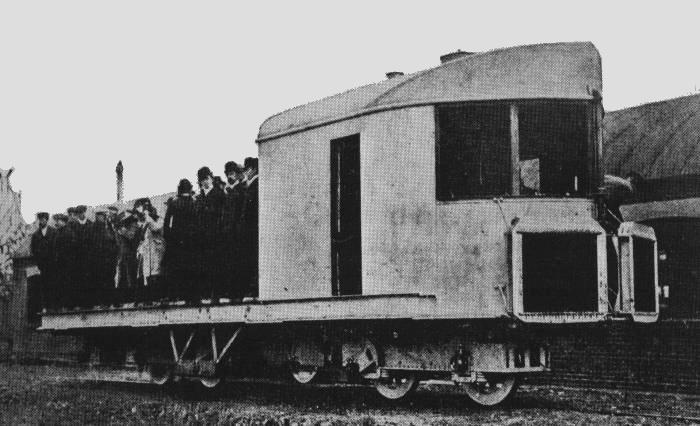
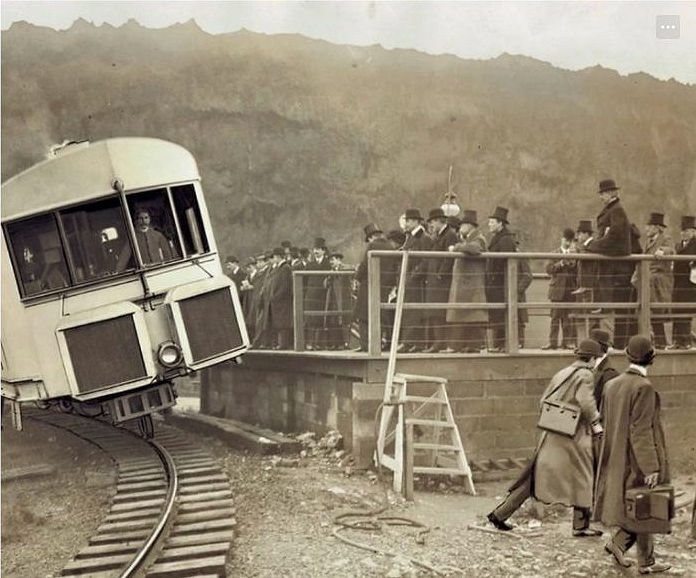
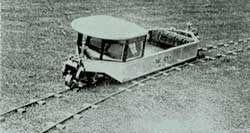
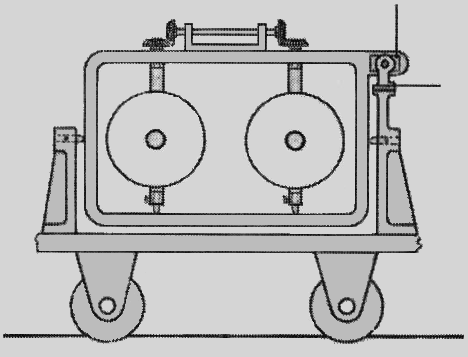
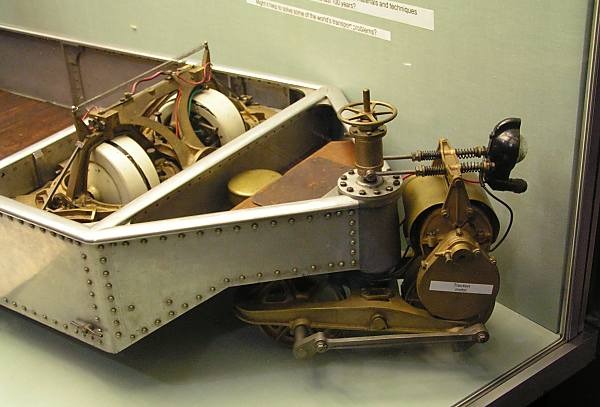
The Brennan gyroscopic monorail uses two large, counter-rotating gyroscopes housed in evacuated casings. When the vehicle tilts, gyroscopic precession generates torques that are mechanically coupled to a horizontal shaft, producing a reaction that counteracts the tilt. The system is powered by petrol-driven generators feeding electric motors that spin the gyros and drive the wheels. The vehicle can therefore travel on a single rail, negotiate sharp curves and moderate gradients while remaining upright.
Detailed Description
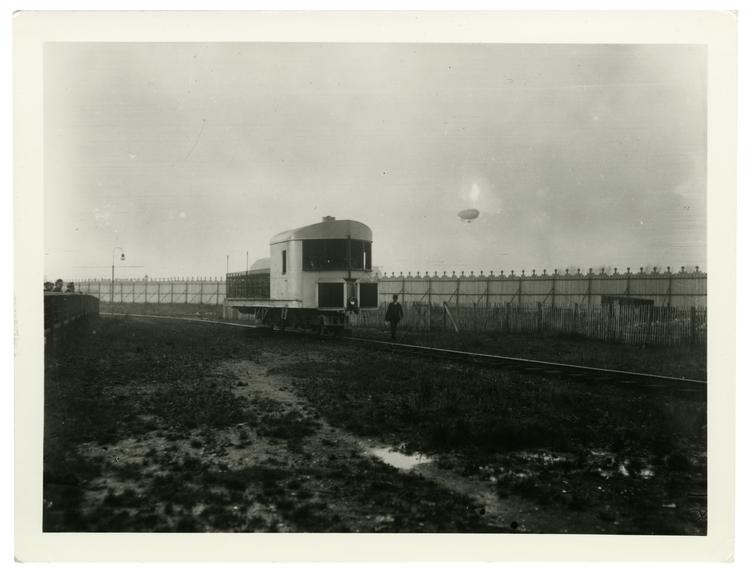
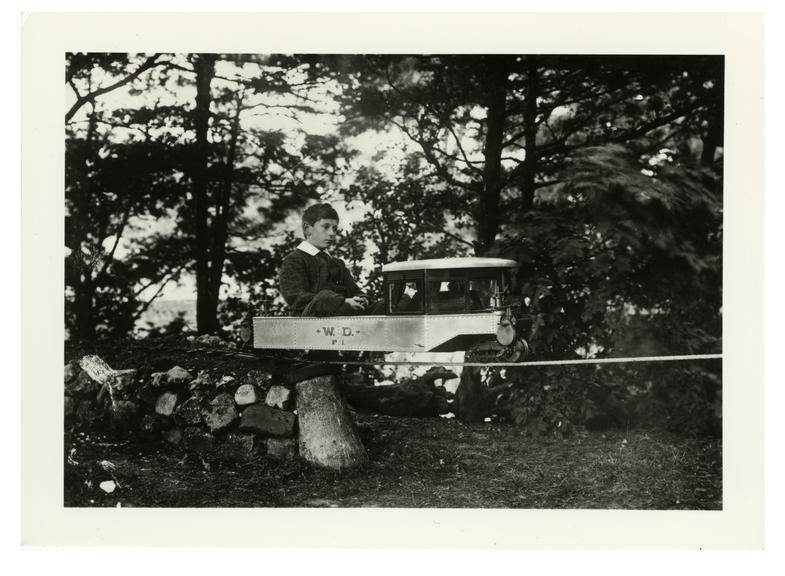
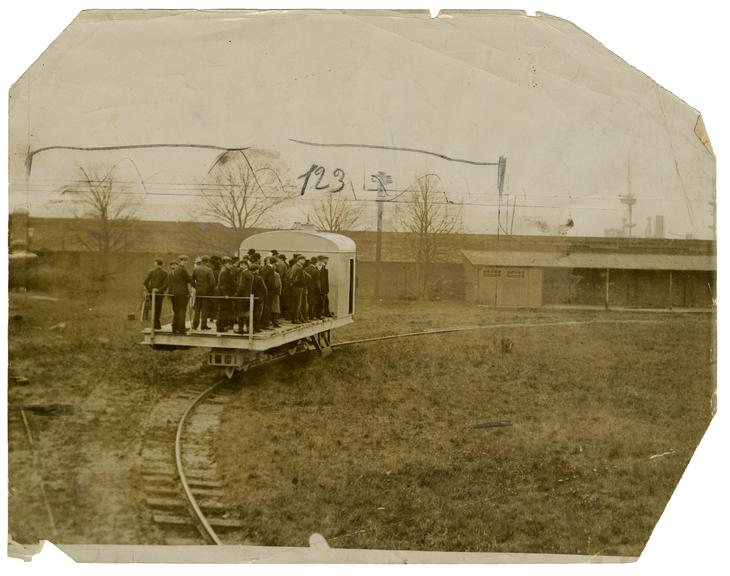
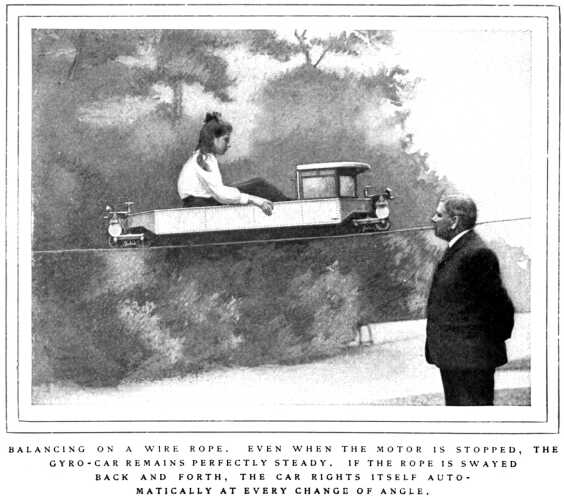
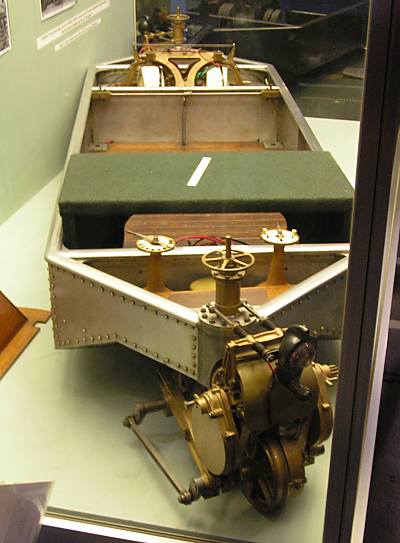
A full-scale prototype (40 ft long, 22 t weight) carried up to 15 t of payload and reached 22 mph on level track. Two 3.5 ft-diameter gyroscopes (~=0.75 t each) spun at 3000 rpm in opposite directions; their precession torques were geared together to produce a roll-damper effect. Propulsion was supplied by a 20 hp petrol engine for low speed and an 80 hp engine for high speed, driving a generator that powered the gyros, electric traction motors and an air-compressor used for braking. A smaller electrically powered model (6 ft long, 175 lb) demonstrated the principle on a single wire and was shown to the Royal Society in 1907.
Principles
- Gyroscopic angular momentum
- Precession torque
- Mechanical gearing of counter-rotating gyros
- Statically stable roll damper
- Pneumatic servo for braking
Scientific Domains
Materials
- steel
- iron
- wood
- copper
Mechanisms of Action
- Gyroscopic stabilization
- Precession-induced counter-torque
- Mechanical coupling to vehicle chassis
- Electric drive of traction wheels
Energy Sources
Applications
- Passenger transport
- Freight transport
- Military logistics
Claimed Performance
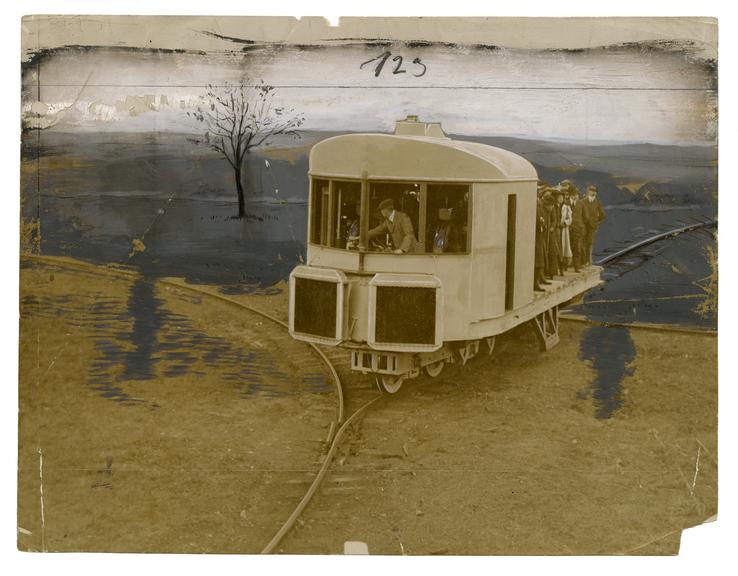
Speed 22 mph (35 km/h) on level track; load capacity 10-15 t; capable of negotiating 1 in 13 gradients and 35 ft radius curves; demonstrated carrying 32-person and 50-person loads.
Experimental Evidence
Demonstrated at Gillingham (1909) with two petrol engines; Royal Society model test (1907) on a single wire; public exhibition at White City, London (1910) carrying 50 passengers; full-scale vehicle ran under its own power on 15 Oct 1909 carrying 32 people.
Replication Status
Only prototype demonstrations; no commercial or further replication reported.
Limitations
- Requires continuously powered gyroscopes to stay upright
- Heavy gyroscope assemblies increase vehicle mass
- Complex mechanical gearing and control
- Limited to low-to-moderate speeds
- Never progressed beyond prototype stage