Goal
Generate continuous electric current from a conductive liquid without electrochemical consumption of the electrodes.
Problem
Conventional batteries degrade due to electrochemical reactions and require chemical fuels; this invention seeks a non-depleting electricity source using water or other conductive fluids.
Concept Summary
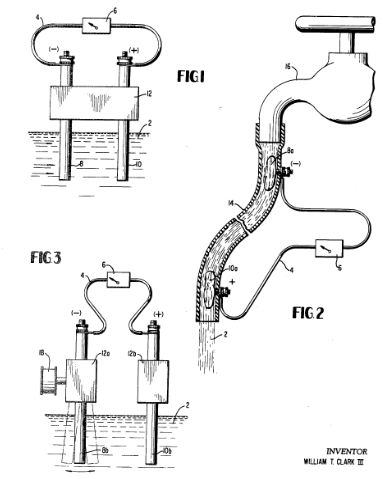
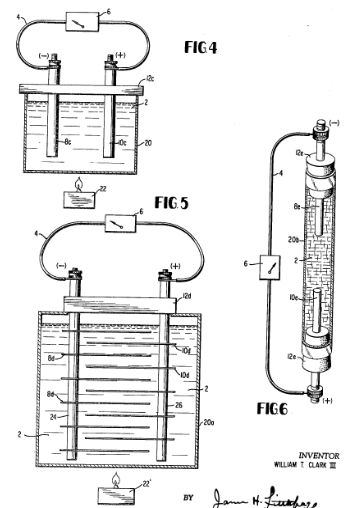
Two solid electrodes are immersed in a conductive liquid (e.g., tap water). Energy is imparted to the liquid by flow, heat, or mechanical vibration, causing free electrons in the liquid to be preferentially attracted to one electrode (upstream or more conductive) than the other, producing a net current in an external load. No magnetic field or electrochemical reaction is required.
Principles
- Excitation of free electrons in a conductive liquid
- Asymmetric electrode positioning (upstream vs downstream)
- Differential electrical conductivity of electrodes
- Mechanical agitation of an electrode
- Thermal heating of the liquid
Scientific Domains
Materials
- copper
- carbon
- brass
- aluminum
- tap water
- gelatin (electrically conductive jelly)
Mechanisms of Action
- Free electrons in the liquid are driven into the more conductive or upstream electrode
- Vibration of an electrode increases local electron activity
- Heating the liquid raises electron mobility
Energy Sources
Applications
- low-power electronic devices
- remote sensors
- portable radios
Claimed Performance
Measured currents up to 60 mA (enough to power a seven-transistor radio) and lower currents (10-50 uA) in various configurations.
Experimental Evidence
The patent describes multiple laboratory setups (flowing tap water, vibrating electrode, heated water) with measured currents ranging from 14 uA to 60 mA.
Limitations
- Very low power output without heating or agitation
- Requires conductive impurities in water
- Performance drops with pure distilled water
- Heat management needed for high-current mode
Red Flags
- Claims of "perpetual" energy without clear thermodynamic analysis
- No independent replication or peer-reviewed validation