Goal
Transmit mechanical energy over distance using vibrational waves in liquids or solids.
Problem
Inefficient power transmission in hydraulic and mechanical systems due to reliance on static pressure rather than wave propagation.
Concept Summary
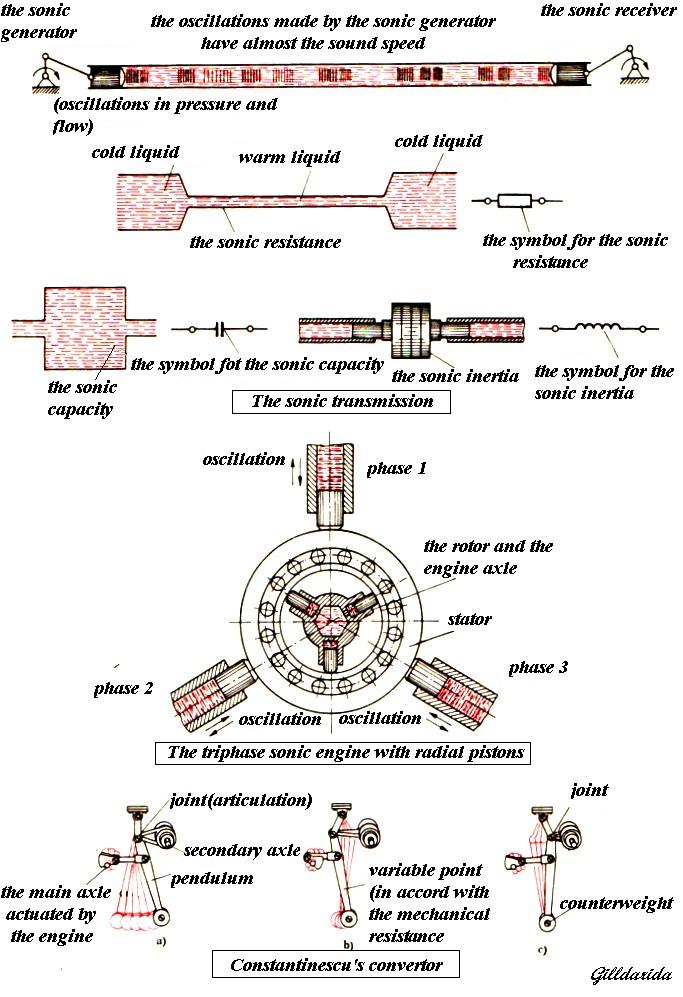
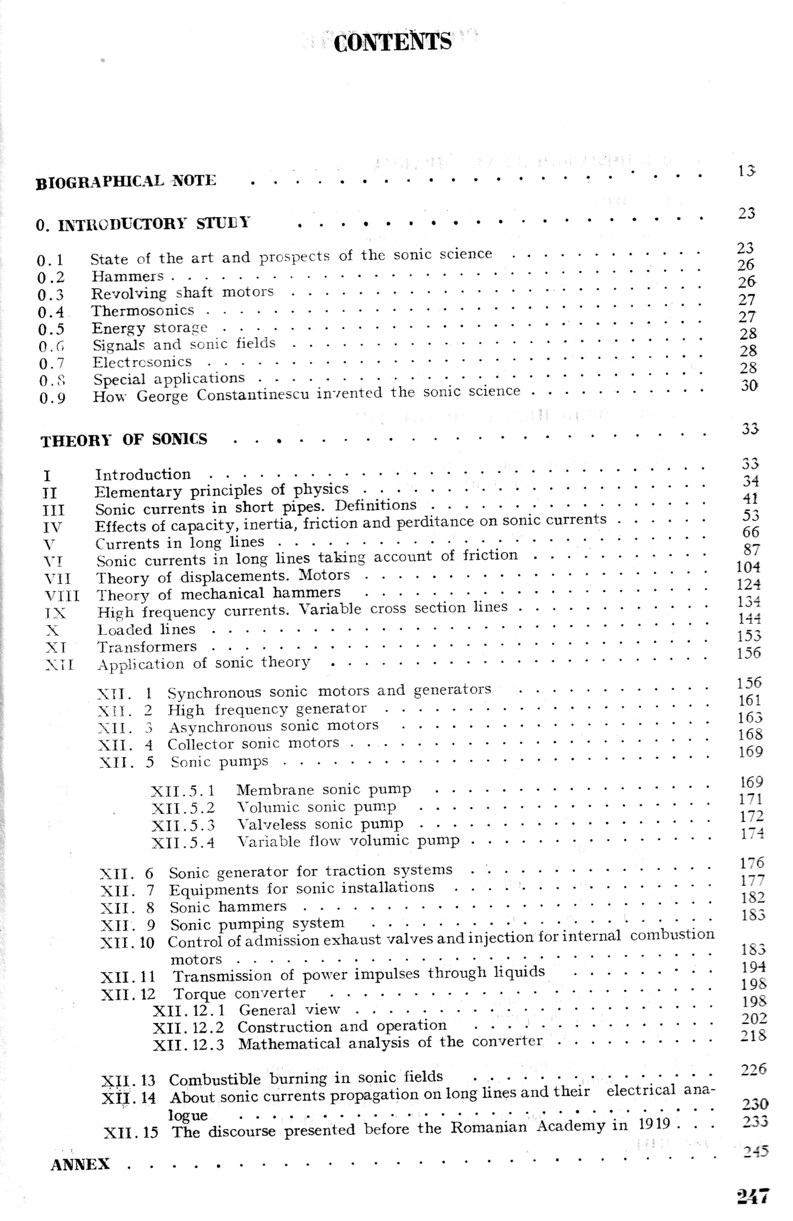
Constantinescu's theory of sonics describes how mechanical energy can be conveyed through continuous media (liquids or solids) by generating and propagating compressional waves. A generator creates high-frequency pressure oscillations in a fluid; the resulting wave transports energy to a receiver that converts the oscillations into useful work (percussion, rotary motion, etc.). The approach promises lower dissipation and higher power density than conventional hydraulic transmission.
Principles
- Wave propagation in compressible media
- Resonant oscillation and harmonic coupling
- Momentum transfer via pressure pulses
Scientific Domains
Materials
- oil
- water
- steel
- iron
Mechanisms of Action
- Liquid-wave power transmission
- Asynchronous liquid-rotor motor conversion
- Percussive impact drilling
Energy Sources
Applications
- Oil-field drilling
- Vehicle propulsion
- Geothermal and environmental core sampling
- Rock-drilling in construction
Claimed Performance
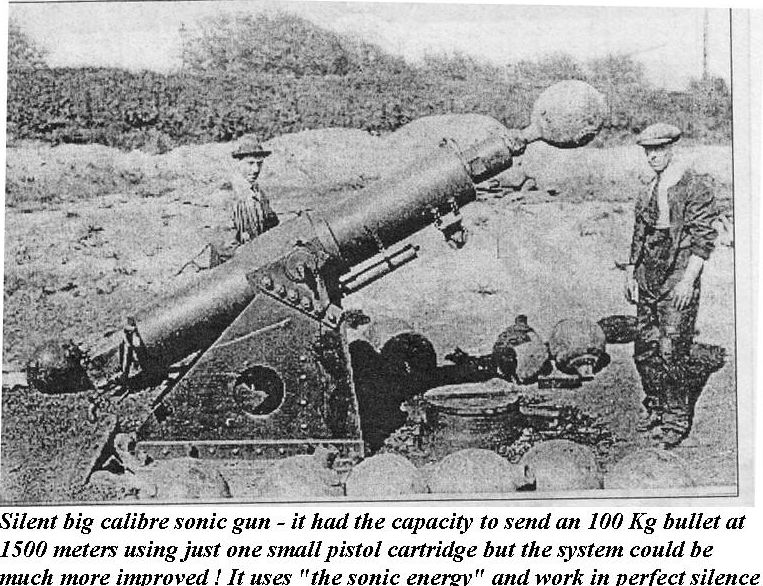
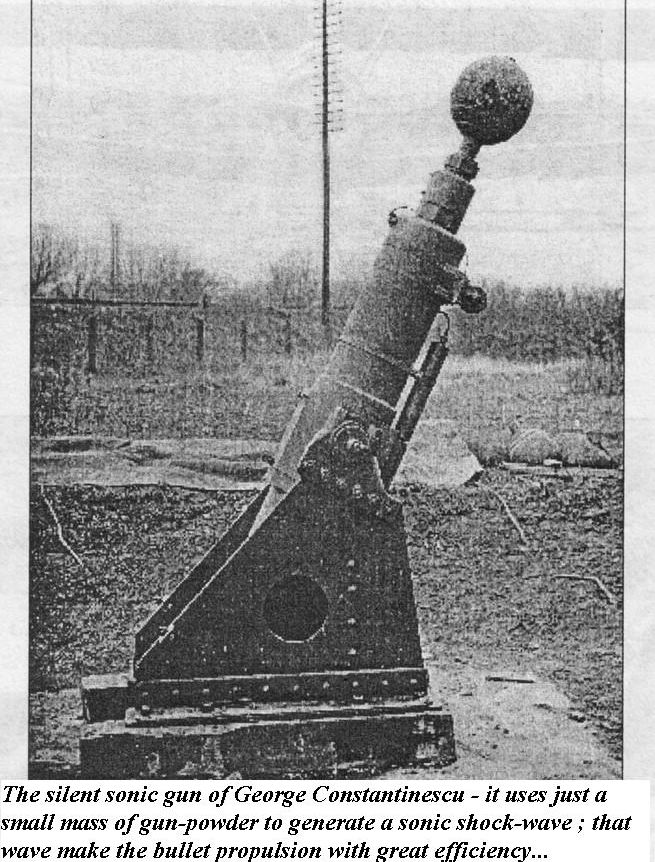
Sonic drill heads can drill 3-5x faster than conventional rigs, reduce waste by 70-80 %, and launch a 90 kg projectile >1.4 km using 25 000 psi compressed oil.
Experimental Evidence
Prototype rock-drill launched 90 kg projectile 1.4 km (1915); two experimental models of a sonic asynchronous motor built and analysed (2010); commercial sonic drilling rigs operating in Canada and used for geothermal and environmental investigations.
Replication Status
Multiple patents issued; commercial rigs built by Sonic Drilling Ltd.; academic prototypes demonstrated at Transilvania University of Brașov.
Limitations
- Early rigs suffered frequent breakdowns due to tooling wear
- High-pressure fluid handling requirements
- Limited commercial adoption outside niche drilling markets