Goal
Direct production of electrical power via plasma-based low-energy nuclear reactions (LENR) using Exotic Vacuum Objects (condensed plasmoids).
Problem
Need for high-efficiency, low-thermal-output energy generation that can produce electricity directly without large heat conversion stages.
Concept Summary
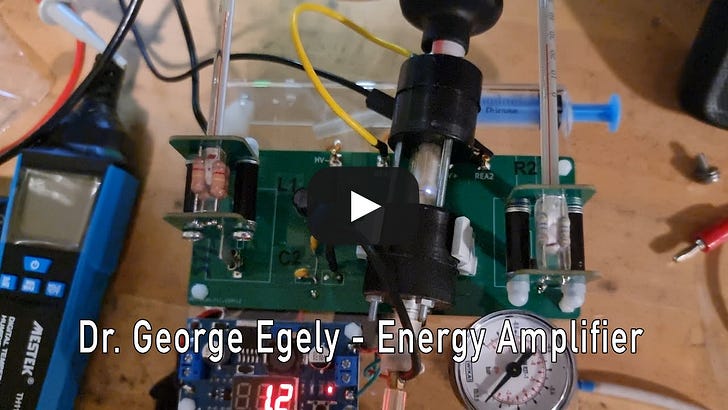
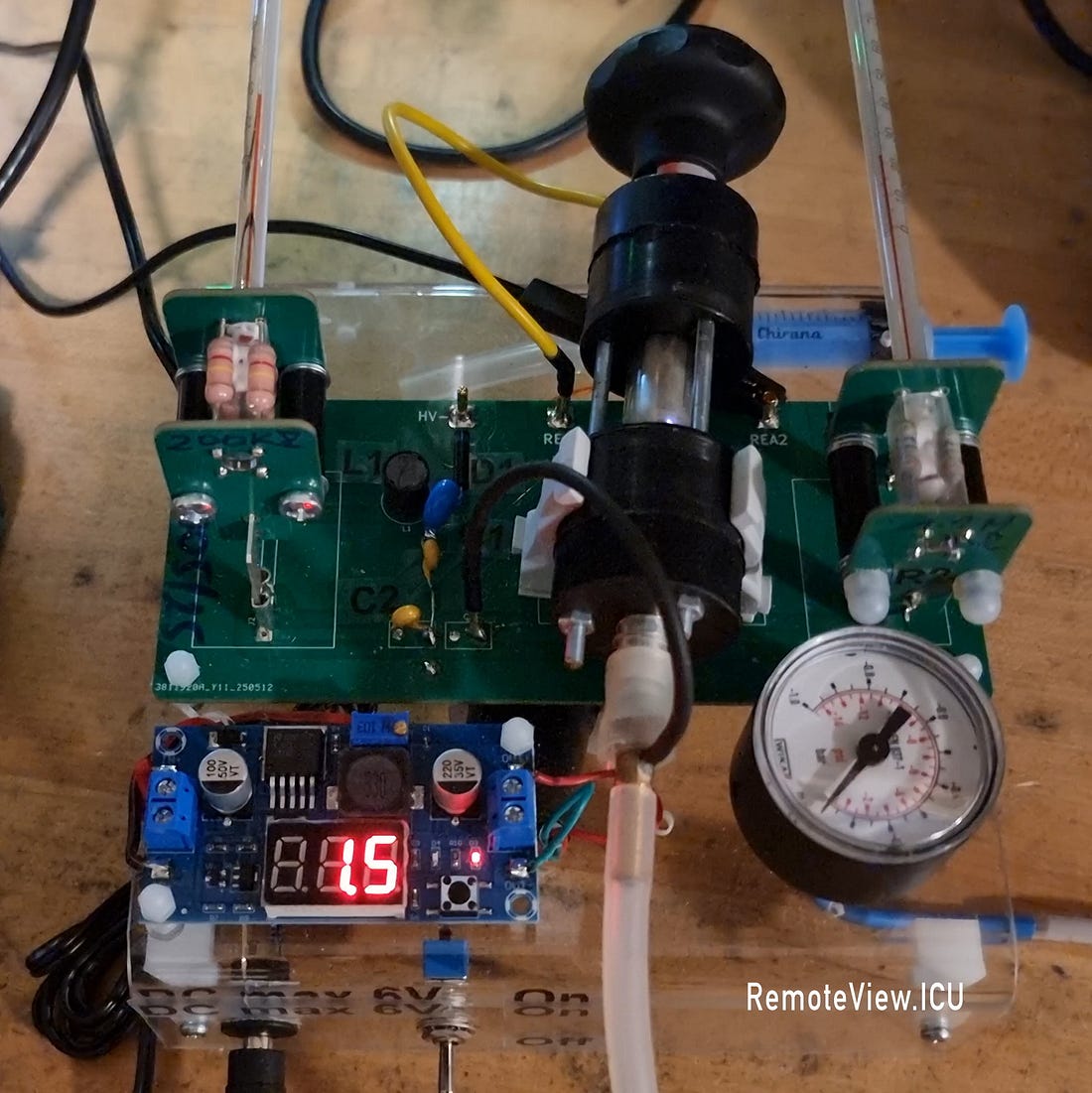
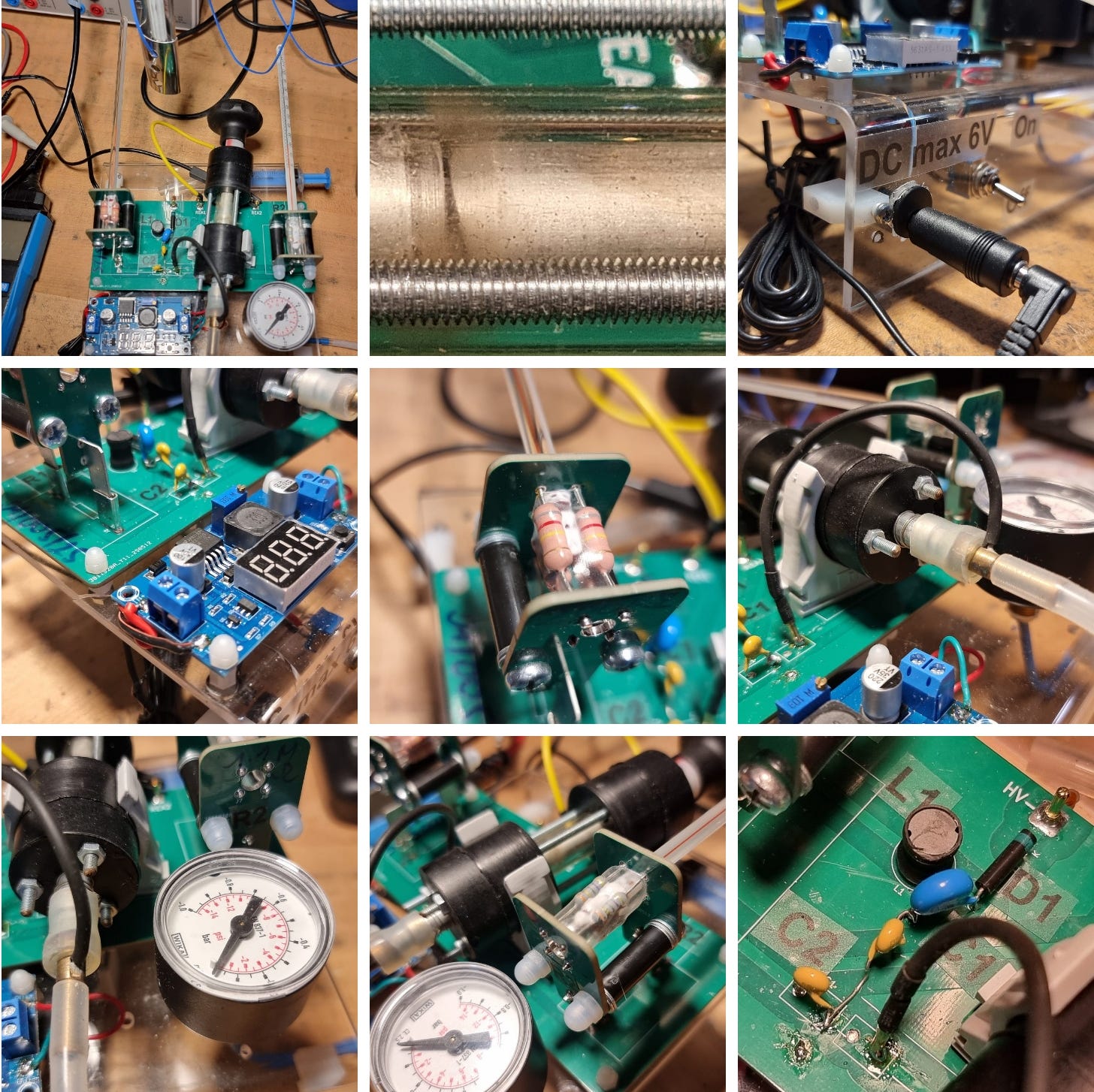
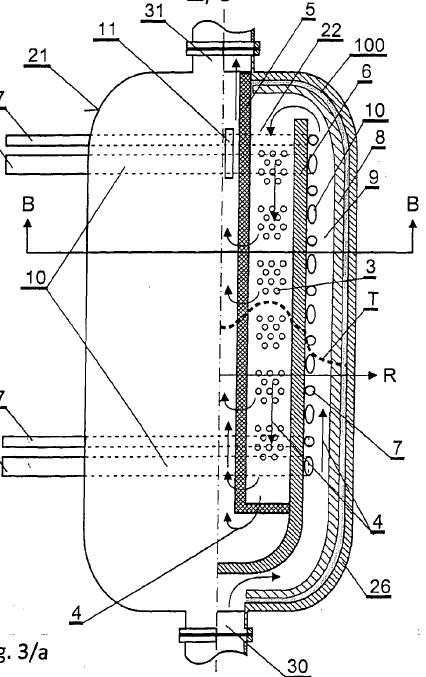
The device uses high-voltage spark discharges in a hydrogen/deuterium atmosphere to create self-organized plasma structures called Exotic Vacuum Objects (EVOs). These condensed plasmoids act as catalytic sites for nuclear fusion of hydrogen isotopes, releasing energy that is collected as direct electrical current at the anode. The system is powered by a low-voltage source (e.g., AA batteries) that drives a relaxation oscillator, high-voltage transformer, and plasma chamber. Output is measured with calibrated resistors and thermal imaging, with claimed excess energy ranging from 200 % to 1000 % of input depending on load matching.
Principles
- High-voltage plasma discharge
- Formation of condensed plasmoids (EVOs) as quantum-mechanical catalysts
- Low-energy nuclear fusion of hydrogen/deuterium within EVOs
- Direct electrical energy extraction from fusion events
Scientific Domains
Materials
- Stainless steel (electrodes)
- Hydrogen gas
- Deuterium gas
- Dust particles (catalytic material)
Mechanisms of Action
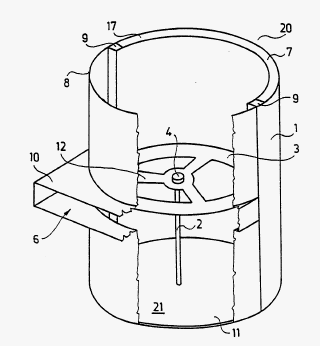
- Spark discharge creates a high-electric-field region between tubular stainless-steel electrodes.
- In the hydrogen/deuterium gas mixture, the discharge forms self-organized plasma structures (EVOs).
- EVOs catalyze fusion reactions of hydrogen isotopes, releasing energetic particles and photons.
- The released energy is captured as electrical current at the anode and can be routed to loads.
Energy Sources
Applications
- Portable power generation
- Electric aircraft propulsion
- Direct electricity supply for stationary loads
Claimed Performance
Output reported as 200 % +/- 50 % of input for ohmic loads, up to 500 % for matched-impedance loads, and up to 1000 % when a neon tube is added. Hand-held unit claimed to power a 4 W neon bulb; desktop rig claimed to produce multiple kilowatts.
Experimental Evidence
Video demonstrations showing oscilloscope waveforms, thermal imaging of the reactor zone, and a calibrated resistor/thermometer indicating excess thermal energy. No quantitative data tables provided.
Replication Status
No independent replication reported; only the inventor's own demonstrations are described.
Limitations
- Lack of quantitative performance data
- No peer-reviewed or independently replicated results
- Unclear long-term stability of electrodes and plasma
- Potential material degradation from carbon deposition
Red Flags
- Claims of >1000 % efficiency without peer-reviewed data
- Reliance on visual video evidence rather than calibrated measurements
- No independent replication or third-party validation