Goal
Increase seed germination, plant growth rate, crop yields and disease resistance using electrical and electromagnetic stimulation.
Problem
Low agricultural yields, pest and disease losses, poor nutrient uptake, and inefficient seed germination.
Concept Summary
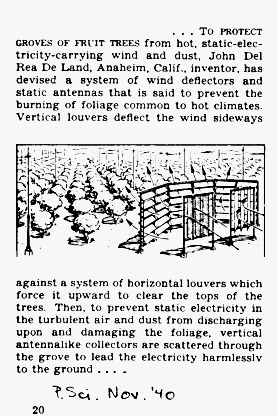
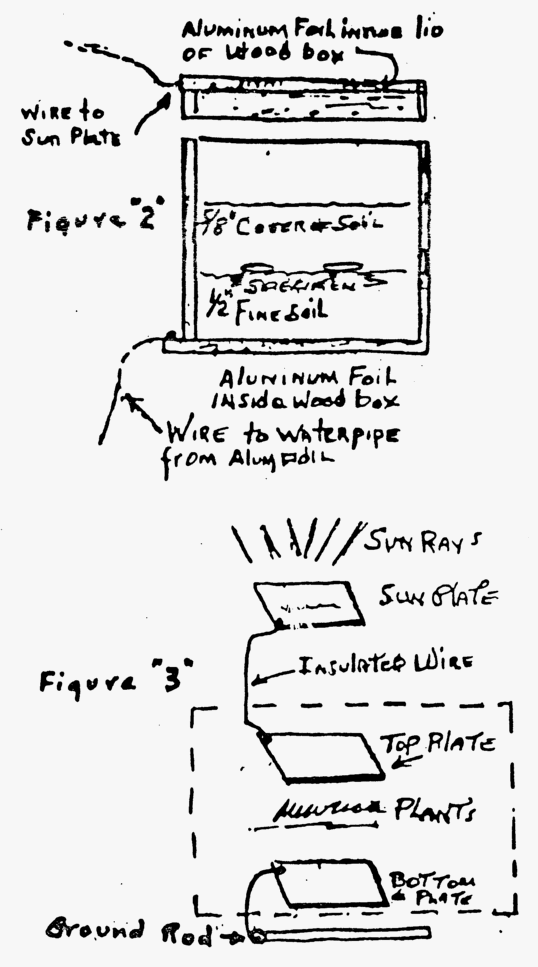
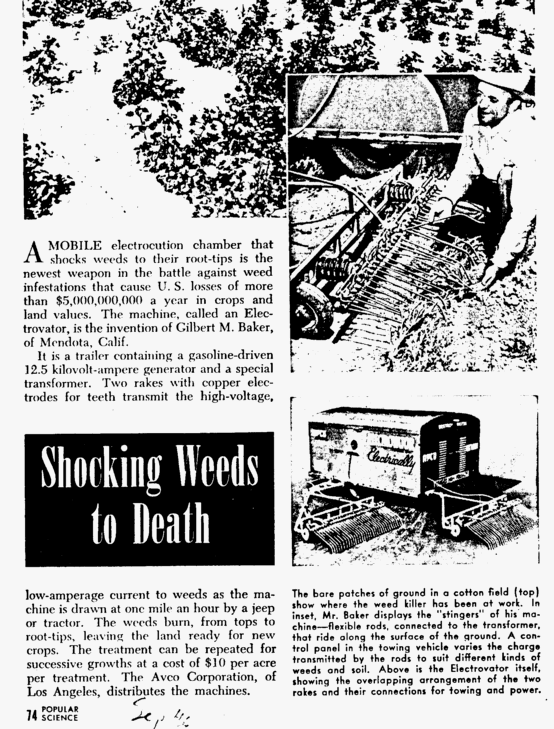
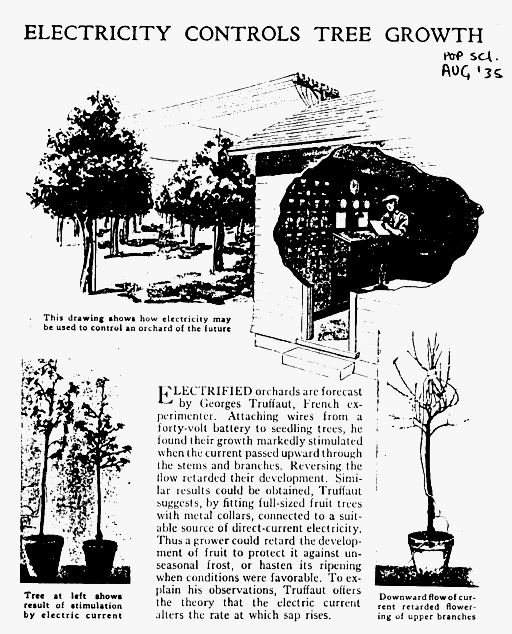
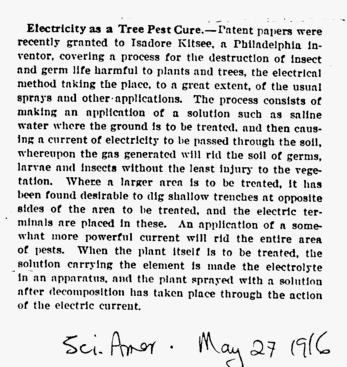
ElectroCulture employs electric fields, pulsed magnetic fields, radio-frequency/microwave radiation, ionizing light and other electromagnetic phenomena to stimulate biological processes in seeds and plants. Devices range from simple metal plates powered by atmospheric electricity to sophisticated solenoid coils delivering pulsed magnetic fields, LED arrays emitting specific wavelengths, and solar-powered ionizers. The claimed effects include faster germination, larger fruits, higher nutrient content, reduced disease incidence and even altered gravity-like effects in some patents.
Detailed Description
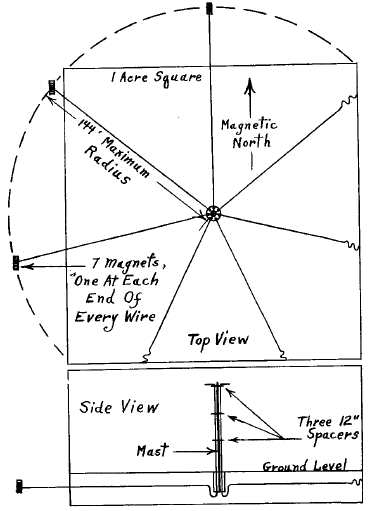
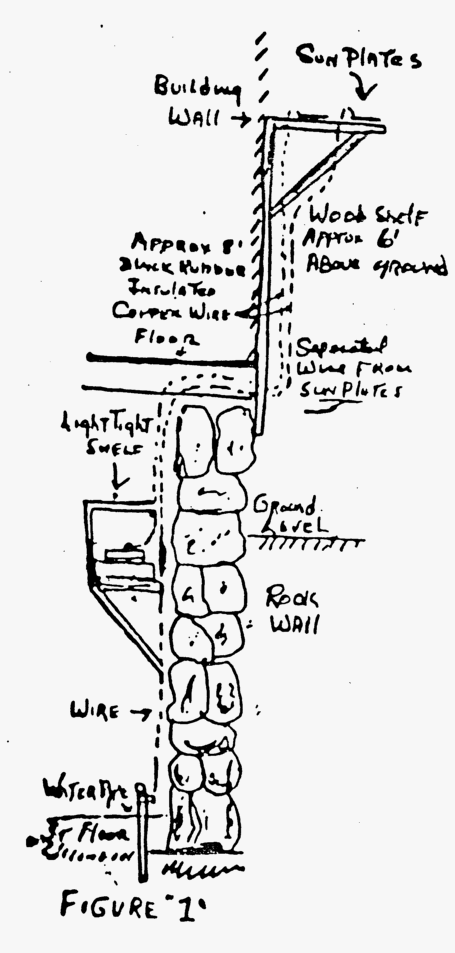
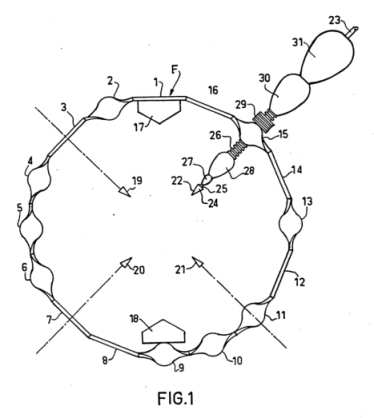
The technology comprises a variety of implementations: (1) metal grates or plates placed in soil and energized by a voltage source that may harvest atmospheric electricity; (2) solenoid coils through seed batches through a pulsed magnetic field (PMFT) at low power (~=50 VA) to shorten thermogenesis phases; (3) LED arrays (green light) that irradiate plants to boost disease resistance; (4) high-frequency microwave generators arranged in a ring to overheat pest cells; (5) solar-powered ionizers (Ion-A-Gro) that emit charged particles to increase yields by 30 %+; (6) acoustic or music playback systems for pots. Most installations are powered from standard mains (220 V/50 Hz or 110 V/60 Hz) and can be scaled to process 10 tons of seeds per hour. Field trials reported in Russian regions and historic literature claim up to 100 % yield increases, though quantitative peer-reviewed data are scarce.
Principles
- Electrostatic field stimulation
- Pulsed magnetic field exposure
- Radio-frequency / microwave heating
- Photonic (LED) irradiation
- Ion generation and delivery
- Acoustic stimulation
Scientific Domains
Materials
- Copper coils
- Metal plates / grates (steel, aluminum)
- Magnetite (Fe3O4) powder
- LED diodes (green)
- Solenoid coil (iron core)
- Photocells (solar panels)
- Ceramic or quartz antenna elements
Mechanisms of Action
- Modification of seed thermogenesis
- Enhanced ion transport in plant tissues
- Stimulation of DNA repair enzymes
- Induction of stress-response pathways
- Physical disruption of pest cells by microwaves
Energy Sources
Applications
- Crop yield enhancement
- Seed pre-treatment for germination
- Disease-resistant horticulture
- Reduced pesticide usage
Claimed Performance
Reports of >100 % yield increase, 30 % higher harvests with solar ionizers, 10 % reduction in gravity-like effects in specific patents, and up to 50 % fuel savings in related magnetic-field devices.
Experimental Evidence
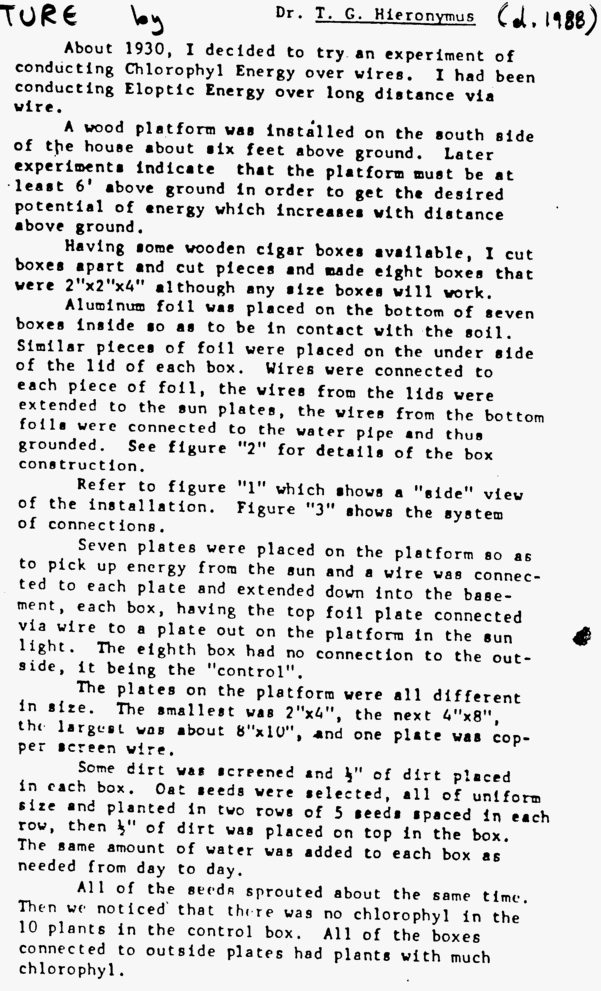
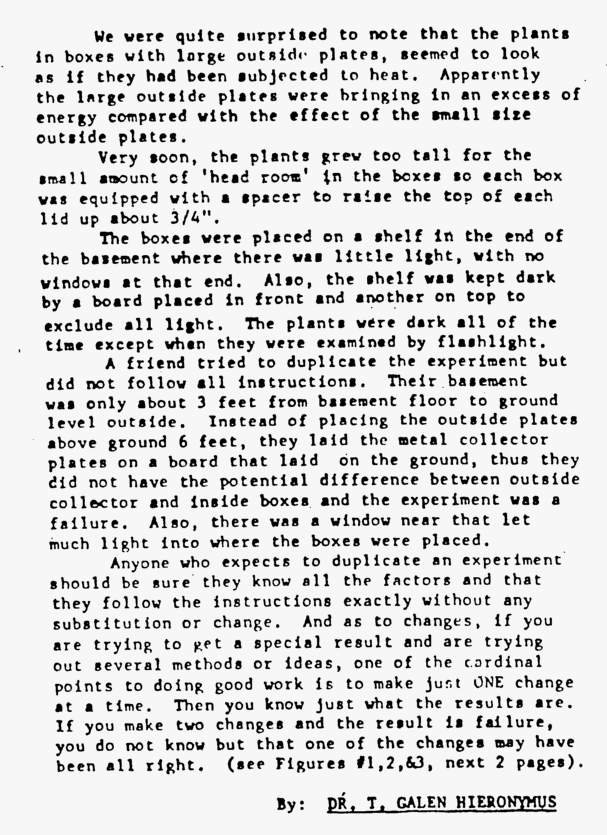
Numerous patents and historical reports (e.g., Laemstrom 1904, Jorgensen 1918, Russian field trials 2010-2020) claim successful seed treatment and yield improvements. Quantitative data are limited to a few numbers (e.g., 100 % increase, 30 % yield boost) and anecdotal field observations.
Replication Status
Field installations reported in several Russian regions and historic laboratory experiments, but no independent peer-reviewed replication studies are cited.
Limitations
- Lack of rigorous, peer-reviewed experimental data
- Device performance highly dependent on precise field parameters
- Potential variability across plant species and environmental conditions
- Some claims (e.g., reduced gravity) lack scientific plausibility
Red Flags
- Heavy reliance on patents and anecdotal reports rather than independent studies
- Presence of over-hyped language (e.g., "accelerated germination", "mummification")
- Some patents claim effects that contradict established physics (e.g., gravity reduction)
- Potential for pseudoscientific interpretation