Goal
Generate usable electrical power (up to kilowatts) from the natural electrochemical potential of the ground.
Problem
Need for low-cost, low-maintenance power sources for remote or village use and reduction of soil pollution associated with traditional galvanic earth batteries.
Concept Summary
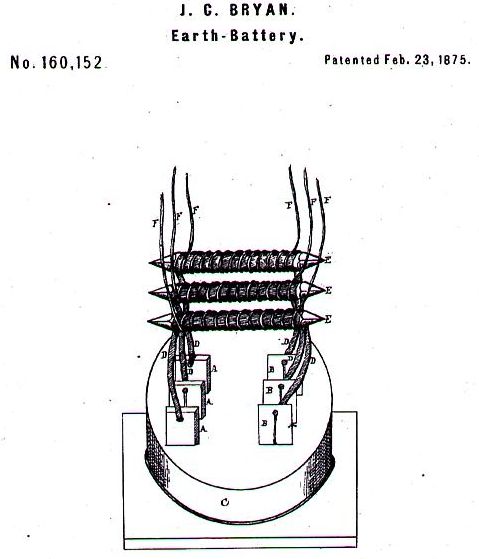
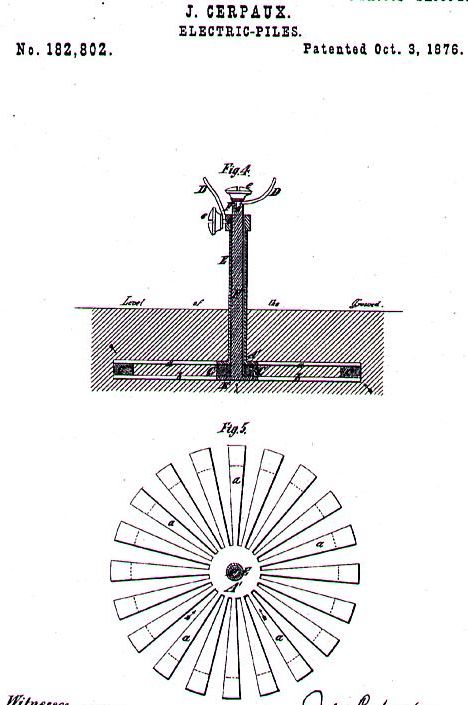
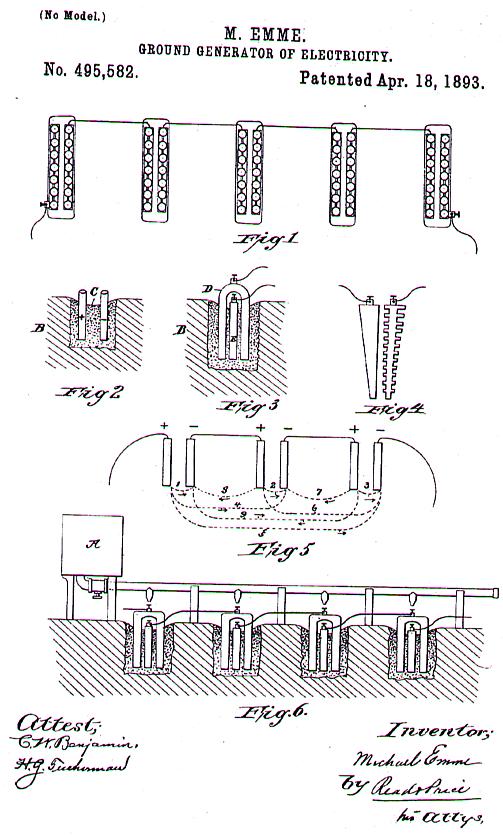
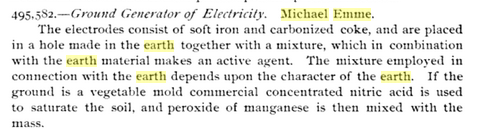
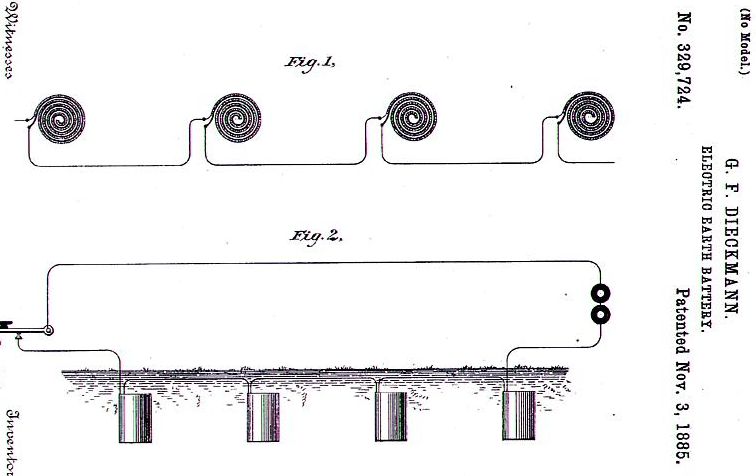
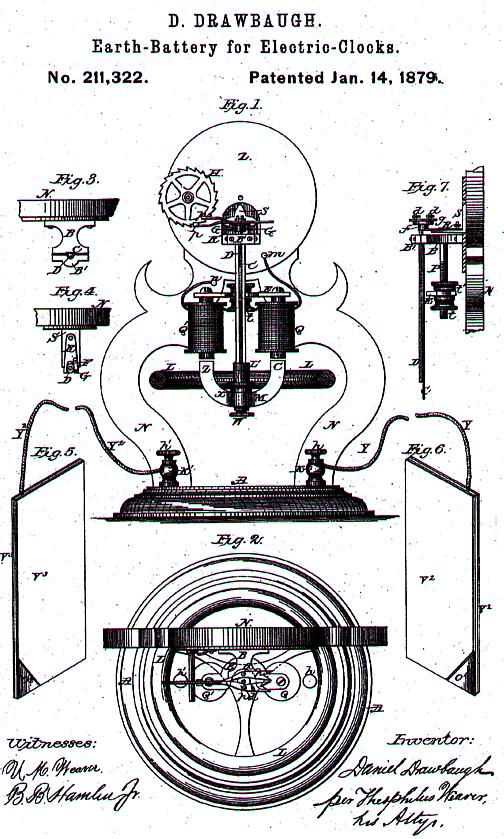
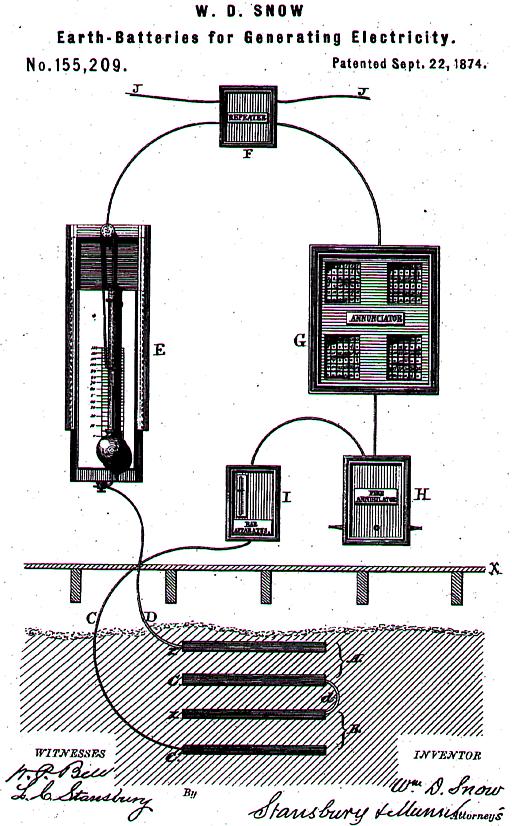
A series of galvanic couples (dissimilar metal electrodes) are inserted into the ground with large spacing between couples. The couples are electrically linked in series so that the voltage of each cell adds, producing a higher total voltage and power. The system relies on the natural chemical potential difference between the metals and the soil electrolyte.
Principles
- Galvanic electrochemical cells
- Series electrical connection of cells
- Electrochemical potential difference in soil
- Linear voltage scaling with cell count
Scientific Domains
Materials
- Magnesium
- Zinc
- Aluminum
- Copper
- Graphite
- Coke (carbon)
- Soil (moisture)
- Metal electrode plates
Mechanisms of Action
- Redox reactions between dissimilar metal electrodes and soil electrolyte
- Generation of voltage from natural earth chemical gradients
- Series stacking of multiple cells to increase total voltage and power
Energy Sources
Applications
- Rural electrification
- Low-power electronic devices
- Off-grid power generation
Claimed Performance
3 kilowatts of power from a ground-based earth battery (as shown in video demonstrations); single-cell voltages of 0.9 V - 2.05 V with currents of a few tens of uA, scaling linearly with series/parallel connections.
Experimental Evidence
An IEEE experimental study (Khan et al., 2008) reported successful design, construction, and operation of earth batteries with various metal combinations, achieving voltages of 0.9 V-2.05 V per cell and powering calculators, watches, toys, phones, and LEDs. The study demonstrated linear voltage increase when cells are connected in series and current increase when connected in parallel. Video demonstrations on YouTube also show a 3 kW earth battery prototype.
Replication Status
Demonstrated in experimental study (Khan et al., 2008) and video prototypes; no independent large-scale replication reported.
Limitations
- Very low current per cell (tens of uA)
- Performance depends on soil moisture and composition
- Potential soil contamination with heavy metals
- Scaling to kilowatt levels not experimentally verified
Red Flags
- Claims of kilowatt-scale power from simple galvanic cells (overunity implication)
- Possible heavy-metal pollution from electrode materials