Goal
Restore HDAC1 activity to repair oxidative DNA lesions and mitigate age-related cognitive decline and Alzheimer's disease.
Problem
Accumulation of 8-oxoguanine DNA lesions in neurons with to memory loss and neurodegeneration during aging.
Concept Summary
The research identifies the histone deacetylase enzyme HDAC1 as a key regulator of DNA repair in neurons. HDAC1 stimulates the expression of the repair enzyme OGG1, which removes oxidative 8-oxoguanine lesions. Age-related decline of HDAC1 leads to DNA damage and cognitive deficits. Small-molecule activation of HDAC1 (e.g., exifone) in mice reduces DNA lesions and improves memory, suggesting a therapeutic avenue for aging-related neurodegenerative conditions.
Detailed Description
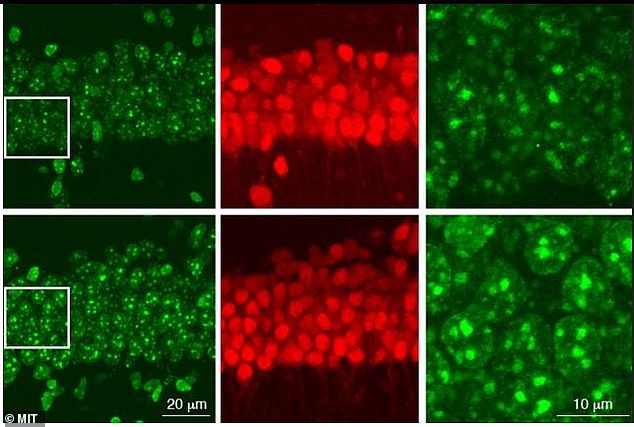
MIT and Harvard scientists engineered mice lacking HDAC1 and observed accelerated accumulation of 8-oxoguanine lesions, impaired spatial navigation, and memory decline. Conversely, mice with elevated HDAC1 showed fewer lesions and better cognitive performance. The team demonstrated that HDAC1 up-regulates the DNA-repair enzyme OGG1. Treatment of HDAC1-deficient and Alzheimer's mouse models with the drug exifone-previously used for dementia but withdrawn for liver toxicity-stimulated HDAC1 production, reduced oxidative DNA damage, and restored cognitive function. The authors propose that safer HDAC1-activating compounds could be developed as drugs for age-related cognitive impairment and Alzheimer's disease.
Principles
- Epigenetic regulation of gene expression
- Enzyme activation
- DNA repair via base excision pathway
Scientific Domains
Materials
- Exifone (small-molecule HDAC1 activator)
- HDAC1 enzyme (native protein)
- OGG1 enzyme (native protein)
Mechanisms of Action
- HDAC1 up-regulation increases OGG1 transcription
- OGG1 excises 8-oxoguanine lesions from DNA
- Chemical activation (e.g., exifone) enhances HDAC1 enzymatic activity
Applications
- Therapeutic treatment for age-related cognitive decline
- Alzheimer's disease drug development
- Neuroprotective strategies for neurodegenerative disorders
Claimed Performance
Exifone treatment reduced oxidative DNA damage and improved memory performance in aged and Alzheimer's mouse models.
Experimental Evidence
Mice treated with exifone showed a significant reduction in DNA lesions and enhanced performance in memory and spatial navigation tests compared with untreated controls.
Replication Status
Results reported only by the original MIT/Harvard research team; no independent replication documented in the article.
Limitations
- Findings limited to animal (mouse) models
- Exifone caused liver toxicity in humans, raising safety concerns
- No clinical trial data in humans yet
Red Flags
- Historical liver toxicity of exifone
- Therapeutic claims are based on pre-clinical data only