Goal
Detect low-frequency gravitational (G-wave) signals and convert them into usable electrical/audio outputs for scientific observation and potential energy extraction.
Problem
Current mainstream gravitational-wave detectors are limited to high-frequency events and require massive, expensive infrastructure; Rhysmonic Cosmology proposes a low-cost, tabletop method to sense pervasive G-waves and related scalar-field phenomena.
Concept Summary
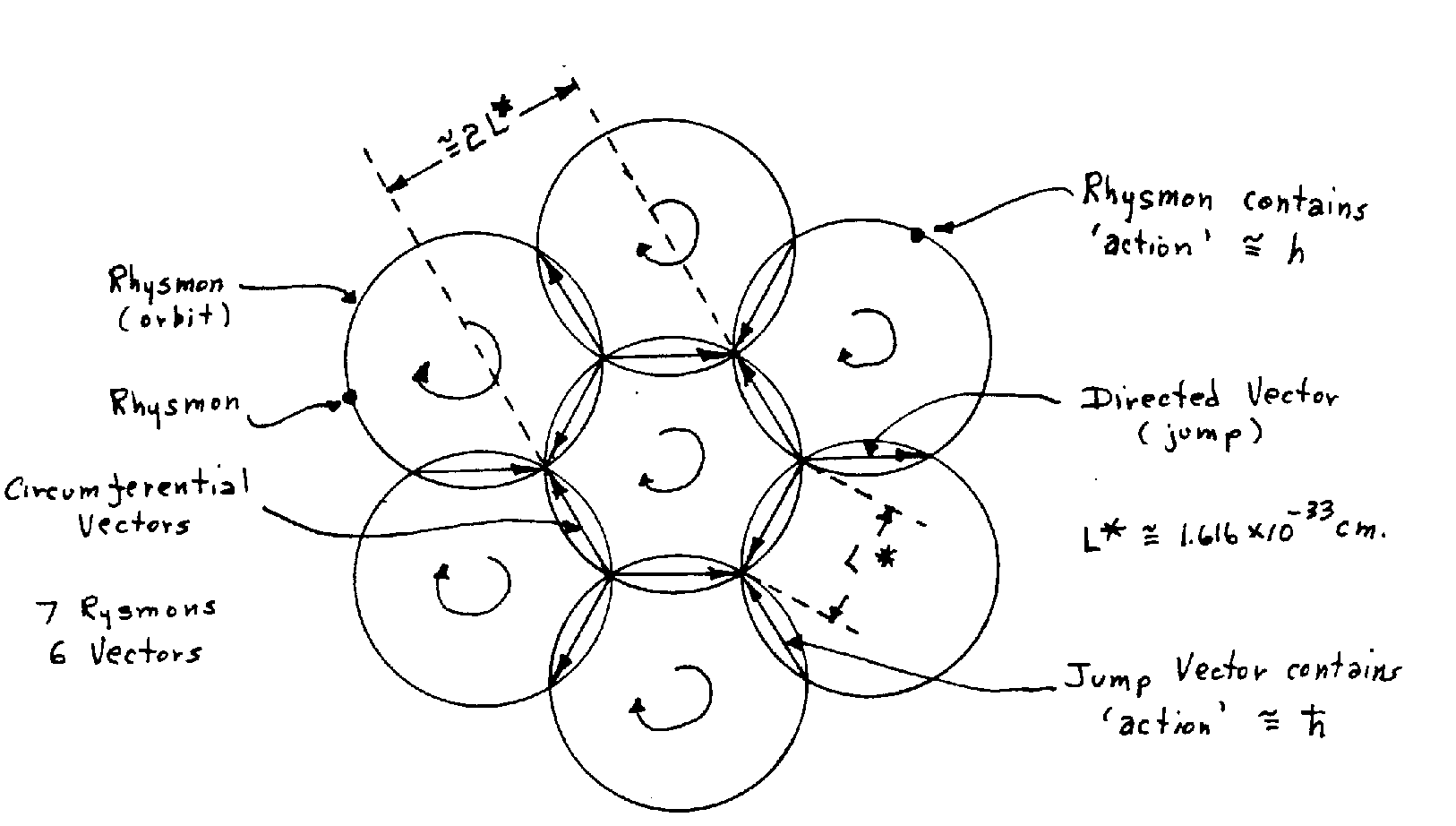
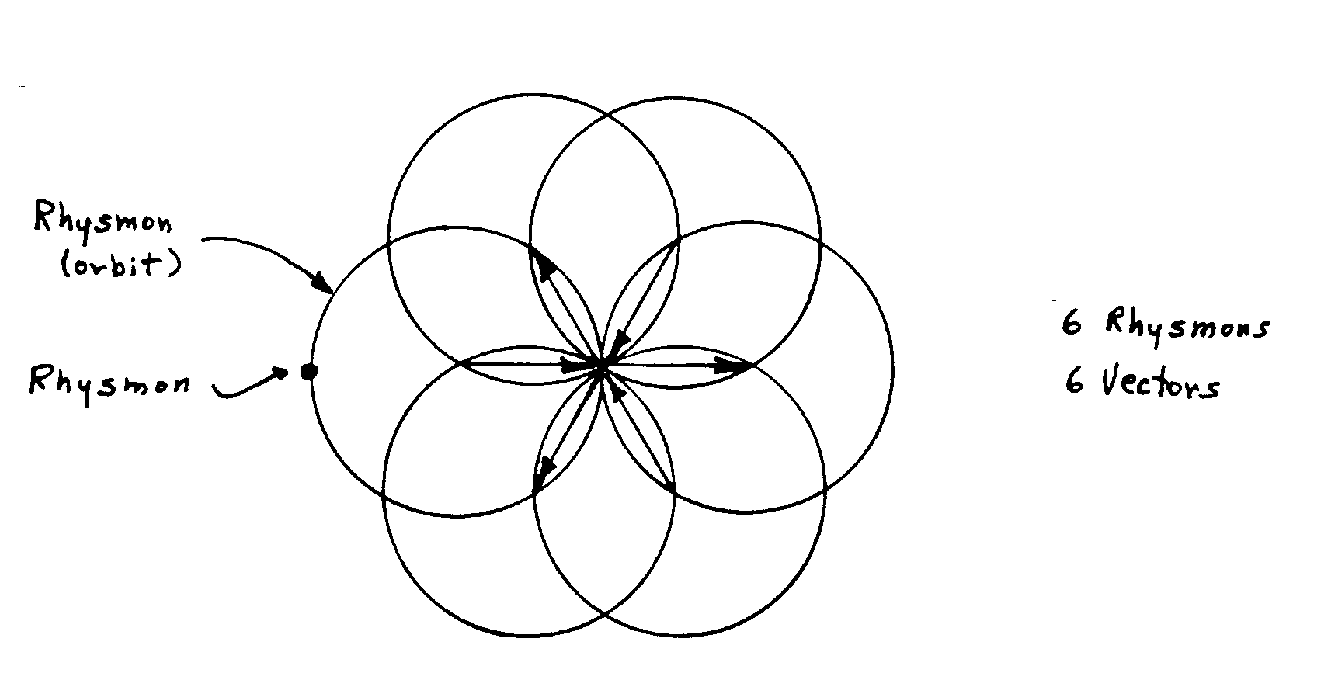
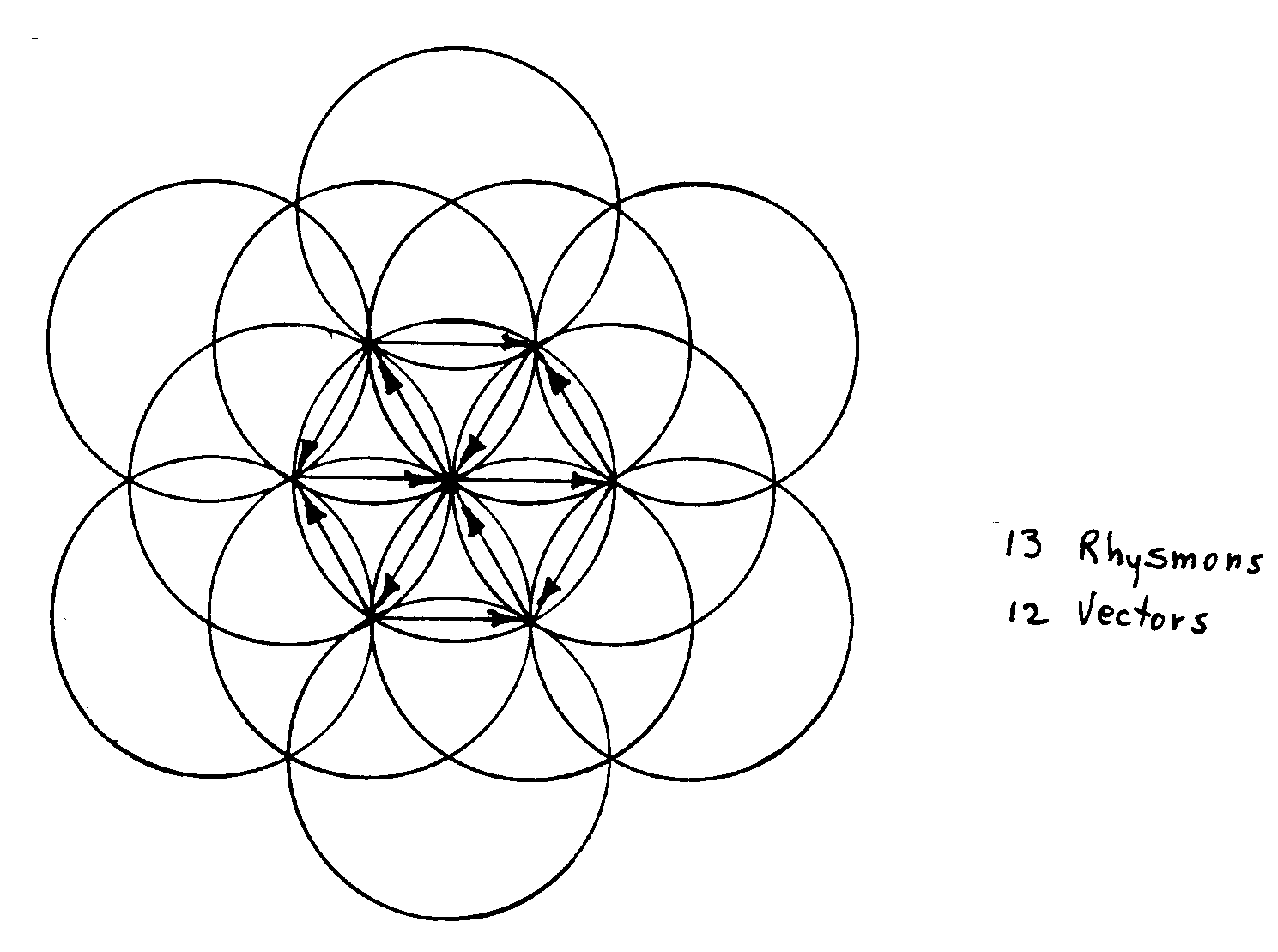
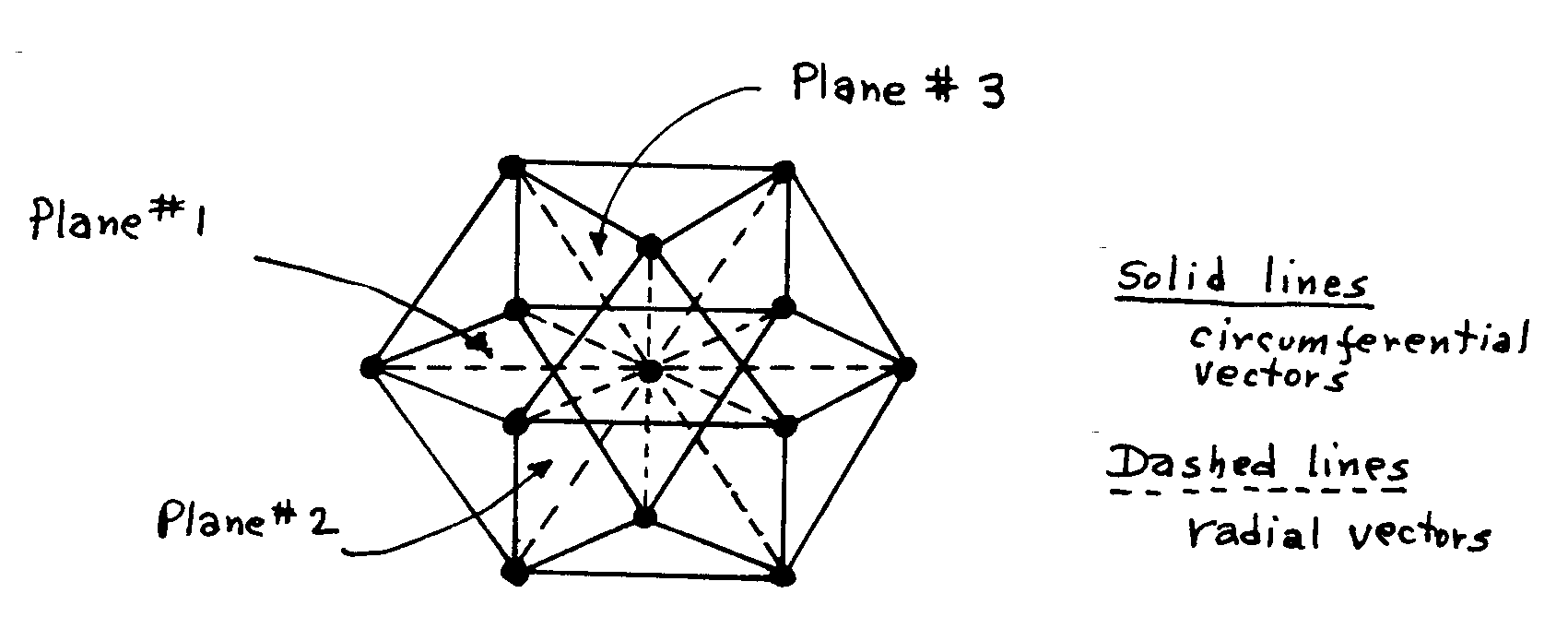
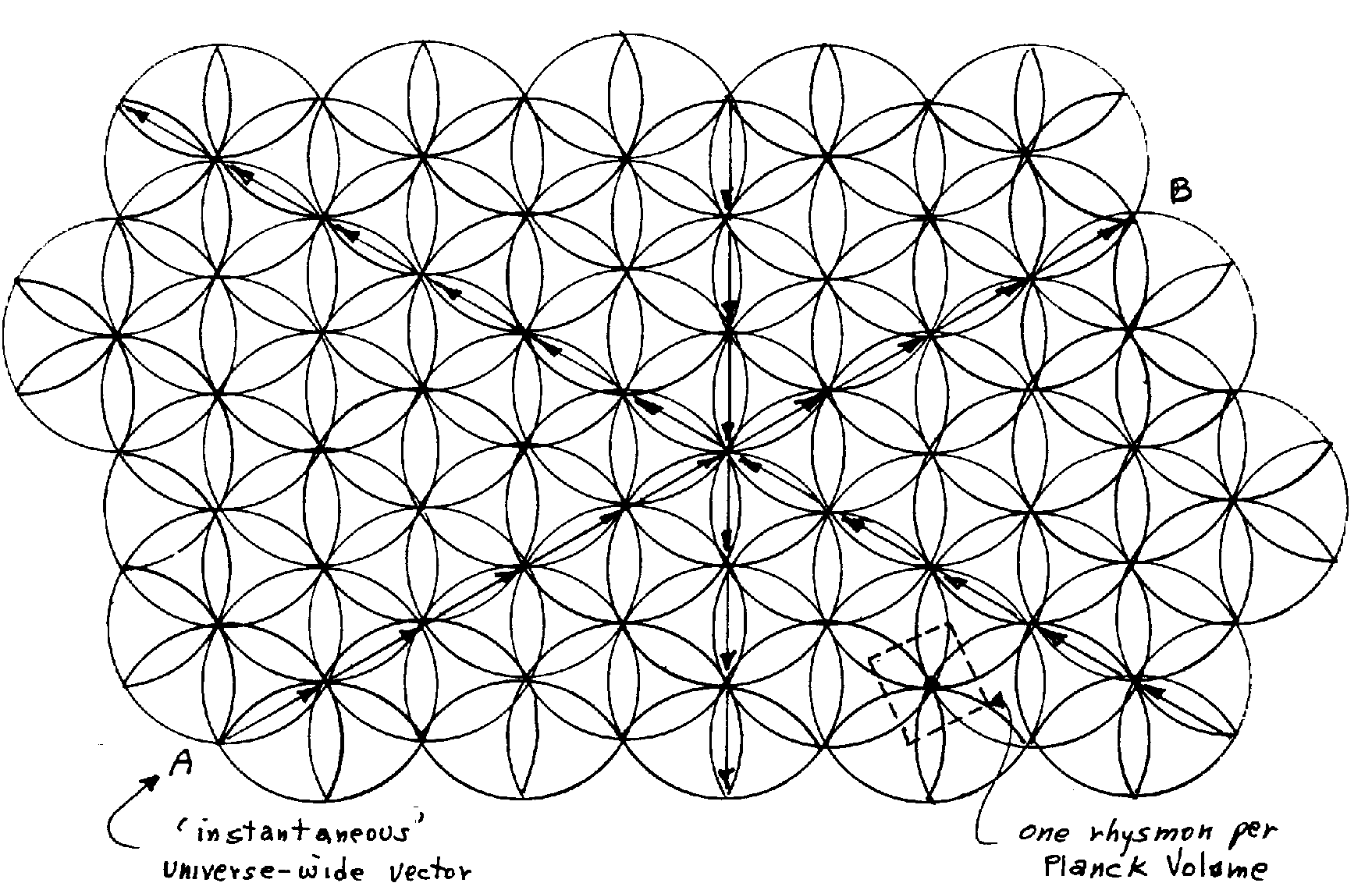
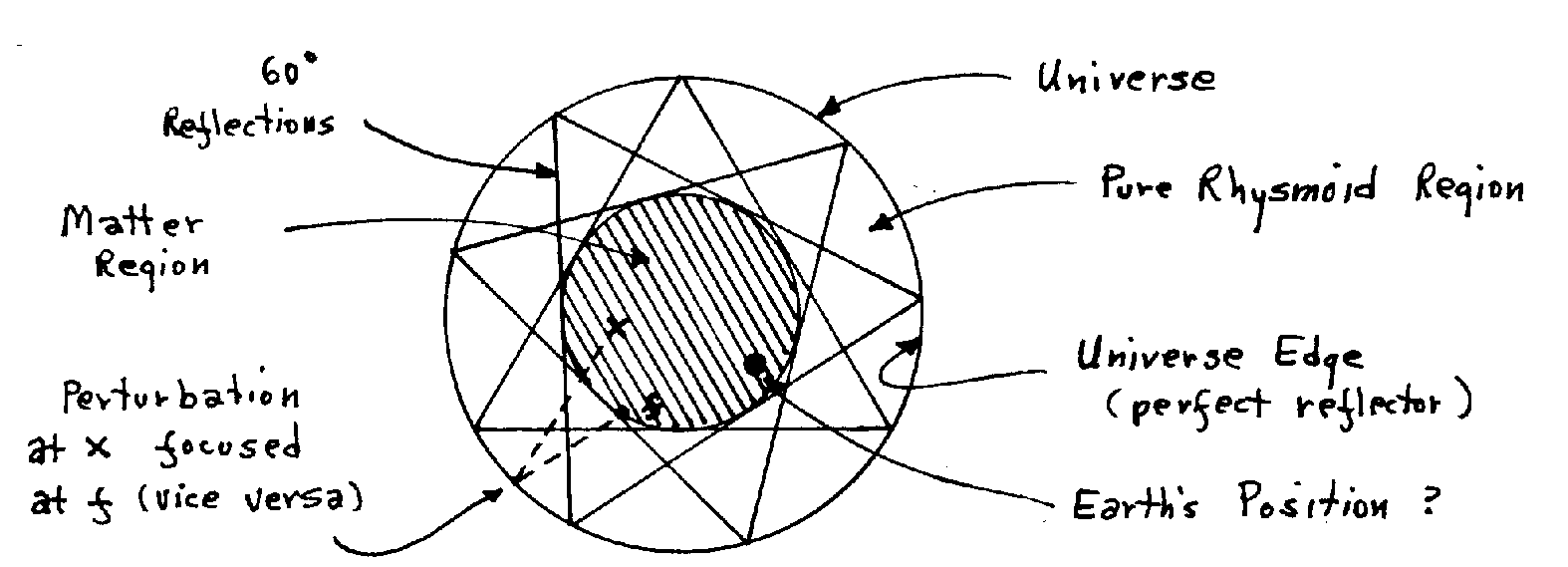
Rhysmonic Cosmology posits that scalar fields and aether-like structures generate low-frequency gravitational waves (G-waves) that modulate 1/f electronic noise. Specialized electronic circuits-dubbed G-Wave Detectors-are designed to resonate with these waves, amplify the modulation, and output audible or data signals. The theory links these effects to inertial and antigravity phenomena and suggests possible energy extraction from the ambient G-wave field.
Detailed Description
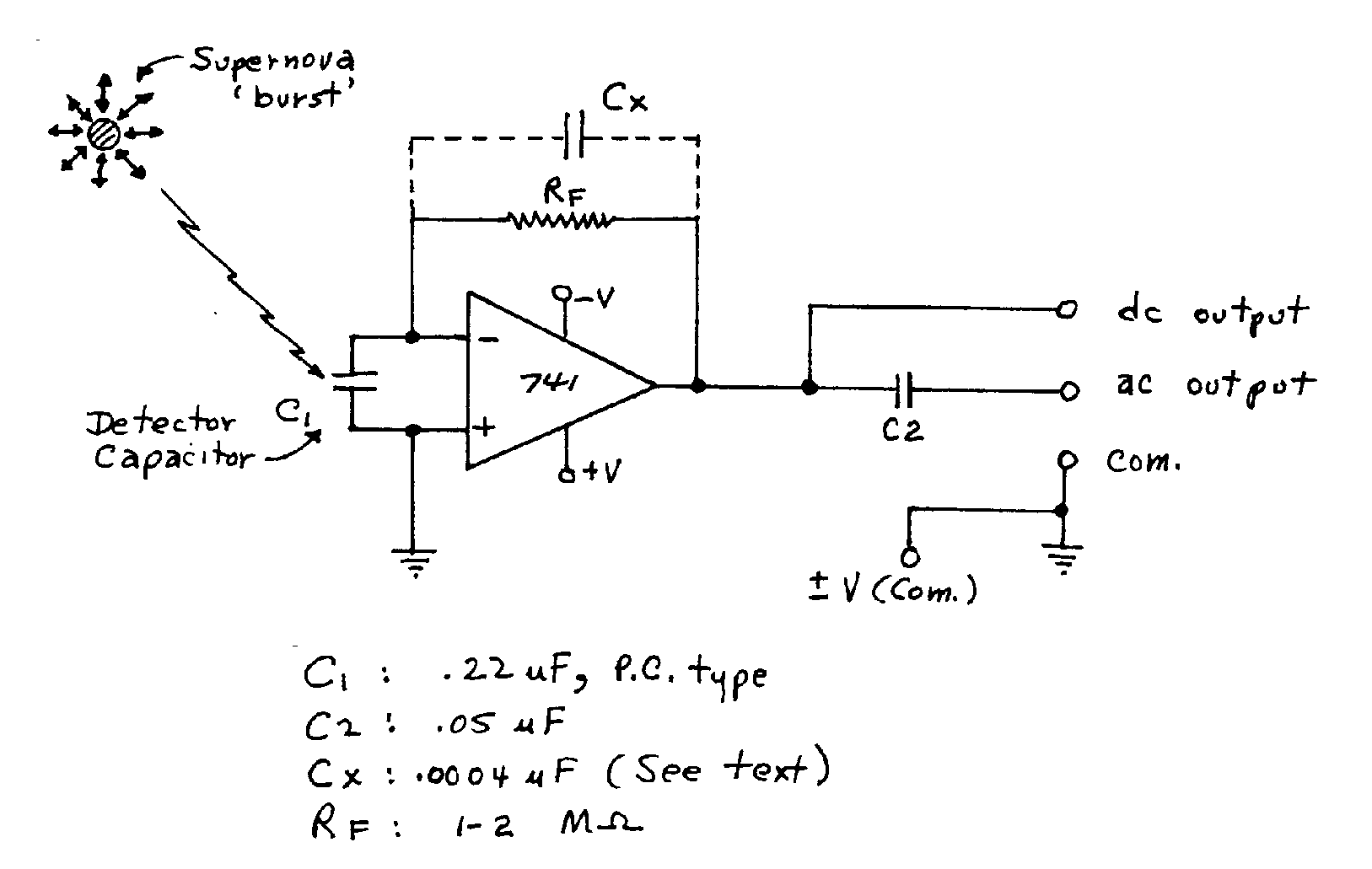
The index lists dozens of prototype circuits (e.g., Circuit #42, #500, #110-A, #1400-A, #1500, #2005, #600-A, #910, #930, #333-B, #10 000-B) that employ resistors, capacitors, inductors, transistors, and opto-isolators to create resonant pathways sensitive to low-frequency gravitational disturbances. Some designs incorporate optically-coupled detection, while others use differential amplifiers or noise-modulation techniques. Audio recordings (e.g., "Heart Chord F#AC", "Out of the Noise") are presented as the audible output of detected G-wave activity.
Principles
- Resonant detection of low-frequency gravitational waves
- Modulation of 1/f noise by mass and scalar fields
- Optical coupling for signal isolation
- Scalar-field interaction with electronic circuits
Scientific Domains
Materials
- Resistors
- Capacitors
- Inductors
- Transistors (e.g., ICL 7621)
- Semiconductor diodes
- Opto-isolators
- Printed circuit board substrate
Mechanisms of Action
- Circuit resonance with ambient G-wave frequencies
- Noise modulation caused by mass-induced scalar field variations
- Amplification of weak signals via differential amplifiers
- Conversion of modulated signals into audio or digital data
Energy Sources
Applications
- Gravitational-wave astronomy
- Low-cost detection of scalar-field phenomena
- Potential energy extraction from ambient G-waves
- Novel communication methods using G-wave modulation
Claimed Performance
Prototype circuits produce audible representations of cosmic G-wave activity and claim to detect continuous low-frequency gravitational background radiation.
Experimental Evidence
Multiple demo units and circuit schematics (e.g., "Demo Unit #500: QND Detector & Audio Oscillator", "Optically-Coupled GW Detector (Simplest) Circuit #42", "Simple GW Demo Unit Circuit #930") are documented with audio recordings and experimental notes.
Replication Status
The author reports building and testing numerous prototype circuits; no independent third-party replication is mentioned.
Limitations
- Lack of peer-reviewed validation
- Theoretical framework not widely accepted
- Sensitivity and noise-floor not quantified
- No independent replication of results
Red Flags
- Claims of free energy and antigravity effects
- Absence of published, peer-reviewed data
- Heavy reliance on anecdotal audio recordings