Goal
Provide a carbon-free, recyclable energy carrier for industrial heat and district heating while storing renewable electricity in solid form.
Problem
Need for large-scale, low-carbon energy storage and heat generation for industry and district heating networks; reliance on fossil fuels and the limits of electricity/hydrogen storage.
Concept Summary
Iron powder is combusted in a boiler, releasing heat and producing iron oxide (rust). The oxide is captured and later reduced back to iron powder using green hydrogen, completing a circular redox cycle that stores renewable energy in a dense, solid form.
Detailed Description
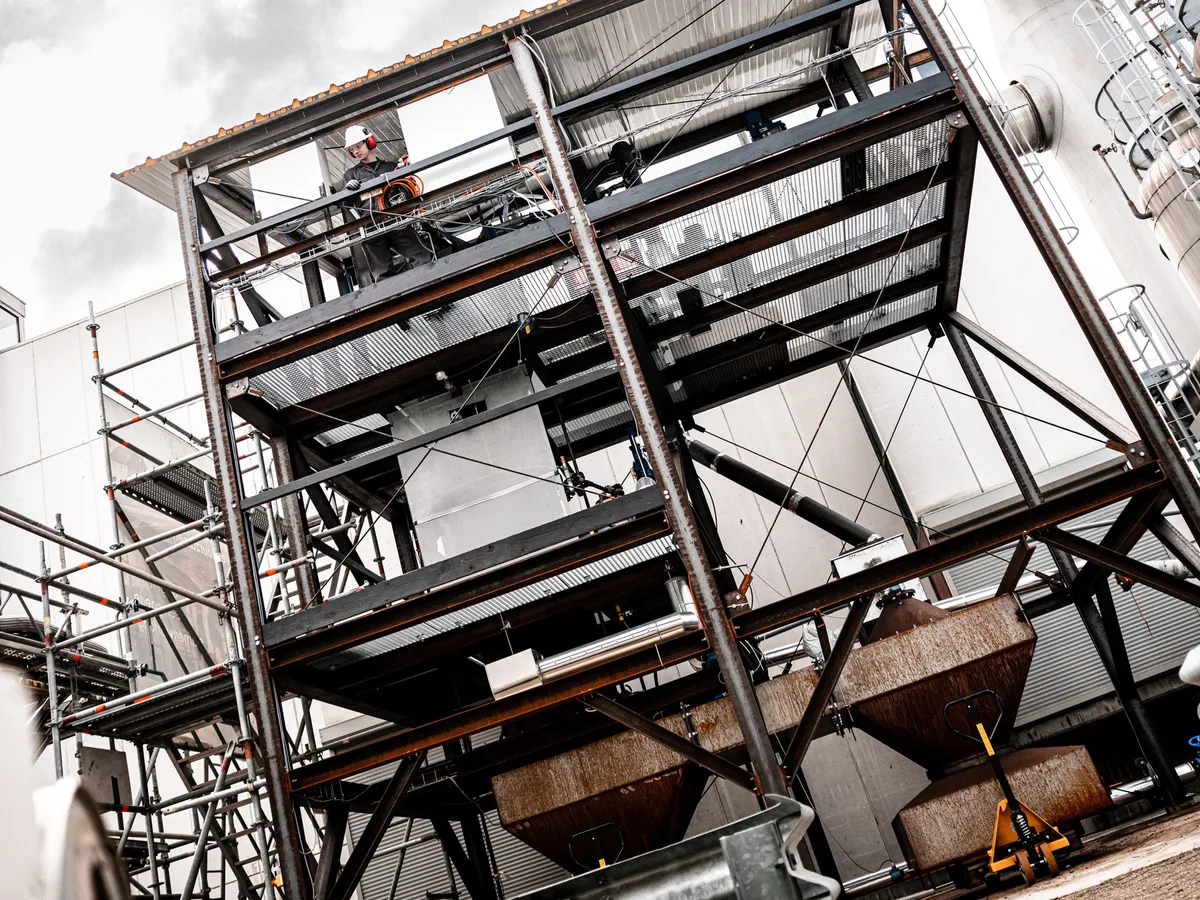
The system consists of two main loops. In the combustion loop, a suspension of iron powder and oxygen is burned in a specially designed burner, generating high-temperature heat for steam generation or direct process heat. The resulting iron oxide particles are separated and cooled below their sintering temperature before being collected. In the reduction loop, the oxide is mixed with green hydrogen (or other reducing agents such as carbothermal reduction) in a separate reactor, stripping oxygen and regenerating metallic iron powder. The regenerated powder is re-suspended and fed back to the boiler, enabling continuous operation. Pilot installations include a 1 MW boiler in Helmond (Netherlands) heating a brewery and a district-heating network for 500 households, with a planned 5 MW plant under development.
Principles
- combustion of metal powder
- redox (oxidation-reduction) cycle
- circular energy storage
- heat exchange
- hydrogen-driven reduction
Scientific Domains
Materials
- iron powder
- iron oxide (rust)
- hydrogen gas
Mechanisms of Action
- oxidation of iron to iron oxide releases heat
- reduction of iron oxide to iron using hydrogen stores energy
- heat transfer from hot oxide stream to boiler water/steam
Energy Sources
Applications
- Industrial process heat
- District heating
- Brewery heat
- Heavy-industry decarbonisation
- Long-duration energy storage
Claimed Performance
One cubic metre of iron fuel stores roughly the same energy as eleven cubic metres of high-pressure hydrogen; energy density ~= 11.3 kWh L^-^1; pilot 1 MW boiler operating for months; nanoparticle emissions reduced to < 0.3 % (factor-10 improvement).
Experimental Evidence
2020 demonstration at Swinkels brewery producing required heat; 500-household district-heating pilot in Helmond (2022); 1 MW plant scheduled for operation (2024); nanoparticle emissions cut by a factor of 10 to < 0.3 % with HEPA filtration.
Replication Status
Pilot boiler installed in Helmond, reduction plant in Arnhem; 2020 test at Swinkels brewery; 500-household heating pilot; 1 MW plant under construction; plans for 5 MW plant.
Limitations
- Relatively low specific energy density (weight) limits mobile applications
- Slow flame speed and ignition difficulty; natural-gas assist sometimes required
- Loss of iron as fine oxide nanoparticles
- Requires green hydrogen for reduction, adding complexity
- Transport logistics favour bulk shipment (ship/train) over road