Goal
Demonstrate that biophotons can act as neural communication signals and develop a detection method for biophotonic activity in neural tissue.
Problem
Uncertainty whether biophoton signaling exists in neural cells and lack of a method to detect such signals.
Concept Summary
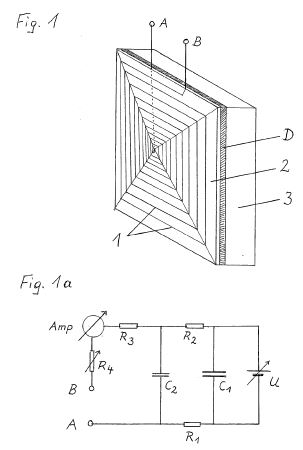
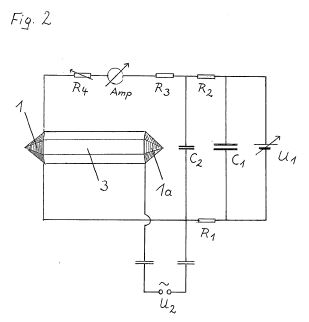
The study introduces an in-situ biophoton autography technique that uses spectral light stimulation (infrared, red, yellow, blue, green, white) on one end of isolated rat spinal nerve roots and measures the resulting biophotonic emission at the opposite end. Increased photon activity is observed, and the effect can be blocked by procaine or metabolic inhibitors, suggesting that light-induced biophotons travel along neural fibers, possibly via protein-protein biophotonic interactions.
Principles
- Photon emission from living tissue
- Coherent biophoton fields
- Protein-protein biophotonic interactions
Scientific Domains
Materials
- LED light sources
- Procaine
- Metabolic inhibitor compounds
Mechanisms of Action
- Light-induced generation of biophotons
- Propagation of biophotons along neural fibers
- Inhibition of propagation by procaine (neural block) and metabolic inhibitors
Energy Sources
Applications
- Neurodiagnostic research
- Fundamental studies of neural signaling mechanisms
- Potential medical diagnostic tools
Claimed Performance
Significant increase in biophotonic activity at the opposite end of the nerve root upon light stimulation; the increase is markedly reduced by procaine or metabolic inhibitors.
Experimental Evidence
In vitro experiments on rat spinal nerve roots showed that illumination with various wavelengths produced a measurable rise in photon emission at the far end, which could be suppressed by regional anaesthetic (procaine) or metabolic blockers.
Replication Status
Reported in a single peer-reviewed study; no independent replication or scaling reported.
Limitations
- Experiments performed only in vitro on rat tissue
- No in vivo or human data
- Mechanistic details remain speculative
Red Flags
- Lack of independent replication
- Interpretation of photon emission as communication may be overstated