Goal
Enable thought transmission (telepathy) and ultra-long-range telecommunications via generation and detection of gravitational waves.
Problem
Absence of a practical method for transmitting information (including thoughts) over very long distances using gravitational waves.
Concept Summary
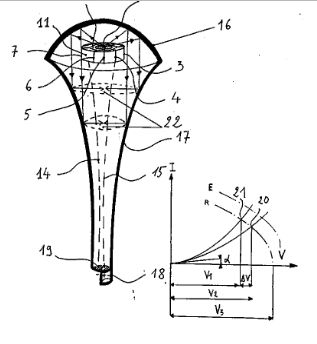
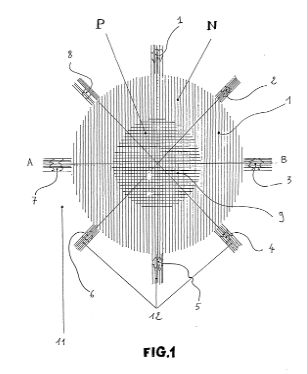
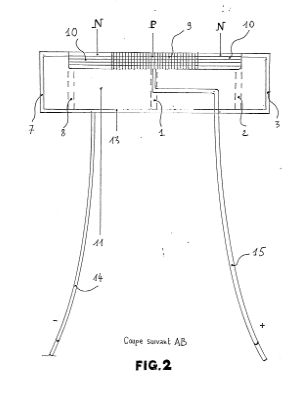
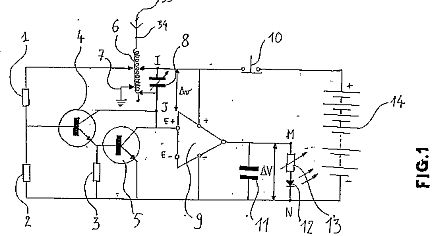
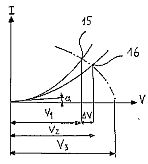
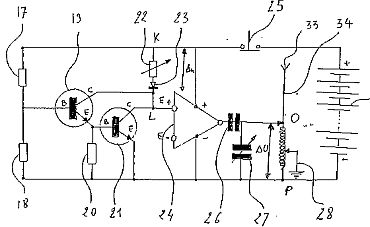
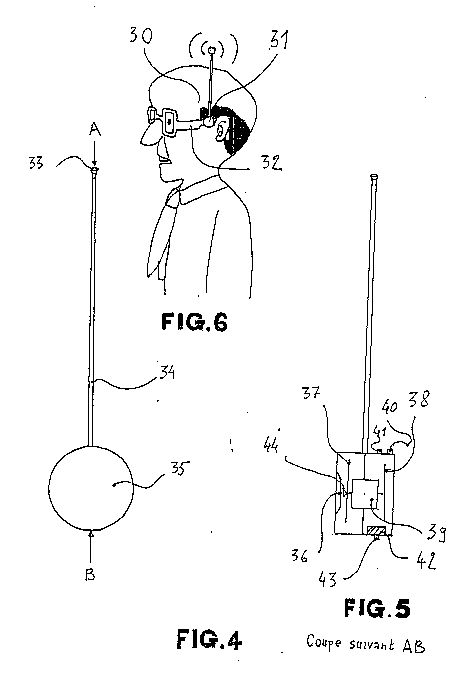
The invention describes a wearable transmitter/receiver that uses an elongated gravito-diode as an antenna. The gravito-diode is formed by juxtaposing a strongly electropositive element (e.g., francium, cesium, rubidium) with an electronegative semiconductor (silicon or germanium doped with antimony). When a gravitational wave passes, it perturbs the electron orbit in the electropositive element, producing a weak electrical current that is amplified by a Darlington transistor stage. Conversely, a sufficiently strong electrical current applied to the diode is claimed to emit a gravitational wave. The device is powered by a 9 V battery and includes standard electronic components (receiver/transmitter ICs, selector switch, light-diode indicator).
Principles
- Gravitational wave detection and emission
- Diode-like behavior of electropositive/electronegative material junction
- Amplification via Darlington transistor assembly
- Variable capacitance tuning of antenna resonance
- Use of radioactive electropositive elements for high electropositivity
Scientific Domains
Materials
- Francium (radioactive alkali metal)
- Cesium
- Rubidium
- Silicon crystal doped with antimony
- Germanium crystal doped with antimony
- Ceramic or plastic insulating substrate
- Zirconolite CaZrTi207
- Perovskite CaTiO3
Mechanisms of Action
- Gravitational wave alters electron orbit in electropositive element -> weak current
- Weak current amplified by Darlington transistors and operational amplifiers
- Strong electrical current through gravito-diode purportedly generates a gravitational wave
- Variable capacitance circuit tunes antenna to desired gravitational frequency
- Antenna (elongated gravito-diode) radiates/receives gravitational waves
Energy Sources
Applications
- Human telepathy communication
- Spacecraft long-range data transmission
- Medical psychoanalysis and brain studies
Claimed Performance
Allows telepathy (thought transmission) and telecommunications at very long range, including space-vehicle communication.
Limitations
- Requires highly radioactive elements (e.g., francium) posing safety hazards
- No quantitative performance data provided
- Conversion efficiency between electrical and gravitational energy is unverified
- Device relies on speculative physics not accepted by mainstream science
Red Flags
- Use of radioactive francium and associated radiation shielding
- Extraordinary claims (telepathy, free-space gravitational communication) without experimental validation
- Potential health and regulatory hazards
- Lack of peer-reviewed evidence or independent replication