Goal
Generate hydrogen-rich gas onboard vehicles to reduce emissions and improve engine efficiency.
Problem
High NOx, CO and hydrocarbon emissions from internal-combustion engines using conventional hydrocarbon fuels.
Concept Summary
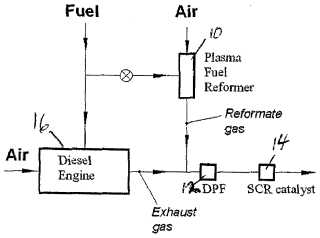
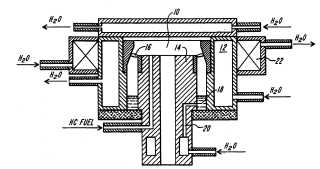
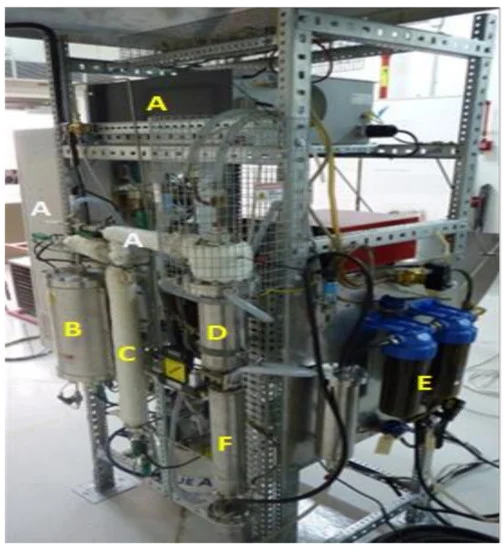
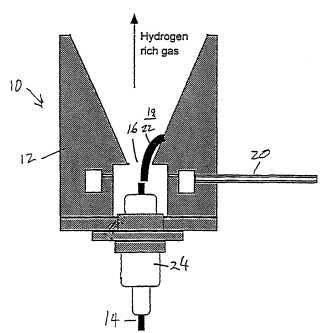
A compact, electrically heated plasma (plasmatron) converts hydrocarbon fuels (gasoline, diesel, bio-fuels, etc.) into a hydrogen-rich gas (H_2/CO mixture). The plasma is generated by a gliding-arc or glow-discharge electrode system powered by electricity from a generator driven by the engine. The hydrogen-rich gas can replace or augment the fuel in the engine, allowing very lean combustion and large reductions in pollutants. The system is designed for rapid on-demand operation, low power consumption (~=3-5 % of fuel heating value), and scalability to industrial power levels (10-15 kW).
Principles
- Electrical discharge plasma heating
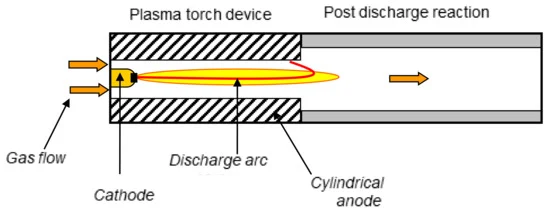
- Non-thermal gliding-arc plasma
- Partial oxidation of hydrocarbons
- Rapid response to electrical input
- Catalytic effect of plasma-generated active species
Scientific Domains
Materials
- Tungsten alloy electrodes
- Hafnium metal
- Lanthanated tungsten alloy
- Ceramic insulators
- Metal housing and flow channels
Mechanisms of Action
- High-energy electrons from the discharge break C-H bonds in the fuel
- Ionized species promote partial oxidation, yielding H_2 and CO
- Rapid heating of the gas stream creates a volumetric plasma discharge
- Generated syngas is fed directly to the combustion chamber
Energy Sources
Applications
- On-board hydrogen production for low-emission vehicles
- Industrial syngas generation from natural gas, coal, biomass
- Rapid-response fuel processing for engine start-up
Claimed Performance
NOx reduction by a factor of 10-100; hydrogen content of syngas up to 25-27 % vol; specific energy requirement 0.25 kW*h/m^3 of syngas; power consumption <5 % of fuel heating value; response time <=1 s.
Experimental Evidence
Preliminary laboratory tests on gasoline, diesel, iso-octane and bio-fuels showed hydrogen-rich gas production; scaling up of gliding-arc plasmatrons to 10-15 kW demonstrated efficient syngas generation from methane and biomass; electrode erosion tests identified lanthanated tungsten alloy as superior to hafnium.
Limitations
- Electrode lifetime and erosion under high-temperature plasma
- Energy penalty of powering the plasma (must be offset by efficiency gains)
- Complex control of gas composition and flow rates
- Scaling from laboratory prototypes to commercial power levels
Red Flags
- Performance claims (e.g., NOx reduction factor 100) are based on limited laboratory data
- No independent third-party replication reported
- Potential for overstatement of overall vehicle efficiency gains