Goal
Generate large amounts of heat and electricity from low-energy nuclear reactions (LENR) using inexpensive materials.
Problem
Need for cheap, clean, and abundant energy sources to replace fossil fuels and reduce greenhouse-gas emissions.
Concept Summary
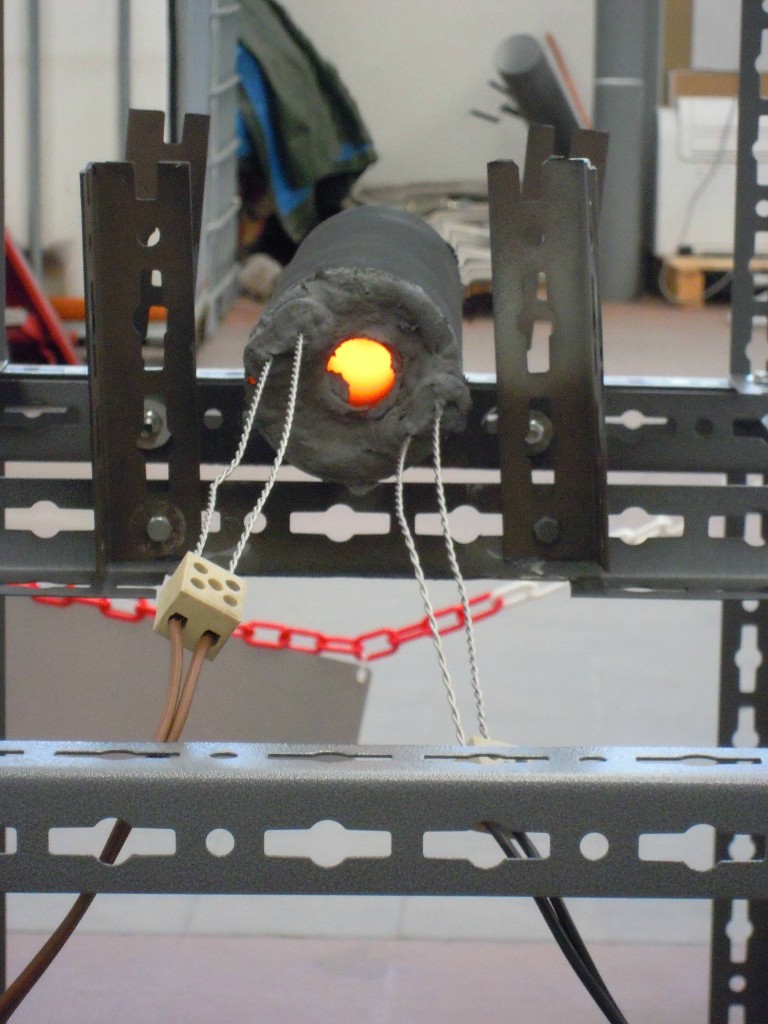
The Energy Catalyzer (E-Cat) is a claimed low-energy nuclear reaction (LENR) device that combines powdered nickel, hydrogen (and sometimes lithium or lithium aluminum hydride) inside a heated metal tube. An external electromagnetic stimulation is applied, allegedly causing transmutation of nickel to copper and releasing excess heat far beyond the electrical input. The device is presented as a compact, low-cost source of thermal or electrical power.
Detailed Description
Patent documents describe a tube filled with nickel powder that is heated to 150-500 deg C while hydrogen at 2-20 bar is injected. The reactor's internal cylinder is about 30 mm in diameter and 330 mm long, surrounded by an external cylinder of 90 mm diameter. The process is said to require an external energy source (electrical stimulation) to 'catalyze' the reaction. Some versions also incorporate lithium, lithium aluminum hydride, or ceramic coatings containing titanate groups with strontium or nickel. The claimed output is heat (up to megawatt scale) and, in certain configurations, electricity generated via thermoelectric or vacuum-diode mechanisms. Demonstrations reported include a 1 MW thermal plant in Bologna (2011) and a 3 kW unit tested on a vehicle in 2024, but independent, peer-reviewed verification is lacking.
Principles
- Low-energy nuclear reactions (LENR) / cold fusion
- Hydrogen loading into nickel lattice
- Electromagnetic stimulation / energetic stimulation
- Nucleon polarizability
- Meson-exchange long-range strong force
Scientific Domains
Materials
- Nickel powder
- Hydrogen gas
- Lithium
- Lithium aluminum hydride (LaAlH4)
- Ceramic coating with titanate group (strontium/nickel)
- Tungsten-hafnium alloy (electron gun)
- Quartz or metal hollow casing
Mechanisms of Action
- Hydrogen diffusion into nickel powder
- Transmutation of nickel to copper
- Excess heat release from nuclear processes
- Electrical stimulation to trigger reaction
- Thermoelectric conversion of heat to electricity
Energy Sources
Applications
- Industrial heat generation
- Electricity generation for grid or off-grid use
- Vehicle propulsion (electric-assist)
- Portable power units
Claimed Performance
Excess heat far beyond electrical input; 1 MW thermal plant claimed in 2011; 3 kW unit demonstrated on a vehicle in 2024; heat-to-electricity conversion claimed to be >100 % efficiency.
Experimental Evidence
Several proprietary tests and demonstrations are reported (e.g., 2011 Bologna plant, 2024 Latina racetrack test, 2024 Twizy vehicle integration). No peer-reviewed, independently replicated data are presented.
Replication Status
Claims of operation exist, but no independent verification or reproducible experiments have been documented.
Limitations
- Lack of independent, peer-reviewed verification
- Proprietary "secret" stimulation method
- Patent granted without technical examination
- Potential violation of established physics
Red Flags
- Patent issued without technical examination
- Numerous claims of defying known physics
- Heavy reliance on undisclosed proprietary stimulation
- Mixed or contradictory test reports