Goal
Maintain level flight and correct pitch and sideslip in tailless gliders
Problem
Instability of pitch and sideslip in aircraft lacking conventional tail surfaces
Concept Summary
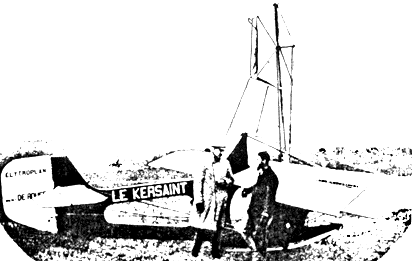
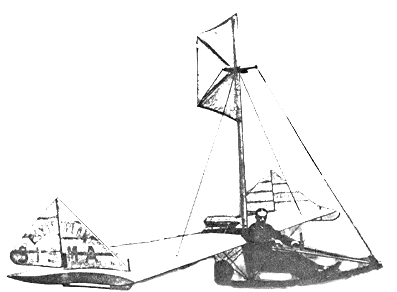
A mast mounted above the wing carries two hinged vanes that can be folded flat or spread sideways by the pilot. By adjusting the vanes, aerodynamic forces are generated that counteract forward pitch and sideslip, keeping the aircraft level. Wing-tip rudders provide yaw steering.
Detailed Description
The invention consists of a vertical mast positioned above the wing of a glider. At the top of the mast are two aerodynamic vanes hinged at their base. The pilot controls a hexagonal lever attached to the mast; moving the lever opens the vanes outward, creating lift-derived forces that push the nose upward and counteract sideslip. Closing the lever folds the vanes flat, reducing the corrective force. Additional rudders mounted on the wing tips are linked to the same control system to provide yaw steering. The system was demonstrated on a tailless glider in early 1930s test flights, where it successfully kept the aircraft level.
Principles
- Aerodynamic lift
- Stability control
- Control surface deflection
- Pitch correction
- Sideslip correction
Scientific Domains
Materials
- Wood
- Aluminum
- Fabric
Mechanisms of Action
- Aerodynamic force generation by hinged vanes
- Pilot-actuated hinge movement
- Deflection of wing-tip rudders for yaw control
Energy Sources
Applications
- Glider stabilization
- Tailless aircraft control
- Light aircraft stability
Claimed Performance
Successful in its first test flights; the device kept the glider level and corrected pitch and sideslip as directed by the pilot.
Experimental Evidence
Popular Science reported that the glider with the device performed successful first test flights, demonstrating level flight and controllable pitch changes.
Replication Status
Single prototype tested; no independent replication reported.
Limitations
- Added weight and drag from the mast
- Complex pilot control mechanism
- Effectiveness limited to specific aircraft geometries