Goal
To slow or halt biological aging and treat age-related diseases by reducing mitochondrial reactive oxygen species (ROS).
Problem
Oxidative damage caused by mitochondrial ROS that contributes to cellular senescence, age-related diseases, and impaired wound healing.
Concept Summary
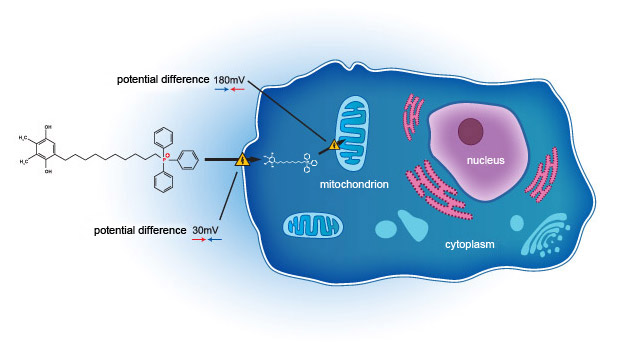
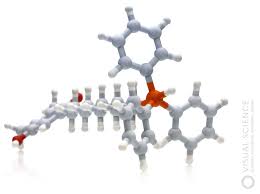
SkQ1 is a mitochondria-targeted antioxidant composed of a penetrating cation (triphenylphosphonium) linked to a plastoquinone antioxidant moiety. The cation drives the molecule across lipid bilayers by the mitochondrial membrane potential, concentrating it inside mitochondria where it scavenges ROS and protects lipids, proteins, and DNA from oxidative damage. Pre-clinical studies show lifespan extension, vision restoration, and accelerated wound healing at nanomolar doses.
Detailed Description
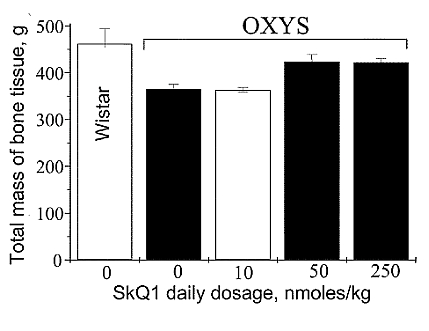
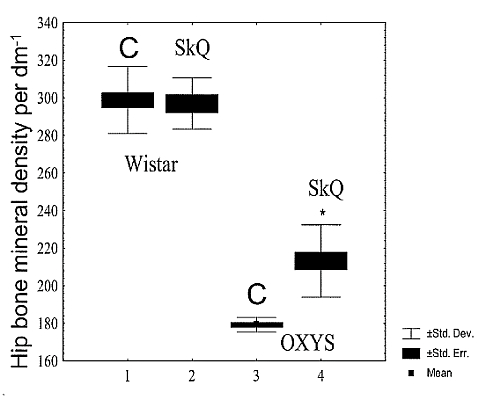
The SkQ1 molecule combines a lipophilic cation (triphenylphosphonium) with an antioxidant (plastoquinone) via a decyl linker. Because mitochondria have a large negative interior potential, the positively charged SkQ1 accumulates up to >1000-fold inside the organelle. At sub-micromolar concentrations SkQ1 acts as an antioxidant, being reduced by the respiratory chain and then re-oxidized, thus repeatedly scavenging ROS. In cell culture, nanomolar SkQ1 prevents H_2O_2-induced apoptosis. In animal models (mice, rats, Drosophila, crustaceans), chronic administration prolongs lifespan, reduces incidence of cataract, retinopathy, osteoporosis, and improves cardiac and renal outcomes after ischemic injury. Topical eye-drop formulations (250 nM SkQ1) restored vision in 67 of 89 blind animals. Wound-healing studies demonstrated faster granulation, reduced neutrophil infiltration, and enhanced re-epithelialization in mice and rats.
Principles
- Electrophoretic accumulation driven by mitochondrial membrane potential
- Targeted delivery of antioxidant to mitochondria
- ROS scavenging and inhibition of lipid peroxidation
- Rechargeable antioxidant cycle via respiratory chain
Scientific Domains
Materials
- Plastoquinone
- Triphenylphosphonium
- Decyl linker
- SkQ1 compound (10-(6'-Plastoquinonyl)decyltriphenyl-phosphonium)
Mechanisms of Action
- Mitochondria-targeted antioxidant activity
- Scavenging of superoxide and other ROS
- Protection of cardiolipin and mitochondrial membranes
- Modulation of apoptosis and inflammation pathways
Applications
- Anti-aging therapeutics
- Ophthalmic drug for retinopathy, cataract, glaucoma
- Topical wound-healing agents
- Cardiovascular and neurodegenerative disease mitigation
- General oxidative-stress reduction
Claimed Performance
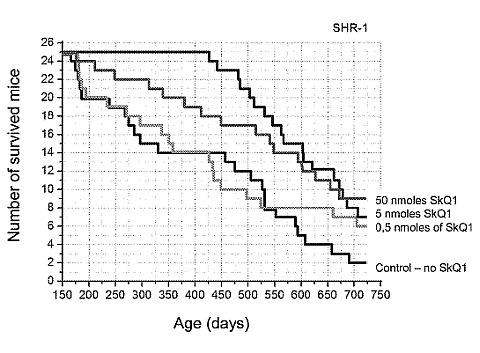
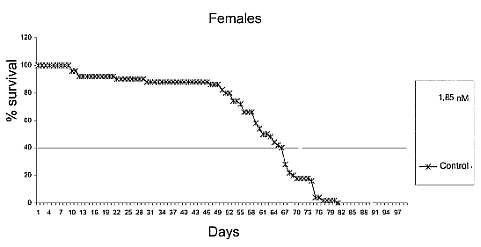
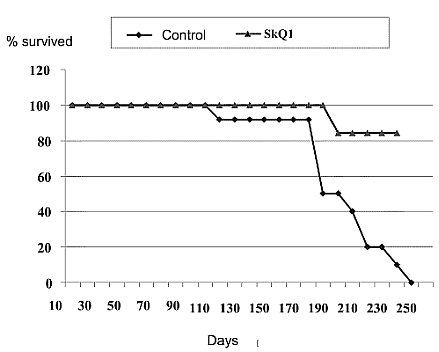
Nanomolar SkQ1 prevented cardiolipin oxidation, prolonged lifespan in mice and Drosophila, restored vision in 67 of 89 blind animals, and accelerated wound healing by >30 % in mice (earlier granulation and re-epithelialization).
Experimental Evidence
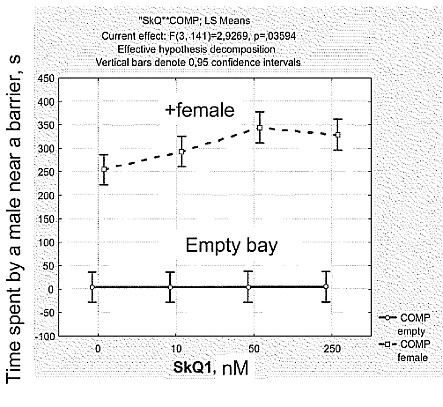
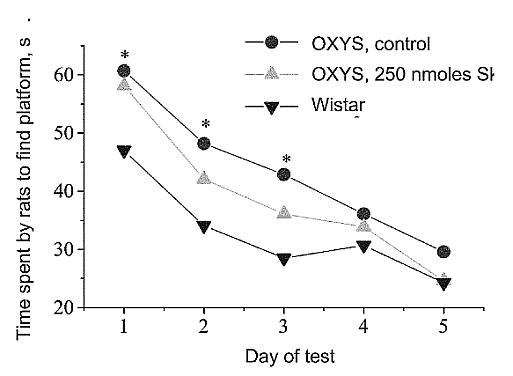
Multiple peer-reviewed studies (Biochim Biophys Acta 2009; Biochemistry (Moscow) 2010) report in-vitro antioxidant activity, in-vivo lifespan extension, vision restoration, and wound-healing acceleration in rodents and other animals at nanomolar doses.
Limitations
- Efficacy demonstrated primarily in animal models and cell culture
- Long-term safety and optimal dosing in humans not yet established
- Potential toxicity at higher concentrations
- Regulatory approval pending
Red Flags
- Claims of "anti-aging" and "longevity" often attract hype and may overstate current evidence.
- Limited large-scale, double-blind human clinical trials reported.