Goal
Generate excess heat (near-free energy) and transmute metals into valuable isotopes at low temperature and pressure.
Problem
Need for a low-temperature, low-pressure nuclear energy source that avoids long-lived radioactive waste and can explain LENR observations.
Concept Summary
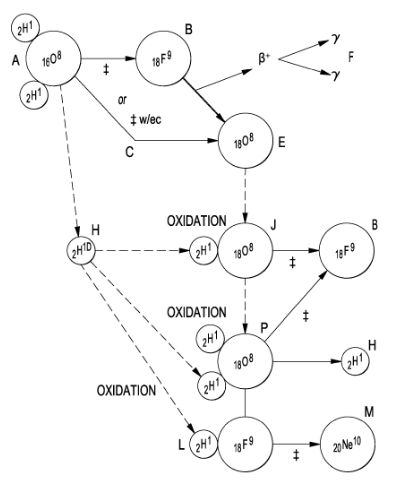
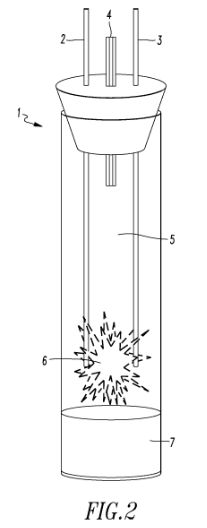
MOXY Fusion uses a negatively-charged, electron-rich environment with a metal (or metal oxide), a noble-gas moderator, and a facilitator element (e.g., O, C, N, F). The configuration reduces the Relative-Rate-of-Change (RRoC), lowering the Coulomb barrier and allowing low-energy nuclear transmutation between metal atoms and oxygen (or other facilitator elements), producing heat, gamma/X-ray radiation, and new elements such as gold.
Principles
- Negatively-charged environment
- Relative-Rate-of-Change (RRoC) reduction
- Electron-rich plasma
- Metal-oxygen transmutation
- Use of noble-gas moderator
Scientific Domains
Materials
- Metal oxides (e.g., TiO_2, FeO)
- Hydrogen isotopes (deuterium, heavy water)
- Noble gases (argon, neon, krypton, xenon, radon)
- Facilitator elements (O, C, N, F, P, S, Cl, Se, Br, I)
Mechanisms of Action
- Electron capture
- Positron emission and annihilation (gamma-photons)
- Fusion of metal isotopes with oxygen (or other facilitator elements)
- Lowering Coulomb barrier via high electron-to-baryon ratio
Energy Sources
Applications
- Portable low-temperature nuclear power
- On-site production of medical isotopes
- Synthesis of rare metals (e.g., gold)
Claimed Performance
Significant excess heat beyond electrical input, described as 'nearly free energy'; production of valuable metals such as gold and medically useful isotopes.
Experimental Evidence
The abstract reports detection of gamma- and X-ray radiation, alpha, beta, neutron, and proton emissions, as well as helium-4 and new elements in metal electrodes after experiments. The patent description mentions observable transmutation products and excess heat in a negatively-charged, noble-gas moderated reactor.
Limitations
- Requires high-voltage spark (>10 V, up to 5 kV)
- No independent replication reported
- Radiation by-products (gamma, X-ray) need shielding
- Scalability and long-term stability not demonstrated
Red Flags
- Extraordinary claim of 'near free energy' without peer-reviewed data
- Heavy reliance on anecdotal video and patent language
- Lack of independent verification or replication
- Potential for commercial hype