Goal
Regenerate missing or arrested teeth by neutralizing USAG-1 to restore BMP/Wnt signaling
Problem
Congenital tooth agenesis (hypodontia, oligodontia) and tooth loss
Concept Summary
The technology uses a monoclonal neutralizing antibody or an RNA-based molecule that blocks the USAG-1 protein, an antagonist of BMP/Wnt signaling. Ining USAG-1 inhibition re-activates dormant tooth buds, allowing them to develop into fully functional natural teeth. The approach is delivered locally (topically or via injectable formulation) and may be combined with bio-absorbable dental implants that accommodate growing teeth.
Principles
- Targeted molecular therapy
- Neutralization of USAG-1 to lift inhibition of BMP/Wnt pathways
- Activation of tooth germ development
Scientific Domains
Materials
- Humanized monoclonal antibody (IgG)
- siRNA / RNA oligonucleotide
- Cationic gelatin carrier
- Bio-absorbable polymer for implant body
Mechanisms of Action
- Monoclonal antibody binds USAG-1 and prevents its interaction with BMP/Wnt ligands
- siRNA or RNA molecule silences USAG-1 gene expression
- Resulting increase in BMP signaling triggers odontogenic stem cell differentiation
Applications
- Treatment of hypodontia and oligodontia
- Regeneration of teeth lost to trauma or disease
- Adjunct to dental implants that accommodate natural tooth growth
Claimed Performance
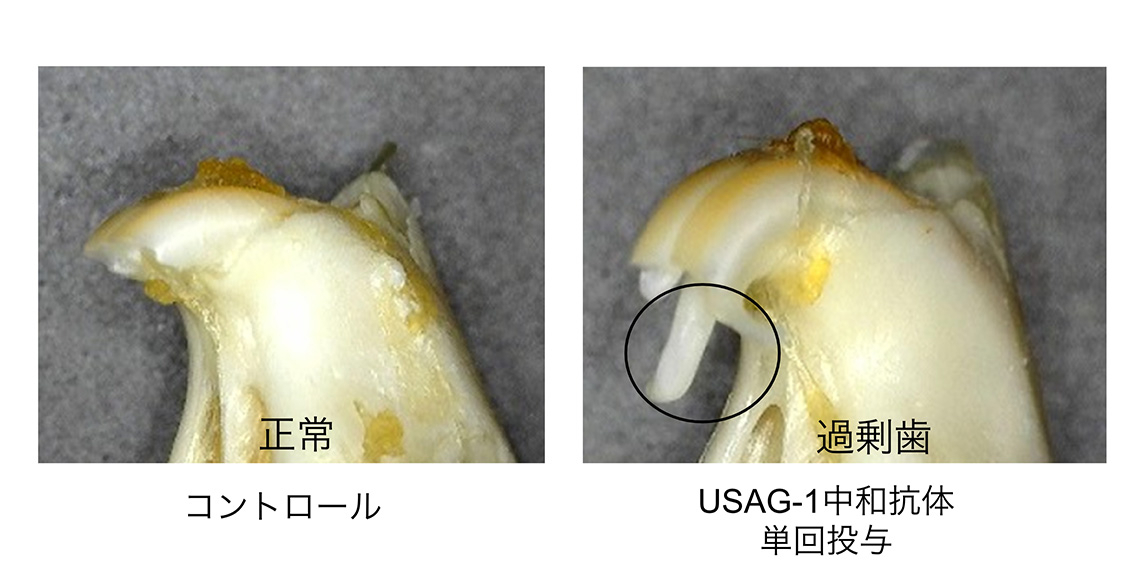
Regeneration of supernumerary teeth in USAG-1 knockout mice; rescue of arrested tooth germs in Runx2/Usag-1 double-knockout mice; humanized antibody ready for Phase 1 clinical trial.
Experimental Evidence
Mouse studies demonstrate that anti-USAG-1 neutralizing antibodies or USAG-1-targeting RNA restore tooth development in models of congenital agenesis. Patent filings describe formulation and pre-clinical data.
Replication Status
Pre-clinical mouse data published; Phase 1 trial protocol finalized; no independent replication reported.
Limitations
- Delivery to the appropriate tooth germ site is challenging
- Efficacy and safety in humans not yet demonstrated
- Potential immunogenicity of antibody or RNA carriers