Goal
Provide clean, limitless low-voltage power for small devices or sensors by harvesting thermal motion of freestanding graphene.
Problem
Need for battery-free, low-power energy sources for IoT sensors and other low-energy electronics; conventional belief that thermal (Brownian) motion cannot do work.
Concept Summary
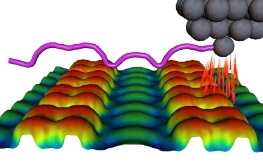
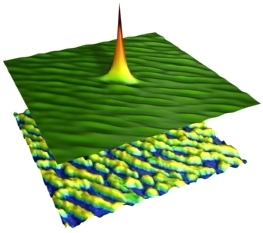
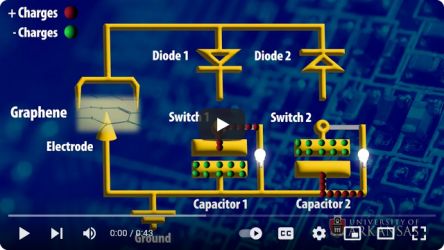
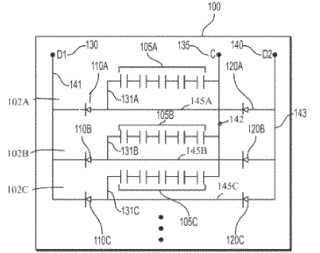
A freestanding graphene membrane exhibits rapid rippling due to thermal fluctuations. When incorporated into a circuit with two opposing nonlinear diodes, the induced alternating current is rectified into a pulsing direct current that can drive a load resistor or charge a capacitor. The system operates at a single temperature, avoiding violation of the second law of thermodynamics, and can theoretically deliver nanowatt-scale power continuously.
Principles
- Stochastic thermodynamics
- Brownian motion induced current
- Nonlinear diode rectification
- Thermal fluctuation harvesting
Scientific Domains
Materials
- Graphene (single-layer carbon sheet)
- Silicon wafer (for chip integration)
- Semiconductor diodes
- Capacitor (electrolytic or ceramic)
Mechanisms of Action
- Thermal fluctuation-induced alternating current in graphene
- Diode opposition creates pulsing DC output
- Capacitor charging from rectified current
Energy Sources
Applications
- Wireless sensor networks
- Smart meters
- Industrial IoT monitoring
- Environmental sensing
- Wearable fitness devices
Claimed Performance
Nanowatt-scale power output sufficient to run low-power sensors; potential to replace batteries in IoT devices.
Experimental Evidence
Demonstrated AC current generation from freestanding graphene; pulsing DC observed across a load resistor; successful charging of storage capacitors as reported in Physical Review E (2023).
Replication Status
Patents pending; licensed to NTS Innovations; no independent third-party replication reported.
Limitations
- Very low power density (nanowatts)
- Requires large arrays of devices for practical power levels
- Performance depends on graphene quality and membrane tension
- No demonstrated long-term stability or degradation data
Red Flags
- Claims of "limitless" power conflict with established thermodynamic principles
- Limited quantitative data; mostly qualitative descriptions
- Potential for over-optimistic commercial expectations