Goal
Regenerate missing congenital teeth (hypodontia, oligodontia) and support growth of newly forming teeth
Problem
Congenital tooth agenesis and loss of baby/permanent teeth that cannot be replaced by conventional implants without inhibiting natural tooth growth
Concept Summary
A therapeutic antibody that neutralizes the USAG-1 protein, an antagonist of the BMP/Wnt signaling pathway, thereby allowing tooth buds to develop and mature into functional teeth. The antibody is administered by vein injection; a complementary bio-absorbable dental implant can be placed above the growing tooth and resorbs as the tooth erupts.
Detailed Description
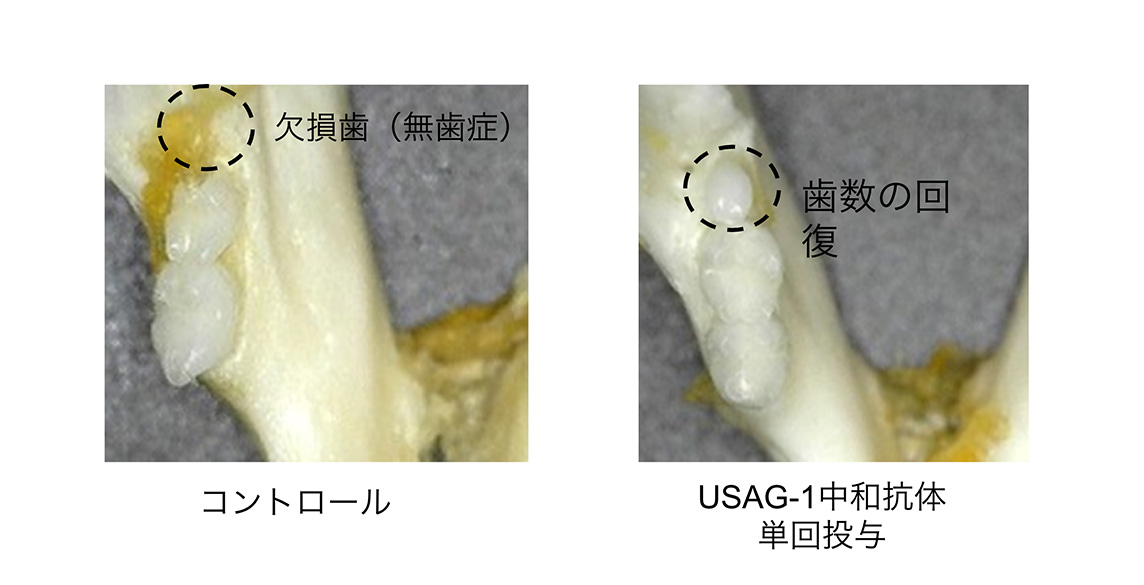
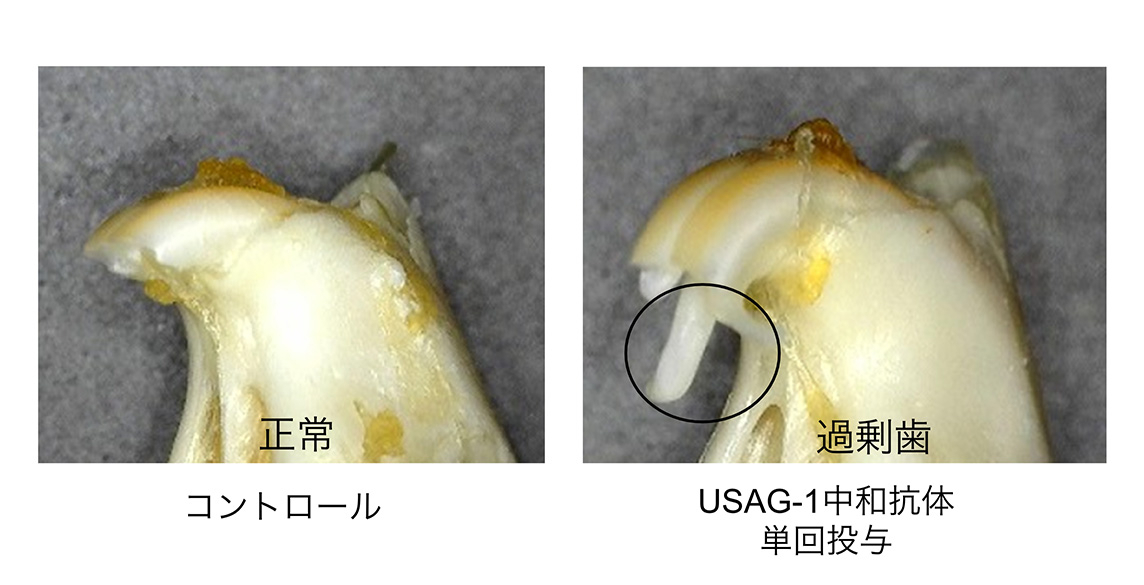
The research identified USAG-1 as a negative regulator of tooth development. Mice lacking USAG-1 develop extra teeth, and administration of an anti-USAG-1 neutralizing antibody restores tooth formation in congenital agenesis models. A humanized version of the antibody has been produced and is slated for Phase 1 clinical trials. In parallel, a dental implant body made of a bio-absorbable material is designed to sit above a newly growing tooth; the lower portion of the implant shortens as the tooth erupts, preventing interference with natural tooth development.
Principles
- Targeted protein inhibition
- BMP/Wnt pathway activation
- Neutralizing antibody therapy
Scientific Domains
Materials
- Recombinant anti-USAG-1 IgG antibody
- Bio-absorbable polymer (e.g., polylactic-co-glycolic acid)
- Titanium or ceramic abutment (optional)
- Apatite-based or ceramic superstructure material
Mechanisms of Action
- Anti-USAG-1 antibody binds USAG-1 protein
- Blocks USAG-1 antagonism of BMP/Wnt signaling
- Promotes proliferation and differentiation of dental stem cells
- Allows tooth bud maturation into functional teeth
Applications
- Treatment of hypodontia and oligodontia
- Dental restoration after premature loss of baby teeth
- Adjunct to regenerative tooth therapies
Claimed Performance
Fully functional teeth regrown in USAG-1-deficient mice; human clinical trials slated for 2025-2026 with goal of commercial rollout by 2030.
Experimental Evidence
Pre-clinical mouse studies demonstrated restoration of tooth formation after administration of anti-USAG-1 neutralizing antibodies; published in J Oral Biosci. 2024 Dec;66(4):1-9.
Replication Status
No independent replication reported; technology is entering Phase 1 human trials.
Limitations
- Efficacy and safety in humans not yet demonstrated
- Regulatory approval pending
- Manufacturing of humanized antibody at scale
- Potential immune reactions to therapeutic antibody