Goal
Reduce acoustic noise and improve safety of multirotor drones while maintaining comparable thrust.
Problem
High noise levels and safety hazards of conventional drone propellers that can cut or collide with objects.
Concept Summary
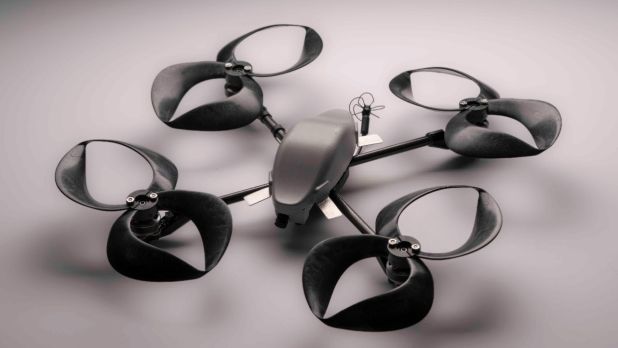
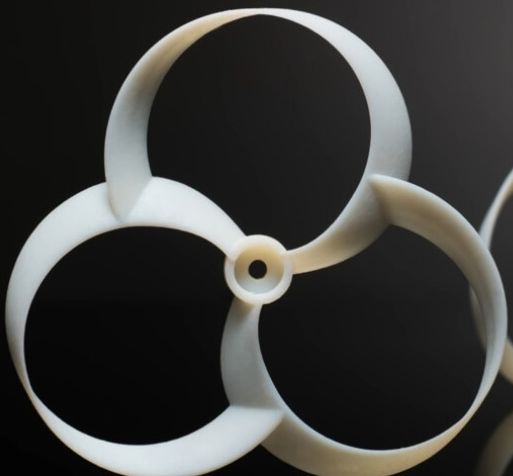
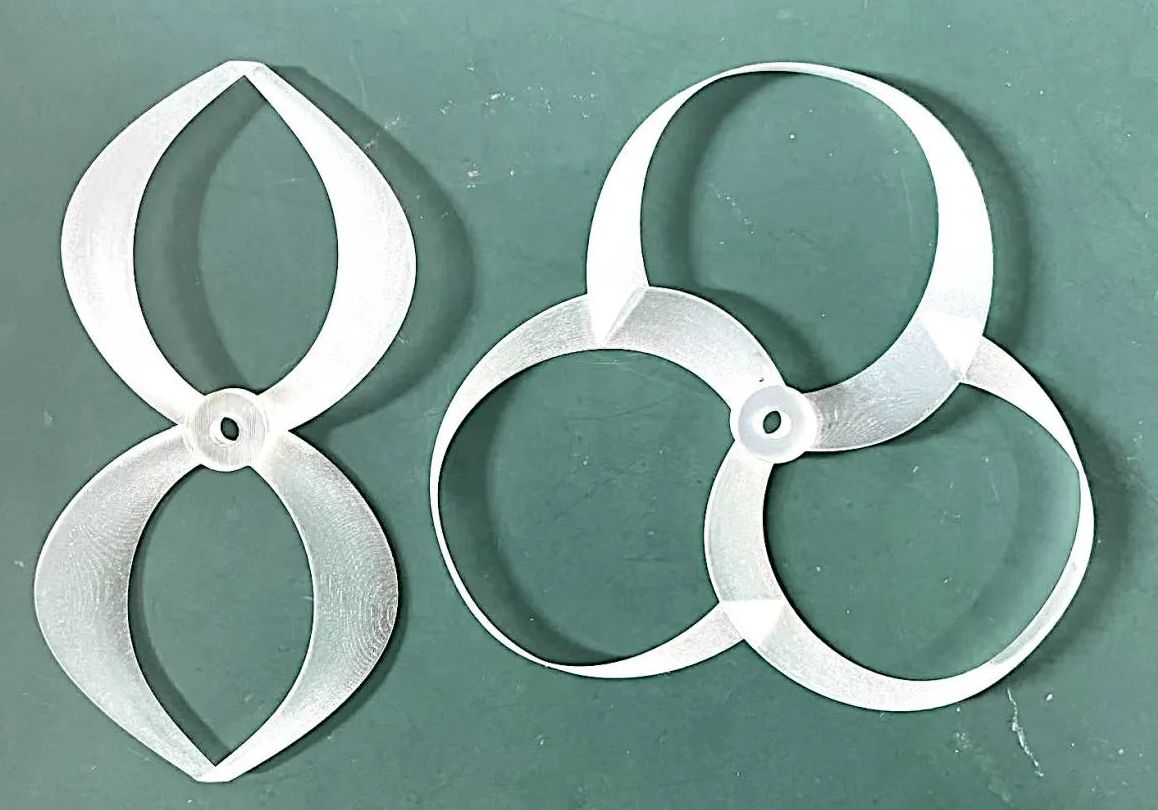
A closed-form toroidal propeller that curves the tip of a leading blade into contact with a trailing blade, creating a looped, stiff structure that reduces tip vortices and acoustic signature while delivering thrust comparable to conventional propellers.
Detailed Description
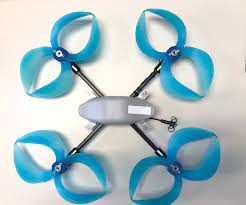
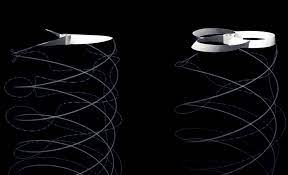
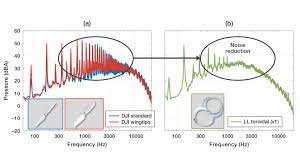
The toroidal propeller consists of a hub supporting multiple elongate blade elements whose leading-edge tips curve around to meet trailing-edge elements, forming a continuous loop. This geometry increases structural stiffness and encloses the rotating blades, which diminishes tip-vortex formation and thus lowers the frequency range most audible to humans. The design can be fabricated via additive manufacturing (e.g., PETG or PLA 3-D printing), allowing customization for various multirotor platforms. Test installations on commercial drones have demonstrated thrust comparable to standard propellers with a noticeable reduction in perceived noise.
Principles
- Aerodynamic loop
- Acoustic attenuation
- Structural stiffness through closed geometry
- Additive manufacturing customization
Scientific Domains
Materials
- PETG
- PLA
- Thermoplastic polymer
Mechanisms of Action
- Enclosing blade tips to suppress tip vortices
- Looped blade geometry increasing stiffness
- Reduced blade-air interaction noise
Applications
- Aerial delivery drones
- Cinematography UAVs
- Industrial infrastructure inspection
- Agricultural monitoring
- Quiet marine propellers for boats
- Electric flying taxis
- Computer cooling fans
Claimed Performance
Thrust comparable to conventional multirotor propellers while decreasing noise in the most human-sensitive frequency range.
Experimental Evidence
Toroidal propellers were installed on a commercial drone for testing; multiple videos demonstrate quieter operation and comparable lift.
Replication Status
Tested on a commercial drone (prototype level).
Limitations
- Manufacturing complexity for larger scales
- Material strength limits of 3-D printed plastics
- Limited quantitative performance data
- Potential durability concerns under high-speed operation