Goal
Stimulate growth and metabolism of fermentation microorganisms and exploit pyroelectric properties for potential industrial applications.
Problem
Low efficiency of fermentation processes and need for natural, low-cost stimulants; harnessing the electric fields generated by pyroelectric minerals.
Concept Summary
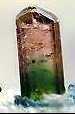
Tourmaline is a pyroelectric silicate mineral whose asymmetric anharmonic lattice vibrations generate surface electric fields when temperature changes. When fashioned into ceramic balls and added to microbial cultures, these electric fields (and associated pH adjustments) have been reported to enhance microbial growth, increase ethanol production, and boost enzyme activities, suggesting a biostimulant application in fermentation.
Principles
- Pyroelectricity
- Asymmetric anharmonic lattice vibrations
- Surface electric field generation
- pH self-control via ion release
- Ferroelectric effect
Scientific Domains
Materials
- Tourmaline (complex silicate of boron, aluminium, iron, magnesium, manganese, calcium, sodium, potassium, lithium, hydroxyl and fluorine)
Mechanisms of Action
- Temperature-induced shift of charge centers creates surface electric fields
- Electric fields stimulate microbial metabolism during lag phase
- Surface interactions modify pH and ion availability, enhancing substrate utilization
- Enhanced enzyme activity through altered cellular redox environment
Applications
- Fermentation industry
- Bioprocessing
- Potential low-cost biostimulant for microbial cultures
Claimed Performance
Growth increase of 34 % for S. cerevisiae, 32 % for L. acidophilus and 10 % for A. oryzae; ethanol production up 150 %; carbohydrate reduction up to 80 %; protease activity +90 %, amylase +31 %.
Experimental Evidence
A single laboratory study using 3, 6, 9 or 12 g of tourmaline ceramic balls in 50 ml cultures reported statistically significant stimulation of three microorganisms, with quantitative changes in growth, metabolite production and enzyme activity as detailed above.
Replication Status
Only reported in the cited 2008 study; no independent replication or scaling data provided.
Limitations
- Effect demonstrated only at laboratory scale (50 ml cultures)
- Mechanistic link between pyroelectric fields and microbial metabolism not fully elucidated
- No data on long-term durability or reuse of ceramic balls
- No commercial or industrial scaling reported