Goal
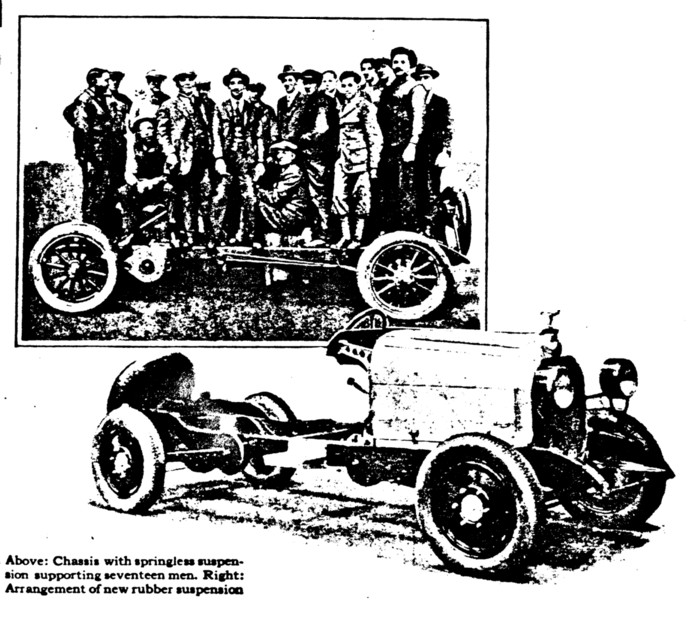
Eliminate traditional coil springs in vehicle suspension to reduce wear parts and lubrication requirements.
Problem
Wearing parts and maintenance associated with conventional spring suspensions in automobiles and trucks.
Concept Summary
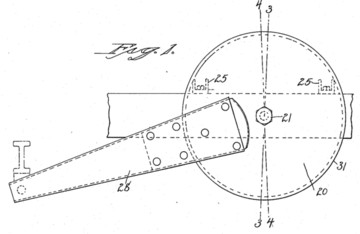
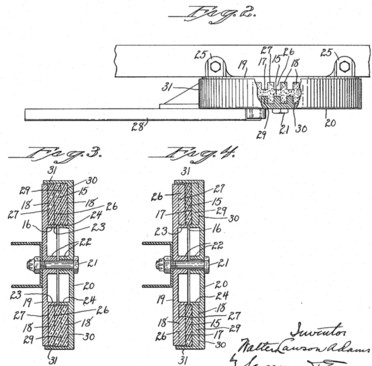
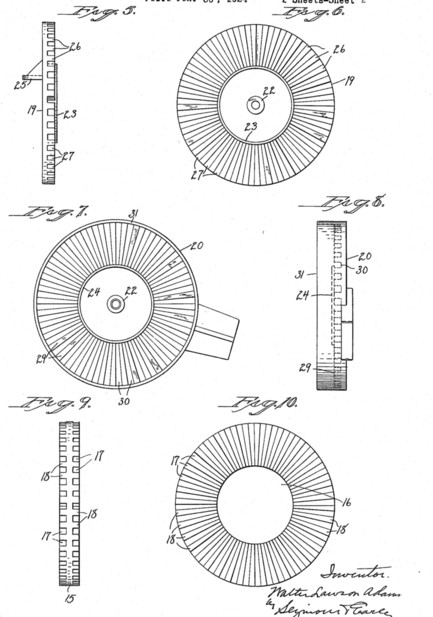
A pressed-steel cantilever arm with a drum at its end, paired with a steel disk having interlocking teeth. A rubber ring-shaped cushion with matching teeth is placed between the drum and disk. When a wheel encounters a bump, the rubber cushion is squeezed outward, providing spring-like compliance without the need for metal springs or lubrication.
Detailed Description
The invention replaces the conventional coil spring with a strong pressed-steel cantilever arm that pivots on the chassis. At the free end of the arm a drum with radially extending teeth is mounted. A steel disk, also toothed, is bolted to the chassis side rail. A bolt runs through the common axis of the drum and disk, and a rubber ring-shaped cushion with matching teeth is positioned between them. As the wheel moves over a road irregularity, the rubber cushion deforms outward, acting like a rubber band, absorbing the impact and returning energy as the wheel passes. No lubrication is required because the only moving interface is the rubber cushion against steel teeth.
Principles
- Elastic deformation of rubber
- Cantilever flexure
- Tooth interlocking for load transfer
Scientific Domains
Materials
- Steel
- Rubber
Mechanisms of Action
- Rubber compression and expansion
- Flexure of pressed-steel cantilever
- Mechanical interlocking of toothed surfaces
Applications
- Automobile suspension
- Truck suspension
Claimed Performance
Provides a springless suspension that eliminates the need for lubrication and reduces wear parts; claimed suitable for large trucks.
Limitations
- Long-term durability of the rubber cushion under repeated compression
- Potential wear of interlocking teeth
- No quantitative performance data provided