Goal
Produce super-heated steam with far lower external energy input than conventional boilers.
Problem
High energy and cost requirements for generating steam, especially super-heated steam, in power-generation and industrial processes.
Concept Summary
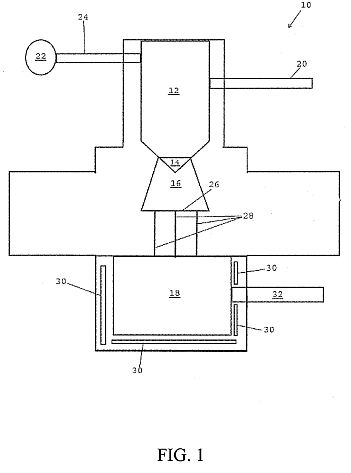
Water is injected at ultra-high pressure (10 000-30 000 psi) through piezo-type injectors. The resulting hypersonic water-jet (1 700-3 000 m/s) strikes a hard surface inside an impact chamber, causing an instantaneous phase transition from liquid to vapor (steam) without traditional boiling. The kinetic energy of the water clusters is claimed to be amplified on impact, releasing additional energy from hydrogen-bond disassociation, yielding output steam power that exceeds the electrical input.
Detailed Description
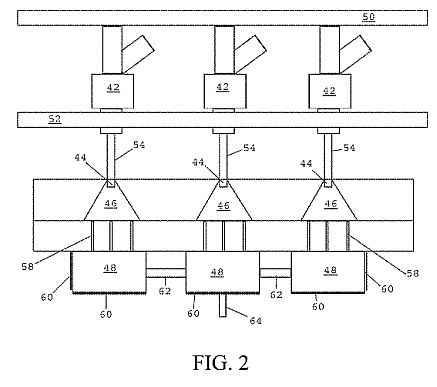
The system consists of a water source, a high-pressure injector (often a modified Ford diesel piezo injector with multiple orifices), an atomizer, an impact chamber with a hard contact surface, and an expansion chamber. Water pulses of 0.1-0.5 ml are injected at 10 000-29 000 psi, achieving velocities of 1 710-3 415 m/s. Upon impact, the water undergoes a virtually instantaneous phase change to steam, which is then expanded and can be used for cleaning, turbine drive, or other steam applications. Test data in the article claim conversion of 2 lb of water per minute into super-heated steam using a 10 HP motor (~=7.5 kWh) and delivering 1 139 W of steam power from only 124 W of electrical input, giving a cost of $0.00683 per pound of water. The inventor attributes the excess energy to the "bonding energy of water molecules" released during the ultra-fast impact (the so-called water-arc explosion or cluster electric effect).
Principles
- Hyper-sonic impact heating
- Mechanical conversion of kinetic energy to thermal energy
- Hydrogen-bond energy release on ultra-fast water-cluster impact
- Instantaneous phase transition upon impact
Scientific Domains
Materials
- Water
- Steel (impact chamber)
- Aluminum (injector components)
- Piezoelectric ceramic (injector actuator)
Mechanisms of Action
- High-pressure water jet impact on a hard surface
- Shock-wave generation and molecular fragmentation
- Rapid conversion of liquid to vapor (steam)
- Possible electro-chemical ionization (cluster electric effect)
Energy Sources
Applications
- Power generation
- Industrial cleaning
- Steam-driven turbines
- Heat-based processes
Claimed Performance
Output steam power of 1 139 W from 124 W electrical input (~=9x apparent efficiency); cost of steam generation $0.00683 per pound of water; steam temperature >= 299 deg F.
Experimental Evidence
The inventor reports "hundreds of tests" with a 10 HP motor, converting 2 lb /min of water to steam at 30 000 psi, measuring velocities up to 3 000 m/s and specific kinetic energies up to 4.5 MJ/kg. No independent peer-reviewed data are provided.
Limitations
- Requires ultra-high pressure (>=10 000 psi) and specialized injectors
- Potential safety hazards from high-pressure water jets
- No independent verification of claimed >100 % efficiency
- Possible material erosion of impact surface
Red Flags
- Claims of energy output exceeding input (possible violation of conservation of energy)
- Lack of peer-reviewed or independently replicated data
- Reliance on proprietary "water-arc explosion" mechanism not accepted by mainstream science