Goal
Provide a high-energy-density power source for autonomous underwater vehicles (UUVs) and super-cavitating propulsion systems.
Problem
Limited range and thrust of conventional rocket motors at depth; need for compact, high-power underwater propulsion.
Concept Summary
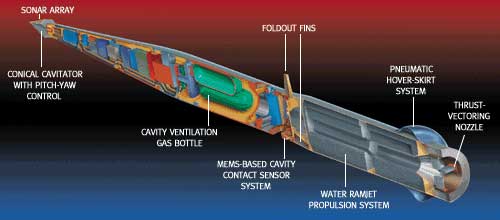
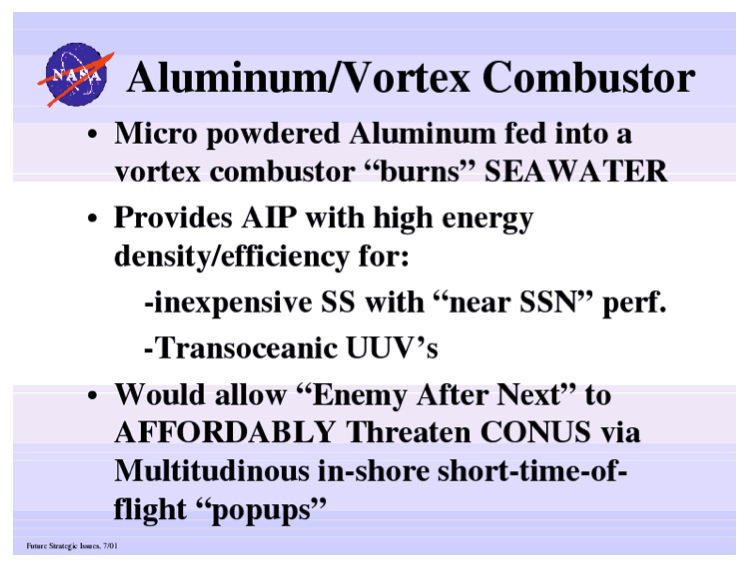
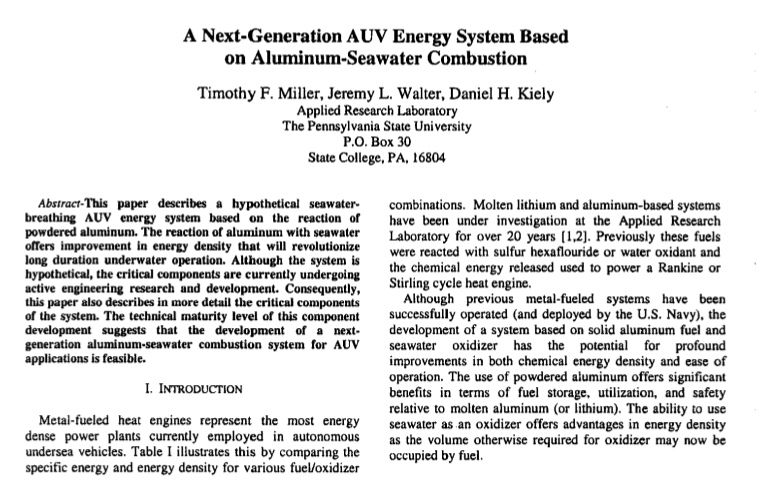
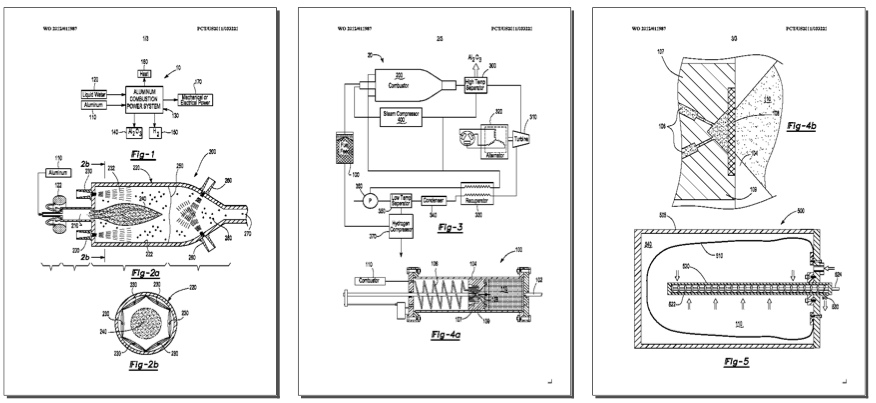
Aluminum powder is introduced into a high-speed vortex of seawater. The vortex fluidizes the metal, removes the surface oxide layer, and promotes rapid oxidation of Al with water, producing high-temperature steam and aluminum oxide. The steam expands through a turbine-driven propeller screw or a rocket nozzle, generating thrust. The system can be cycled by recycling water and hydrogen gases.
Principles
- Exothermic oxidation of aluminum with water
- Vortex fluid dynamics for particle mixing
- Steam generation and expansion
- Turbine-driven propulsion
Scientific Domains
Materials
- Aluminum powder
- Seawater (water)
- Aluminum oxide (product)
- Hydrogen gas (in some cycles)
Mechanisms of Action
- Aluminum oxidation releases heat
- Vortex scrapes oxide film, exposing fresh metal
- Heat melts aluminum and vaporizes seawater
- High-pressure steam drives turbine or nozzle
Energy Sources
Applications
- Propulsion for autonomous underwater vehicles (UUVs)
- Super-cavitating torpedoes
- High-speed naval ramjets
Claimed Performance
Propeller screws could boost thrust by ~20 % compared with rockets; theoretical designs suggest up to a 2x thrust increase.
Experimental Evidence
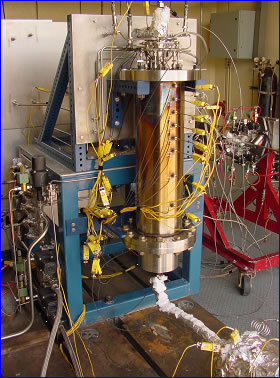
Tests have shown that propeller screws offer the potential to boost thrust by 20 % compared with rockets. A prototype is being constructed by ARL for DARPA.
Replication Status
Prototype under construction at Penn State Applied Research Laboratory; no independent commercial replication reported.
Limitations
- Requires high-temperature materials to withstand >10 000 deg C reaction
- Oxide film removal must be reliable at scale
- Water and hydrogen handling adds system complexity