Goal
Enable honey to be harvested without removing the honeycomb, reducing labor and minimizing harm to bees.
Problem
Traditional honey extraction is labor-intensive, harms bees, requires removal of combs, and can damage the hive.
Concept Summary
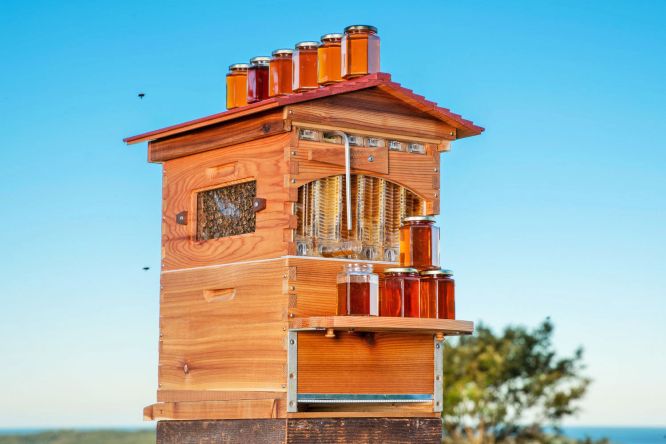
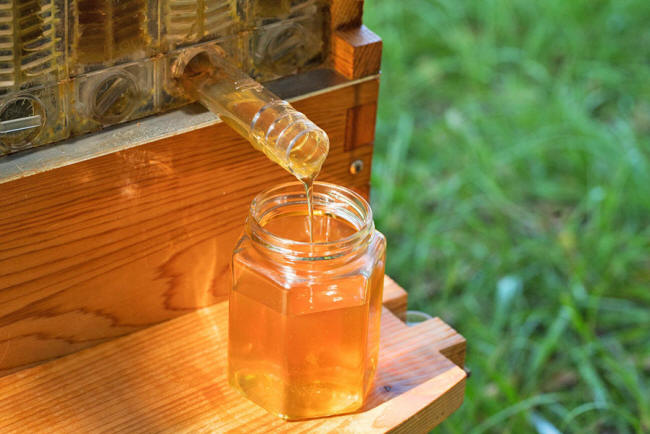
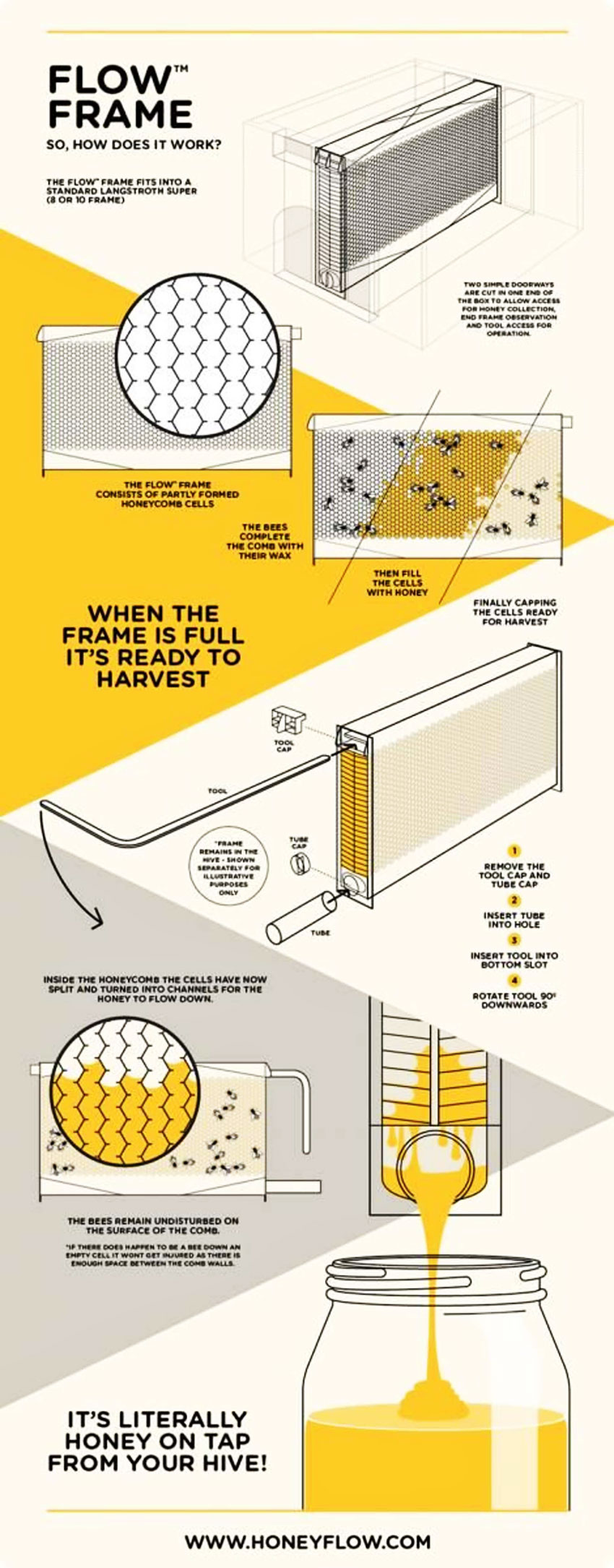
The Flow Hive uses a movable-frame honeycomb where side and end walls can be separated inside the hive, allowing honey to flow out by gravity into a collection trough. The comb remains in place, eliminating the need for uncapping, centrifuging, or frame removal.
Detailed Description
The invention comprises a honeycomb formed of at least two parts that move relative to each other. In the closed position the cells are sealed by side walls and an end wall so bees can fill them with honey. When the beekeeper actuates the frame, the walls separate, opening the cells and permitting honey to drain out of the hive into a collection system. The device can be built from plastic (polypropylene) or aluminium frames with wax or plastic sheet foundations. It operates without external power, relying on manual actuation and gravity.
Principles
- Mechanical actuation of frame parts
- Gravity-driven fluid flow
- Modular honeycomb design
- Bee-friendly extraction
Scientific Domains
Materials
- Polypropylene (plastic)
- Aluminium
- Bee-produced wax
- Honey
Mechanisms of Action
- Movable frame walls separate cell walls to create an open channel
- Gravity causes honey to flow from opened cells into a collection tray
- Manual lever or screw mechanism actuates the frame
Applications
- Commercial beekeeping
- Honey production
- Pollinator habitat support
Claimed Performance
Honey can be harvested without removing the comb, reducing the time-consuming steps of traditional extraction by roughly 90 % and eliminating bee stings.
Experimental Evidence
Prototype videos and field demonstrations show honey flowing out of the opened cells; the product has been sold to thousands of beekeepers worldwide.
Replication Status
Commercially produced and sold to over 24 000 customers in more than 130 countries.
Limitations
- Requires proprietary frame components
- May not be compatible with all existing hive systems
- Higher upfront cost compared with simple Langstroth hives