Goal
Provide a reliable, inexpensive, non-polluting fuel that can replace fossil-based hydrocarbons in internal-combustion engines.
Problem
Dependence on fossil fuels, associated pollution and greenhouse-gas emissions, and the need for clean water in remote areas.
Concept Summary
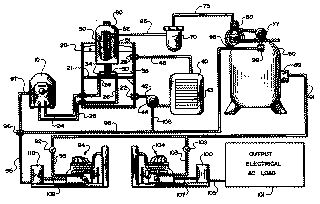
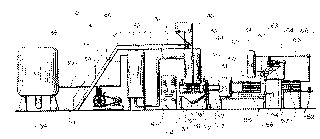
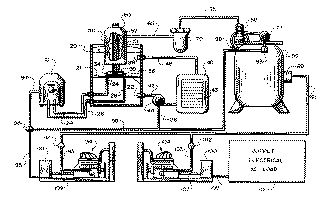
An electric discharge (arc) is applied to a carbon (graphite) rod immersed in water. The high-temperature plasma decomposes the carbon rod and splits water, producing a mixture of hydrogen, oxygen and carbon atoms that recombine into a combustible gas called Aqualene. The gas can be collected, stored, and burned in engines or used for cutting torches. The process also yields water and a small amount of CO_2 as by-products.
Detailed Description
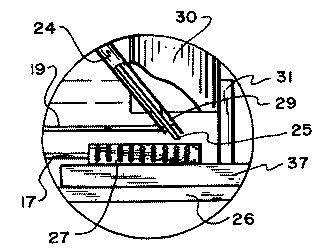
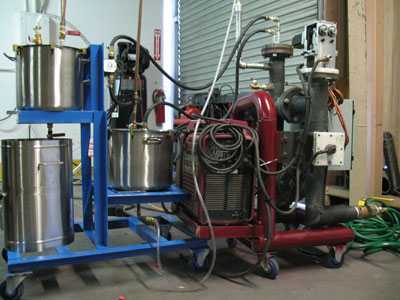
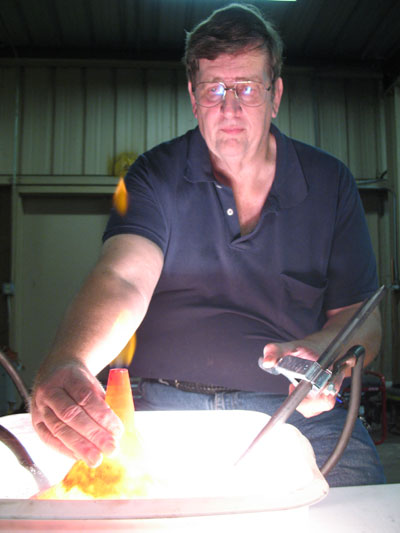
The inventor uses a simple setup: two insulated clamps connected to three 12-V batteries are attached to a graphite rod placed in a bowl of water. When the rod is lowered, an electric arc forms, generating a bright white plasma at ~5,000 deg C. The plasma breaks down water (H_2O) and the carbon rod, releasing H_2, O_2, and C atoms that bubble to the surface. The bubbles are funneled into a collection funnel, ignited, and produce an orange flame-this is the Aqualene fuel. In demonstrations, the gas filled balloons, powered a lawn-mower engine, and was used to run a Ford Escort and a Mustang. A related device, "Aquaclean," uses the heat of the Aqualene combustion to distill polluted or saline water into potable water.
Principles
- Electric arc plasma generation
- Water electrolysis / dissociation
- Carbon rod combustion
- Combustion of mixed H_2-O_2-C gas
Scientific Domains
Materials
- Water
- Graphite (carbon) rod
- Steel (iron) piping and tanks
Mechanisms of Action
- High-temperature plasma splits water molecules
- Carbon rod is ablated, providing carbon atoms
- Resulting H_2, O_2, and C atoms recombine into a combustible mixture
- Combustion of the mixture releases heat for engines or torches
Energy Sources
Applications
- Vehicle fuel for cars and trucks
- Cutting torch fuel
- Portable water purification (Aquaclean)
Claimed Performance
100 V can produce 1,000 ft^3 of Aqualene per hour; energy content 380 BTU/ft^3 (higher than hydrogen at 300 BTU/ft^3); octane rating >160; lawn-mower engine runs without gasoline; cost of electricity $0.02/ft^3 at 39 kW, 60 V DC; Aquaclean can produce 10 gal of distilled water per hour.
Experimental Evidence
Demonstrations of a glowing plasma in water, ignition of the collected gas, operation of a lawn-mower engine on Aqualene, video of a Ford Escort and Mustang running on the fuel, and preliminary tests on a 1987 Ford Tempo showing negative exhaust pollutant readings, octane >160, and lower exhaust temperature (1,160 deg F vs 1,340 deg F for natural gas).
Replication Status
No independent replication or peer-reviewed validation reported; all evidence comes from the inventor's demonstrations and company-issued test summaries.
Limitations
- Electrical energy input may exceed the chemical energy of the produced gas
- Carbon rod consumption and wear
- Potential rusting of exhaust due to water by-product
- Lack of independent verification and peer-reviewed data
Red Flags
- Claims of producing more usable energy than the electrical input (possible overunity)
- No peer-reviewed publications or third-party testing
- Heavy reliance on anecdotal video evidence