Goal
Generate continuous excess heat (energy) at room temperature using nuclear fusion of deuterium nuclei.
Problem
Provide a clean, cheap, virtually unlimited energy source that could replace fossil fuels and reduce nuclear waste.
Concept Summary
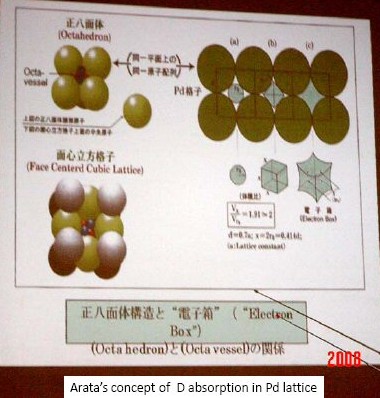
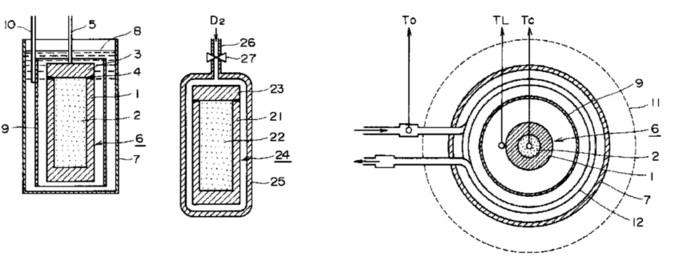
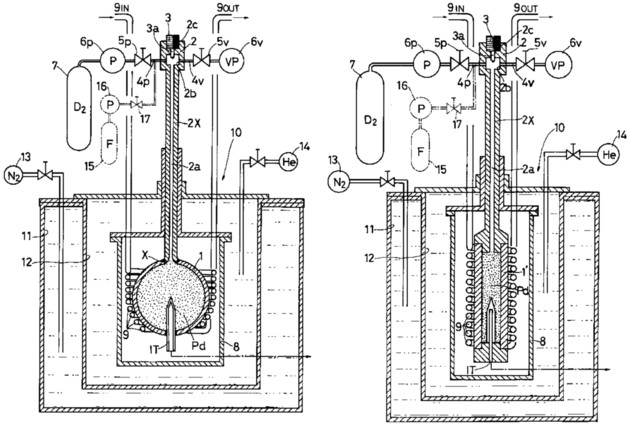
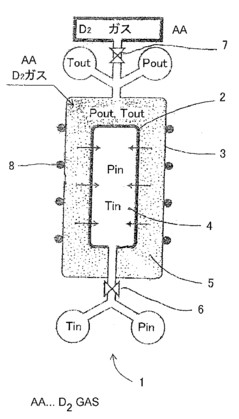
Deuterium gas is forced into a cell containing a mixture of palladium and zirconium oxide. The palladium nanoparticles absorb deuterium, forming a dense "pynco" deuterium state where nuclei are close enough to fuse, producing helium-4 and releasing heat. The excess heat is observed as a temperature rise in the cell and sustained warmth after the gas is turned off.
Detailed Description
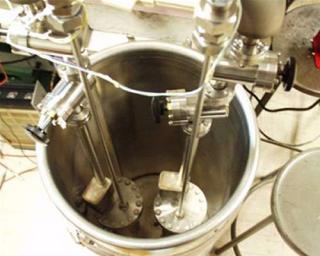
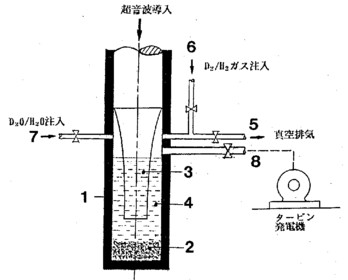
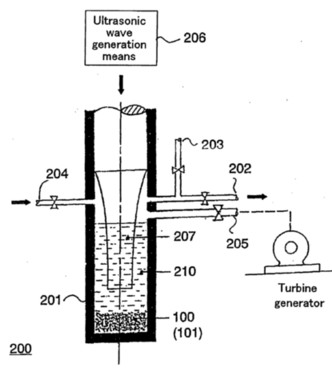
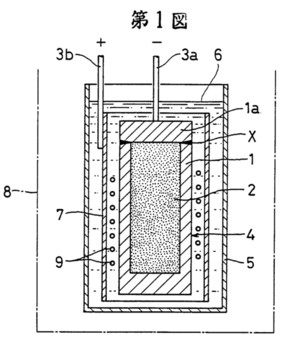
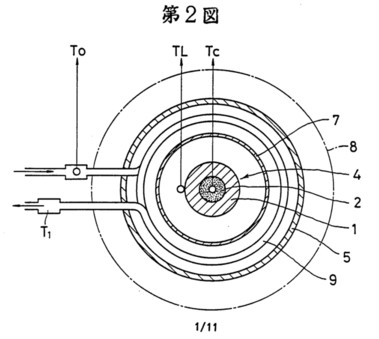
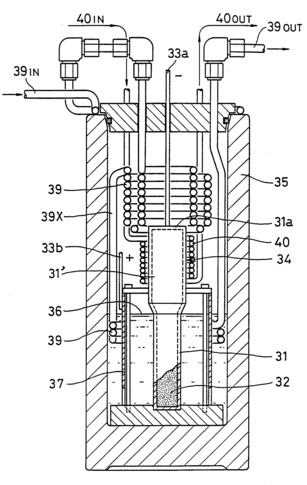
In the Osaka University demonstration, a powder mixture of palladium nanoparticles dispersed in zirconium oxide (ZrO_2) is placed in a sealed cell. High-pressure deuterium (D_2) gas is introduced, allowing the gas to be absorbed into the palladium lattice. The resulting high-density deuterium environment enables nuclear fusion reactions at near-room temperature, producing helium-4 nuclei and releasing thermal energy. Temperature sensors recorded a rise to ~70 deg C upon gas injection, and the cell remained warmer than its walls for ~50 hours after the gas was stopped, indicating continued heat release. Witnesses reported continuous excess heat and helium production, and the authors claim the method is highly reproducible with larger samples.
Principles
- Nuclear fusion of deuterium nuclei
- Lattice confinement of hydrogen isotopes
- Heat generation from exothermic nuclear reactions
Scientific Domains
Materials
- Palladium (Pd) nanoparticles
- Zirconium oxide (ZrO_2)
- Deuterium gas (D_2)
- Heavy water (D_2O)
- Lithium hydroxide (LiOD) in some patents
Mechanisms of Action
- Deuterium absorption into palladium nanoparticles
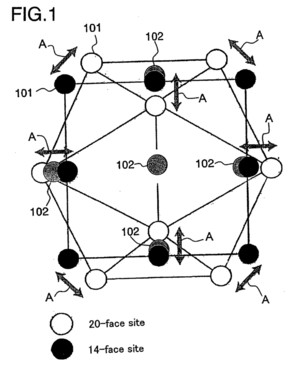
- Formation of high-density deuterium clusters
- Fusion of deuterium nuclei producing helium-4 and heat
Energy Sources
Applications
- Clean power generation
- Heat supply for industrial processes
- Potential backup energy source
Claimed Performance
Temperature rise to ~70 deg C on D_2 injection; sustained heat for >50 h after gas shut-off; continuous excess heat reported by observers.
Experimental Evidence
Temperature measurements inside the cell; observation of prolonged warmth after gas removal; witness statements of helium detection and excess heat; reference to published data in J. High Temp. Soc. Jpn (Feb/Mar 2008).
Replication Status
Authors claim high reproducibility; no independent third-party replication reported in the article.
Limitations
- Lack of independent, peer-reviewed replication
- Unclear quantitative calorimetry data
- Scalability of the nanoparticle matrix not demonstrated
- Potential measurement artefacts (e.g., chemical heating)
Red Flags
- Claims of excess heat without rigorous, independently verified calorimetric data
- Historical association with pseudoscientific cold-fusion claims
- Reliance on anecdotal witness statements rather than peer-reviewed publications