Goal
Produce potable water from saline or brackish water while generating electrical power to operate the system.
Problem
Increasing scarcity of fresh water and high energy costs of conventional desalination methods.
Concept Summary
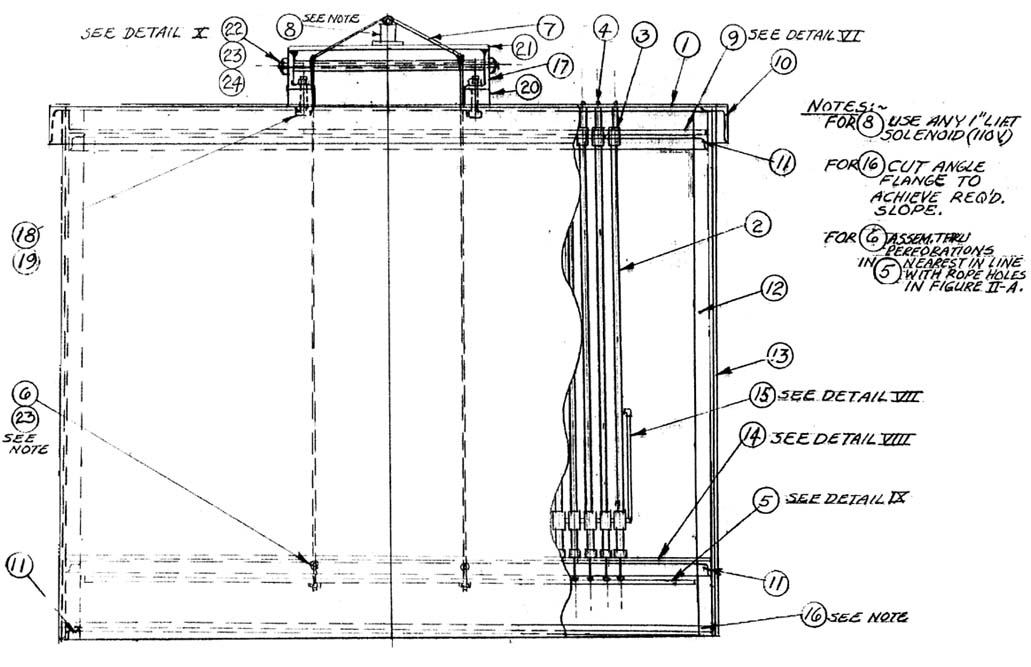
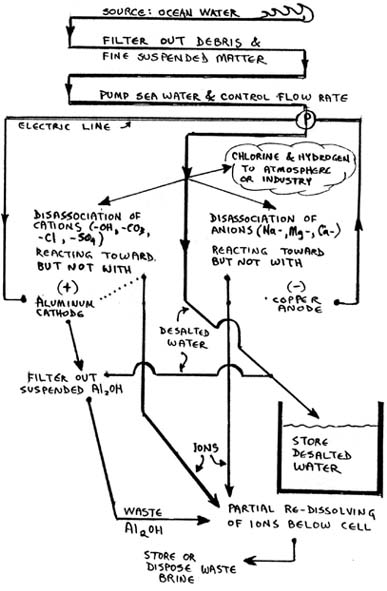
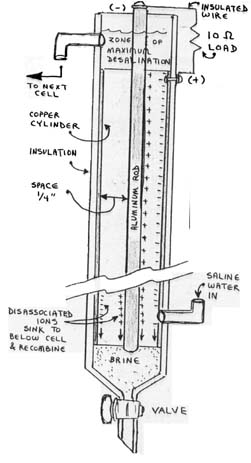
The Aul EGD process uses a galvanic cell formed by a copper anode and an aluminum cathode immersed in seawater. The cell generates its own electrical power and creates an electric field that separates dissolved ions, causing denser saline water to settle below and desalinated water to rise between the electrodes. The system also precipitates salts and produces gases such as hydrogen and chlorine.
Detailed Description
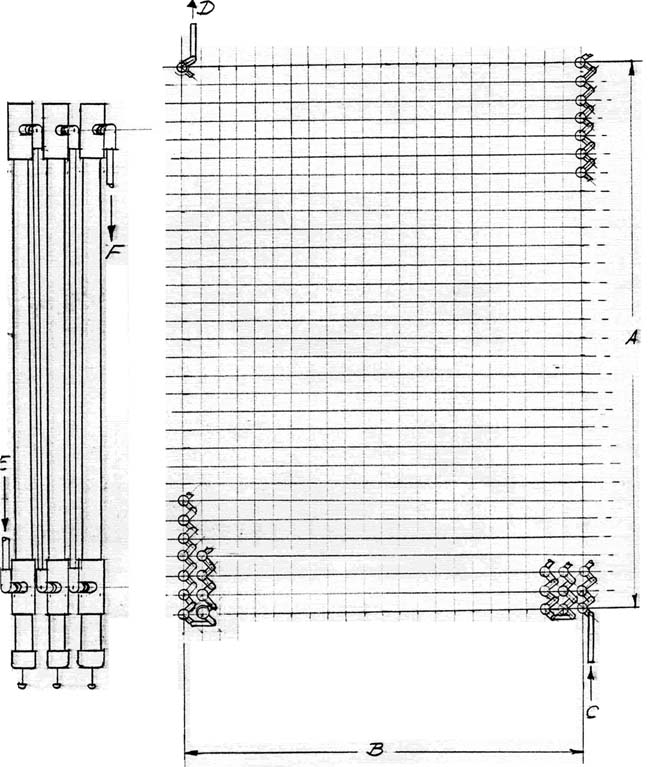
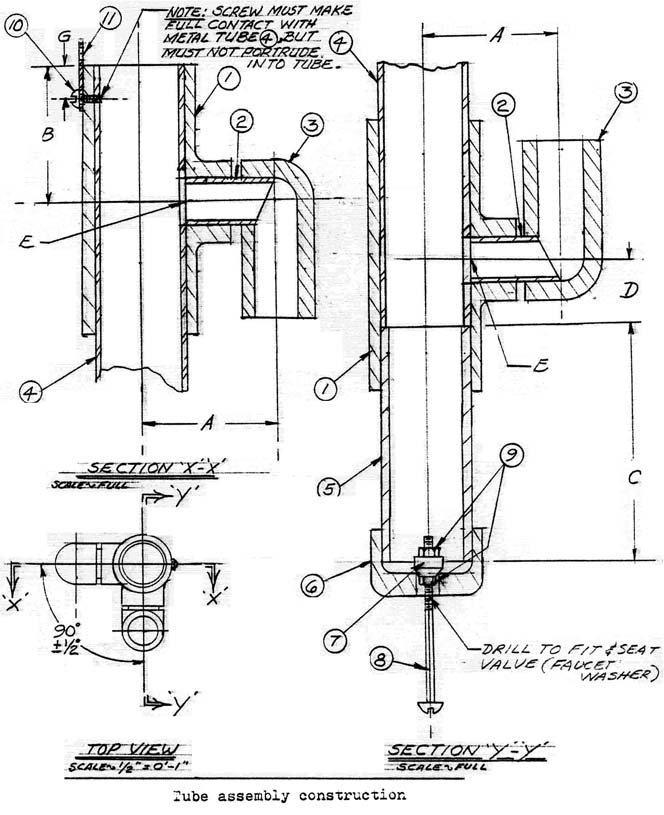
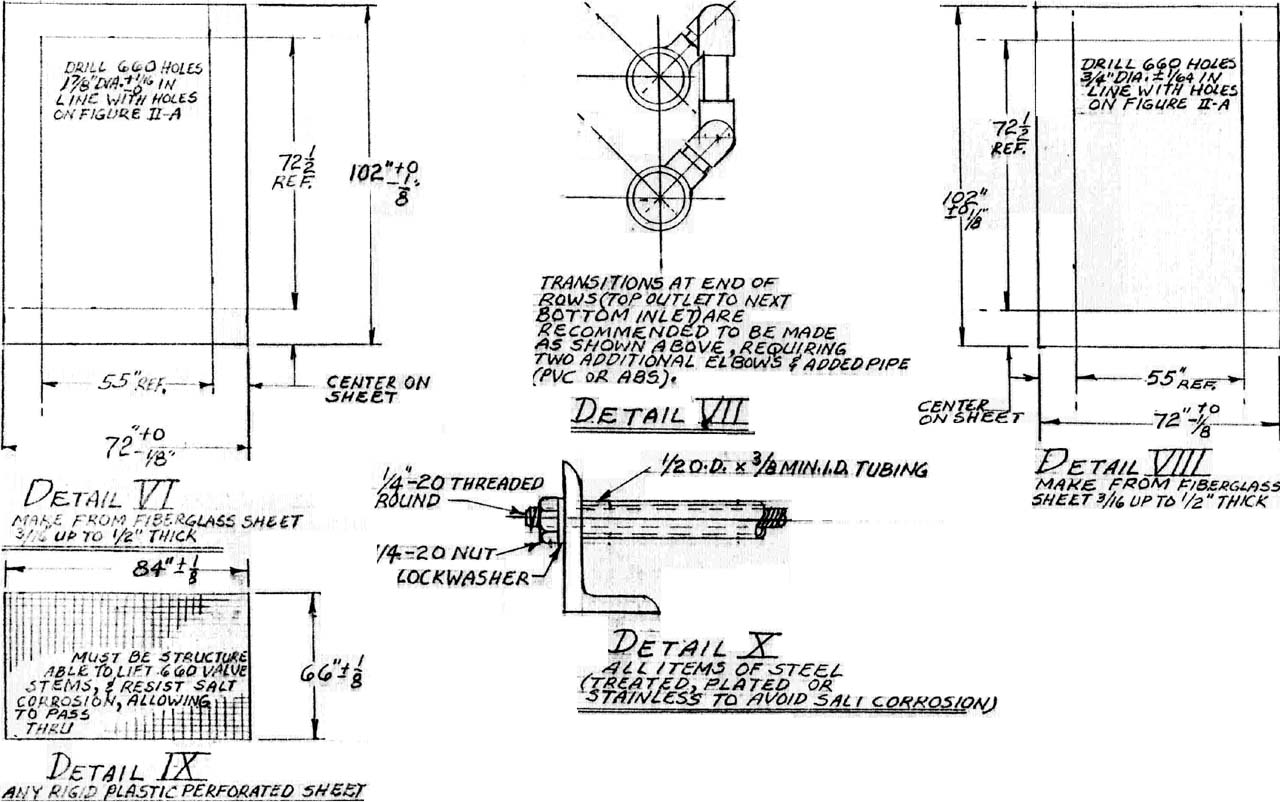
In the EGD system the copper anode attracts positively charged ions (cations) while the aluminum cathode attracts negatively charged ions (anions). Water flows through a series of narrow-gap cells (~=0.25 inches) so that the electric field can act on the ions. The ion-rich layers near the electrodes become denser and settle, while the ion-depleted water in the central gap rises, yielding desalinated water at the top of each cell. The galvanic reaction between aluminum and dissolved oxygen/hydrogen generates a small current sufficient to power pumps. The process also produces hydrogen, chlorine, and precipitated salts that can be removed as brine. Laboratory demonstrations with a 2.7-gallon-per-day unit achieved ~99 % salt removal, and a historical test on Salton Sea water reported drinking-water quality.
Principles
- galvanic cell operation
- electrostatic ion attraction
- gravitational convection separation
- electronic coagulation
Scientific Domains
Materials
- copper
- aluminum
- seawater (or saline water)
- dilute sulfuric acid (optional electrolyte)
- thymol blue indicator
- acetic acid (vinegar)
- sodium hydroxide (lye)
Mechanisms of Action
- galvanic reaction between copper and aluminum
- electric field induced ion migration
- density-driven convection of saline brine
- precipitation of salts as insoluble hydroxides
Energy Sources
Applications
- drinking water production
- agricultural irrigation
- survival/emergency water supply
Claimed Performance
Recover >80 % of water as potable, up to 99 % salt removal in laboratory tests, and generate enough electricity to operate system pumps.
Experimental Evidence
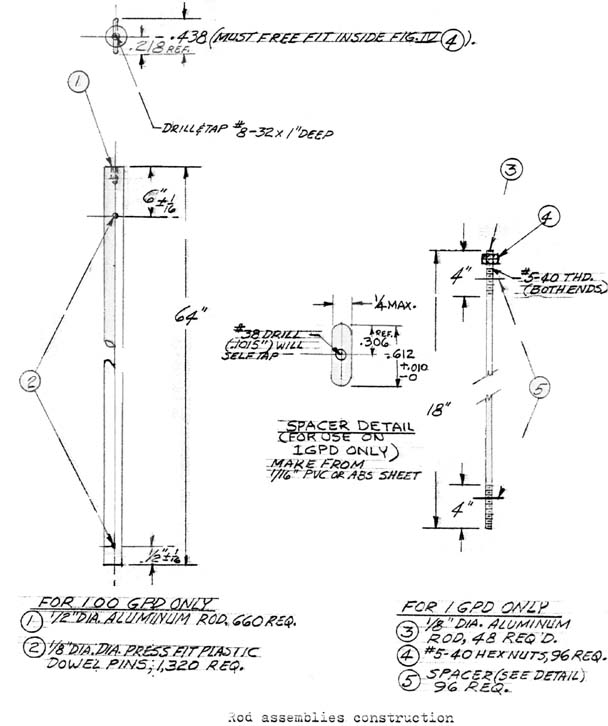
A 2.7-gallon-per-day prototype produced 99 % salt removal (36 000 ppm -> 370 ppm) and generated 0.000022 A/sq in current. A 1-gallon-per-day unit demonstrated ion separation and color changes in the water. Historical testing by Louis Shaffer (1965) on Salton Sea water reported drinking-water quality.
Replication Status
Prototype built and tested in the 1960s-1970s; no recent independent replication or commercial deployment reported.
Limitations
- Precise electrode gap (0.25 in) required; deviation causes short-circuit or low voltage
- Copper corrosion by marine microorganisms (e.g., Gallionella)
- Low power output; only enough for small pumps
- Periodic cleaning of electrodes needed
Red Flags
- Claims of net energy generation without external input
- Lack of peer-reviewed publications or independent replication
- Potential safety concerns from hydrogen and chlorine gas production