Goal
Generate electrical power from sunlight using a thermoelectric effect and sustain a pendulum-based power system for long-term home energy supply.
Problem
Provide a low-maintenance, long-duration power source for homes without reliance on conventional fuel or grid electricity.
Concept Summary
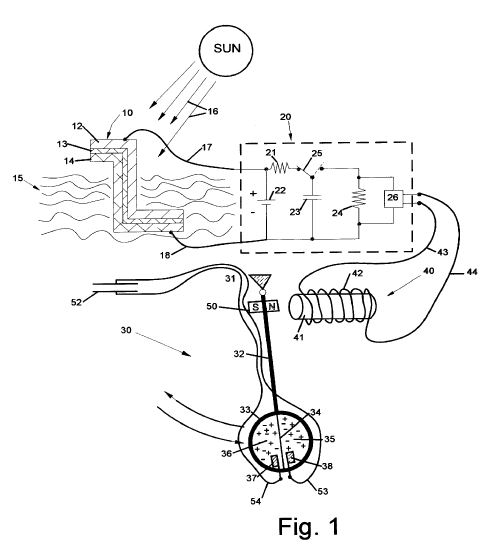
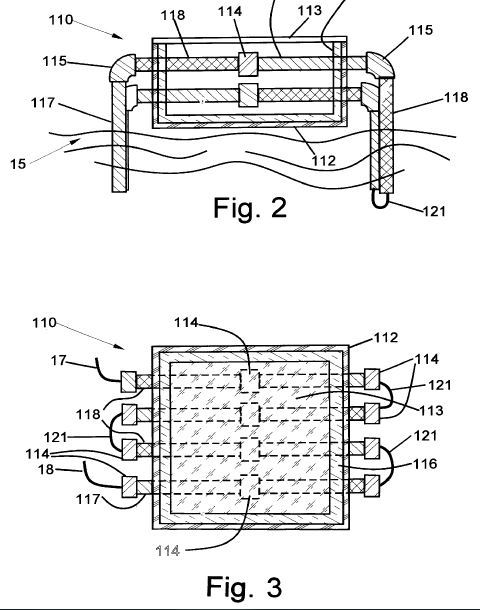
The invention uses alternating series of dissimilar metal plates or pipes (e.g., copper-aluminum or copper-iron) that are heated by sunlight on one side and cooled by water or ground on the other, creating a temperature differential that produces a voltage via the Seebeck effect. The generated electricity powers a pacemaker circuit that periodically energizes a magnetic coil to give a "kick" to a swinging pendulum. The pendulum contains an ionic solution that, when agitated, also produces electricity, providing make-up power when solar input is insufficient.
Principles
- Seebeck thermoelectric effect
- Magnetic induction for impulse generation
- Electrochemical voltage generation from ionic agitation
- Mechanical energy recovery via pendulum oscillation
Scientific Domains
Materials
- copper
- aluminum
- nickel
- galvanized iron
- gold
- silver
- vegetable membrane
- water
- vinegar
- sodium chloride
- potassium chloride
- plexiglass
- styrofoam
- glass
Mechanisms of Action
- Temperature differential across dissimilar metals creates voltage
- Ionic mixture agitation produces electrochemical voltage
- Magnetic coil pulse imparts kinetic energy to pendulum
- Capacitor-transformer circuit stores and releases energy in timed bursts
Energy Sources
Applications
- Residential off-grid power
- Remote sensor or low-power device powering
- Hybrid solar-thermal-electrochemical energy systems
Claimed Performance
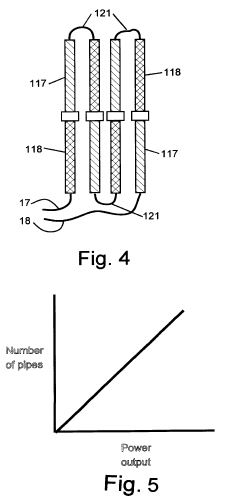
Thermoelectric battery capable of delivering at least 120 V; linear increase of power with number of pipes; pendulum length 70 ft (~=21 m) used in demonstration.
Experimental Evidence
Prototype described with figures showing pipe arrangement, pendulum system, and a graph of current versus number of pipes; no quantitative performance data or independent testing provided.
Limitations
- Dependence on sufficient sunlight and temperature differential
- Need for periodic replacement of ionic chemicals
- Large physical size (e.g., 70-ft pendulum) limits practical deployment
- No demonstrated efficiency or power output figures
Red Flags
- Claims of "free energy" for 25 years without clear quantitative evidence
- Lack of independent verification or peer-reviewed data
- Potential over-optimistic performance expectations