Goal
Increase engine power and torque while reducing fuel consumption and emissions.
Problem
High fuel usage, low engine efficiency, excessive CO/CO2 emissions, engine wear and maintenance costs.
Concept Summary
A chemically activated catalyst installed on the intake manifold converts atmospheric nitrogen and limestone-derived carbon/hydrogen into a combustible nitro-gas, enhancing combustion efficiency up to 98-100 % and providing additional horsepower and torque while cutting emissions.
Detailed Description
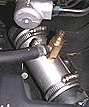
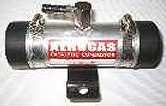
The device is a stainless-steel cylinder (~=5 in long, 2 in diameter) containing a proprietary chemical catalyst (trade secret). During air-fuel intake the catalyst chemically converts nitrogen from the air and carbon/hydrogen derived from limestone into a combustible gaseous form that mixes with the fuel. This promotes more complete combustion, increasing power by up to 25 hp (35-60 % in some tests), torque by up to 1,000 RPM, mileage by 2-4 km / L, and reducing CO and CO2 emissions by up to 99.5 %. The unit can be attached to any gasoline, diesel, or stationary engine intake manifold and is claimed to last 6-10 years, with the ability to be recharged after use.
Principles
- Catalytic conversion of atmospheric gases
- Enhanced combustion chemistry
- Fuel additive effect
Scientific Domains
Materials
- Stainless steel
- Chemical catalyst (trade secret)
- Lime
- Weak acidic solution
- Limestone-derived carbon and hydrogen
Mechanisms of Action
- Catalyst converts nitrogen and limestone-derived carbon/hydrogen into nitro-gas
- Nitro-gas mixes with fuel, raising combustion temperature and completeness
- Reduced formation of CO and CO2 by altering oxidation pathways
Energy Sources
Applications
- Automotive gasoline engines
- Diesel engines
- Stationary combustion engines
Claimed Performance
Power increase up to 25 hp (35-60 % in tests), torque up to 1,000 RPM, mileage 2-4 km / L, emissions reduction 99.5 %, maintenance cost reduction 50 %, engine life extension 6-10 years.
Experimental Evidence
Tests by government agencies (departments of energy, science and technology, environment and natural resources) reported the above performance improvements.
Limitations
- Catalyst composition undisclosed (trade secret)
- Long-term durability not independently verified
- Performance claims lack peer-reviewed data
- Requires periodic recharging
Red Flags
- Heavy reliance on undisclosed trade-secret catalyst
- Performance figures presented without detailed data or peer review
- Claims of converting inert nitrogen into combustible fuel challenge conventional chemistry