Goal
Increase fuel combustion efficiency and reduce fuel consumption while eliminating clogging and soot formation.
Problem
Inefficient atomization in conventional oil burners causing fuel waste, nozzle clogging, and soot emissions.
Concept Summary
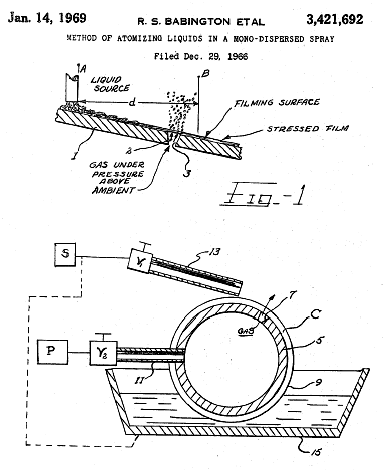
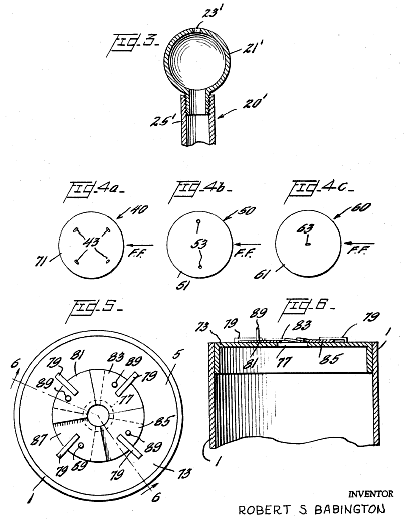
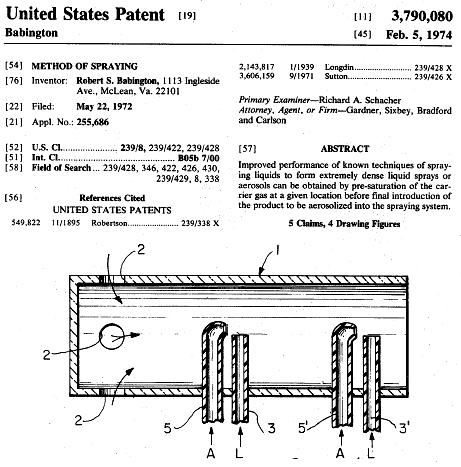
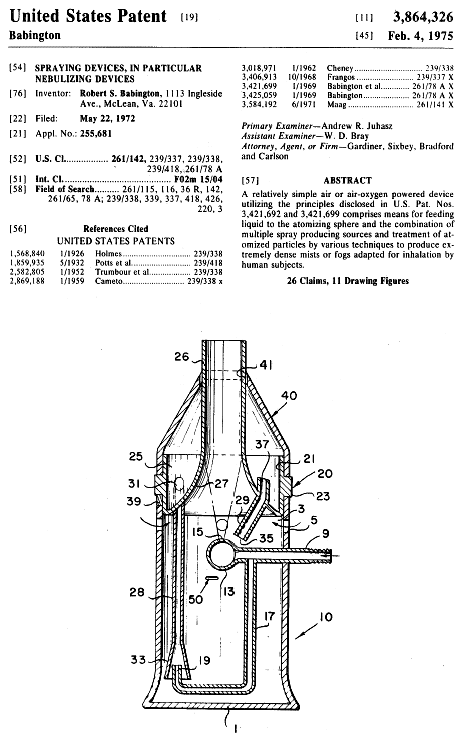
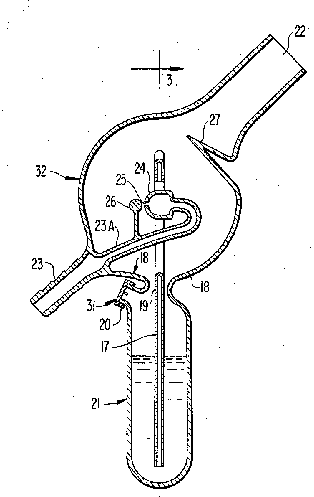
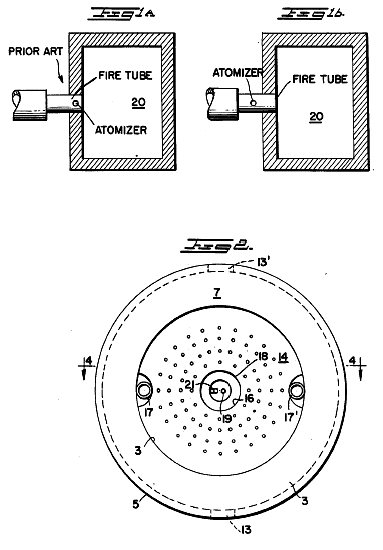
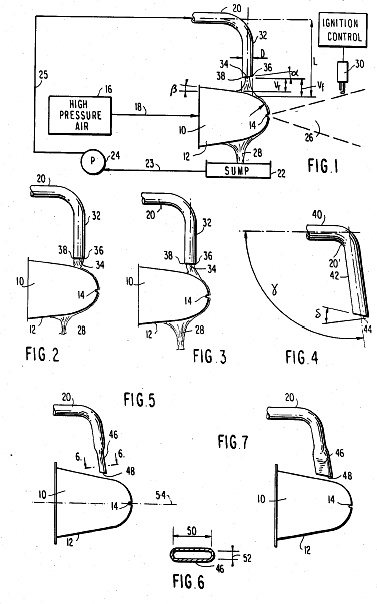
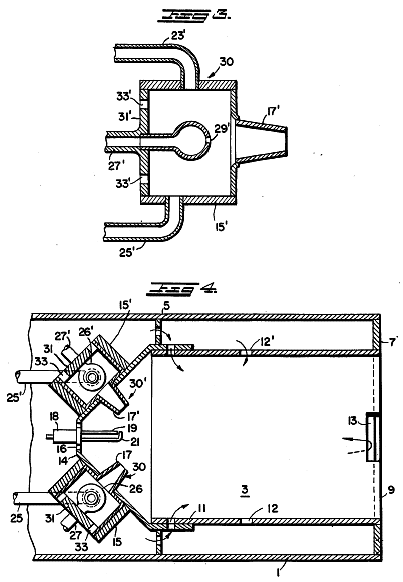
The Babington principle uses a convex bulb with a thin liquid film; compressed air forced through a slot breaks the film into a superfine, uniform spray. The design prevents clogging because liquid never passes through the slot, and it works with a wide range of fuel viscosities. A dual-head version adds a second atomizing bulb to stabilize the flame and improve ignition.
Principles
- Babington principle (air-driven atomization of a liquid film)
- Surface-tension based spray formation
- Dual atomizing heads for flame fixation and stable ignition
- Viscosity-independent fuel delivery
Scientific Domains
Materials
- Liquid fuel (oil, diesel, kerosene, crankcase oil, turpentine, paint thinner)
- Compressed air or other gas
- Glass or plastic bulb (atomizer)
- Metal feed tube
- Electrodes/igniter
Mechanisms of Action
- Compressed air passes through tiny slots in a bulb, shearing the liquid film into fine droplets
- Fine droplets evaporate quickly, allowing more complete combustion
- Two intersecting sprays create a stable ignition zone and reduce mis-fires
Energy Sources
Applications
- Home oil-furnace heating
- Industrial oil burners
- Medical nebulizers
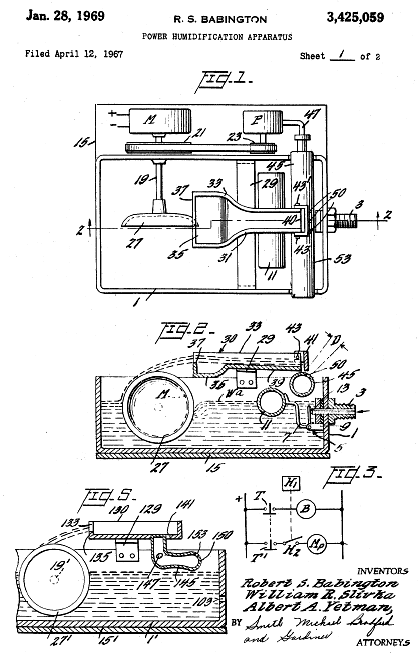
- Humidifiers
Claimed Performance
Up to 15 % fuel savings; finer droplet size than any other atomizer tested; no clogging; CO_2 level 14.5 % vs 9 % for conventional burners; no visible smoke.
Experimental Evidence
Field-tested ~50 burners by NOFI; observed finer droplets, 15 % fuel reduction, 14.5 % CO_2 versus 9 % baseline, and absence of soot. No independent peer-reviewed replication reported.
Replication Status
Field tested ~50 units; no commercial manufacturer; no independent replication documented.
Limitations
- Requires precise air-flow control
- Early prototypes had ignition and sooting issues
- No large-scale commercial production yet
Red Flags
- Fuel-saving claims (15 %) not independently verified
- Potential for clogging if air-flow or slot geometry is mis-designed