Goal
Regenerate lost or damaged tissue (e.g., finger tip, ligaments, skin, organ lining) without scar formation.
Problem
Inability of the body to fully regenerate complex tissues after severe injury, leading to scar tissue and loss of function.
Concept Summary
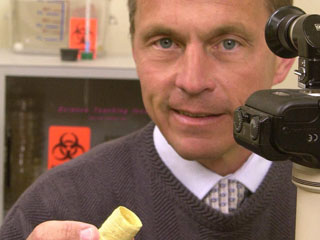
A decellularized extracellular matrix (ECM) derived from pig bladder submucosa is processed into a powder or scaffold. When applied to a wound, the ECM provides structural support and biochemical cues that recruit host cells, stimulate angiogenesis, and promote constructive remodeling rather than scar formation, enabling regrowth of functional tissue.
Detailed Description
The process involves harvesting the lining of a pig bladder, removing all cellular material via acid treatment, and drying the remaining extracellular matrix. The dried matrix can be milled into a fine powder (referred to as "pixie dust") or formed into sheets and scaffolds. The ECM retains collagen and other matrix proteins that convey signals for tissue remodeling. In clinical use, the powder is applied to the wound surface for several days, allowing the body's own cells to migrate into the scaffold, differentiate, and rebuild the missing tissue. Patents also describe combining the ECM with endothelial cells or other exogenous cell types, and hybridizing it with synthetic polymers (e.g., DOPA-based monomers) to create bio-active polymer networks for enhanced healing.
Principles
- Biological signaling via extracellular matrix proteins
- Decellularization to remove immunogenic cells
- Scaffold-mediated tissue regeneration
- Angiogenesis promotion
- Scar reduction through selective signal retention
Scientific Domains
Materials
- Pig bladder submucosa (decellularized extracellular matrix)
- Collagen
- DOPA (dihydroxyphenyl-L-alanine) or tyrosine monomers (in polymeric patents)
- Synthetic polymeric components (e.g., multi-isocyanates)
- Endothelial cells, fibroblasts, muscle cells, progenitor cells (optional added cells)
Mechanisms of Action
- Provides structural scaffold for cell infiltration
- Delivers collagen-derived bioactive cues
- Stimulates host progenitor cell migration and differentiation
- Enhances vascularization of the repair site
- Suppresses pro-scar signaling pathways
Applications
- Finger and fingertip regeneration
- Burn wound healing
- Esophageal tissue repair
- Limb and organ regeneration
- Veteran injury treatment
Claimed Performance
A severed finger tip regenerated to its original length with nail, skin, nerves, and fingerprint in approximately four weeks; complete feeling and movement reported.
Experimental Evidence
A single anecdotal case (Lee Spievak) where a pig-bladder ECM powder was applied daily for ten days and resulted in full fingertip regrowth within four weeks. Planned clinical trial for esophageal repair mentioned.
Replication Status
Only one reported human case; no independent replication confirmed in the article.
Limitations
- Evidence limited to a single anecdotal case
- Potential for oncogenic stimulation not fully evaluated
- Regulatory approval pending for clinical use
- Scalability of ECM production and standardization
Red Flags
- Reliance on media reports rather than peer-reviewed studies
- Lack of independent replication or clinical trial data at the time of reporting