Goal
Eliminate carbon monoxide from exhaust and reduce fuel consumption
Problem
Deadly carbon monoxide emissions and inefficient fuel use in gasoline engines
Concept Summary
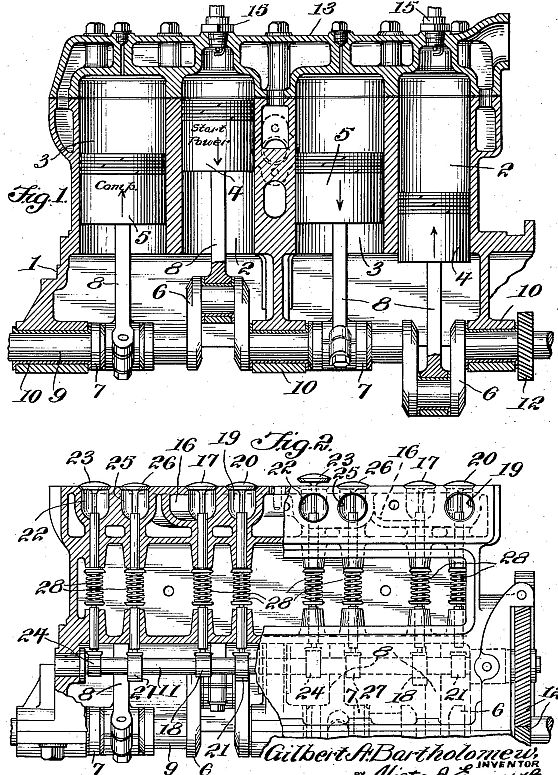
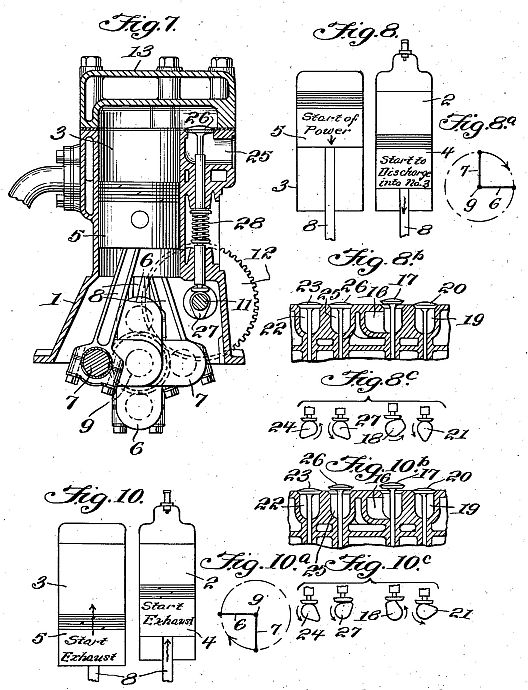
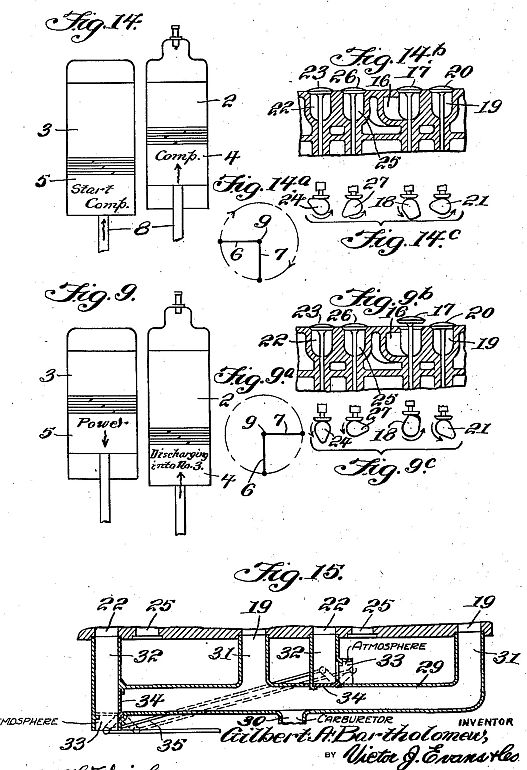
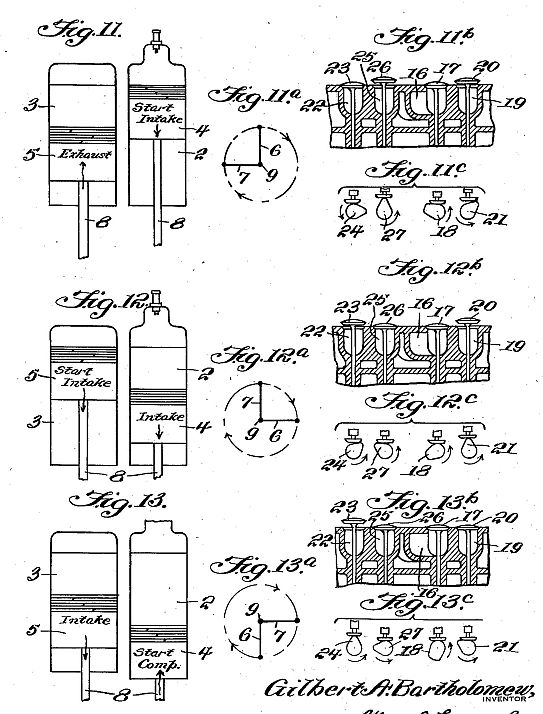
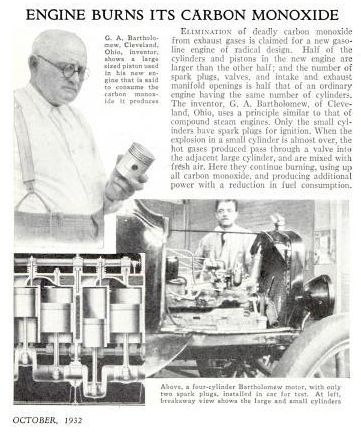
The engine uses a compound-engine principle: small cylinders ignite the fuel-air mixture, then near the end of combustion the hot gases are transferred through a valve into adjacent larger cylinders where they mix with fresh air and continue burning, fully oxidising CO and producing additional power.
Detailed Description
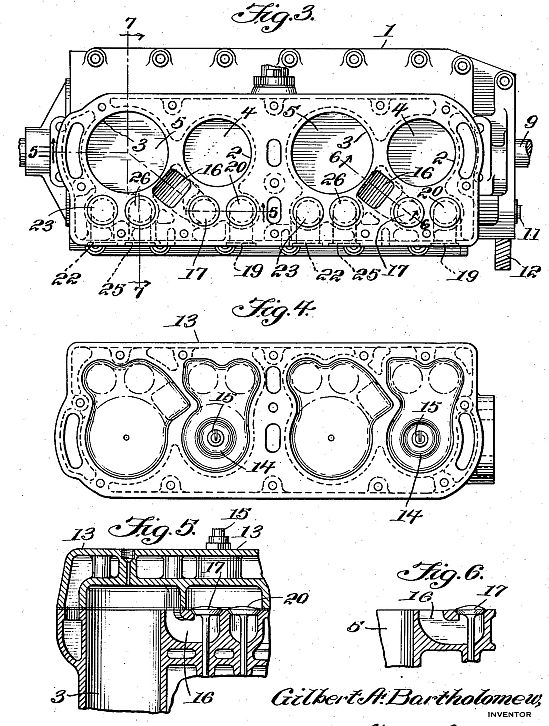
Only the small cylinders have spark plugs. After the primary combustion, a valve opens and the hot gases flow into a larger cylinder that contains only air. In the larger cylinder the gases complete combustion of any remaining carbon monoxide, extracting extra work and reducing the amount of CO in the exhaust. The design halves the number of spark plugs, valves and manifold openings compared with a conventional engine of the same cylinder count.
Principles
- Compound engine principle
- Sequential combustion
- Complete oxidation of CO
- Heat recovery
Scientific Domains
Mechanisms of Action
- Transfer of hot gases from small to large cylinder
- Mixing with fresh air in large cylinder
- Secondary combustion of CO
- Additional power generation
Energy Sources
Applications
- Automotive engines
- Power generation
Claimed Performance
Reduction in fuel consumption and elimination of carbon monoxide from exhaust
Experimental Evidence
The article provides only a design description and no quantitative test data.
Limitations
- No experimental data provided
- Complex valve timing and transfer system
- Potential increase in engine weight and size
Red Flags
- Lack of quantitative performance data
- Claims of complete CO elimination without supporting evidence