Goal
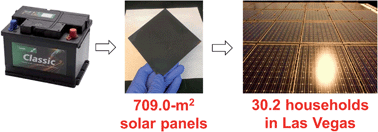
Produce high-efficiency, low-cost solar cells using lead recovered from discarded lead-acid car batteries.
Problem
Environmental and health impacts of lead mining and waste, and the need for inexpensive photovoltaic materials.
Concept Summary
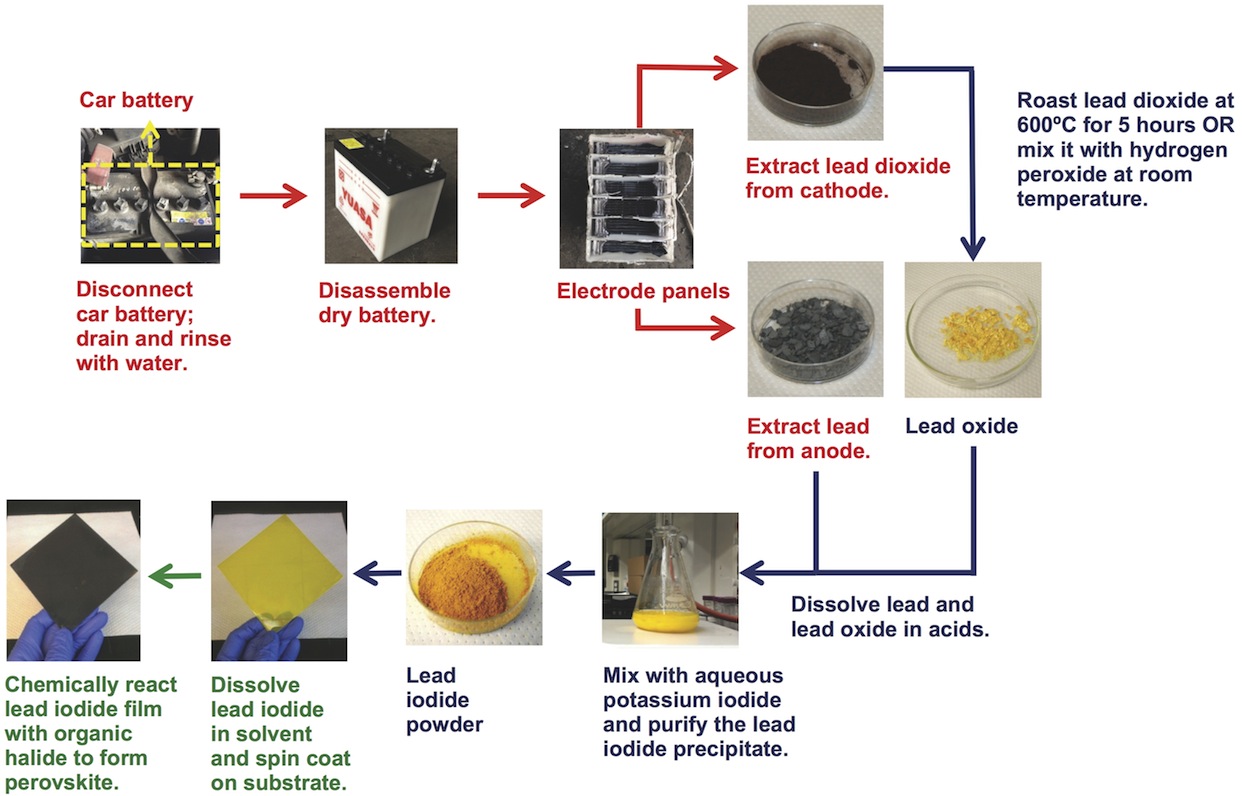
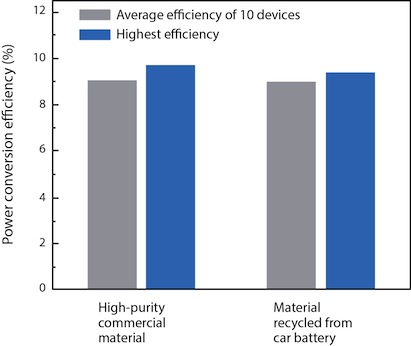
MIT researchers developed a simple, low-temperature process that extracts lead from spent lead-acid car batteries, converts it to lead iodide, and uses it to fabricate perovskite thin-film solar cells. Laboratory tests show that cells made from recycled lead perform identically to those made from high-purity commercial lead iodide, offering a potential circular-economy solution for photovoltaic manufacturing.
Detailed Description
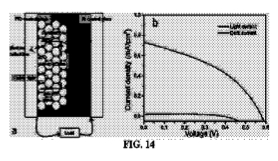
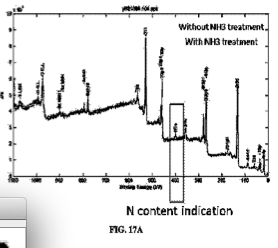
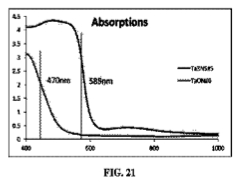
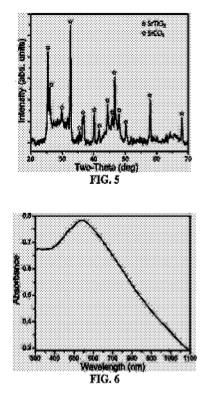
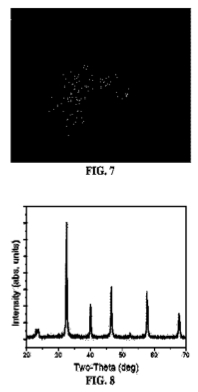
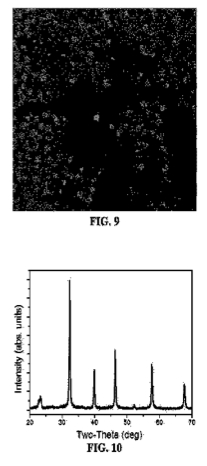
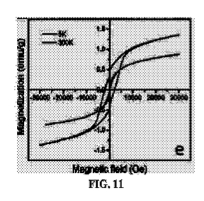
The procedure involves (1) disassembling a lead-acid battery and scraping lead from the electrodes, (2) synthesizing lead iodide (PbI_2) from the recovered lead, (3) dissolving the PbI_2 in a solvent and spin-coating it onto a transparent conducting substrate to form a perovskite (CH_3NH_3PbI_3) film, and (4) completing the solar-cell stack with electron- and hole-transport layers. Devices fabricated from recycled lead exhibited the same nanocrystalline structure, optical absorption, photoluminescence, and photovoltaic parameters as those made from commercial reagents. Tests on batteries of different ages confirmed that the process also recovers lead from lead-sulfate compounds.
Principles
- Photovoltaic effect
- Perovskite crystal structure
- Thin-film deposition (spin-coating)
- Lead iodide synthesis
Scientific Domains
Materials
- Lead (recovered from battery electrodes)
- Lead iodide (PbI_2)
- Methylammonium lead iodide perovskite (CH_3NH_3PbI_3)
- Solvent (e.g., DMF, DMSO)
- Transparent conducting oxide (e.g., ITO)
- Spin-coating substrate
Mechanisms of Action
- Light absorption
- Charge-carrier generation
- Electron transport
- Hole transport
Energy Sources
Applications
- Solar power generation
- Building-integrated photovoltaics
- Renewable energy supply
Claimed Performance
Power conversion efficiency up to ~15 % (conservative) and statistically identical average efficiency to cells made from high-purity lead iodide.
Experimental Evidence
Laboratory tests on 10 cells fabricated from recycled lead and 10 cells from commercial lead iodide showed virtually identical average power-conversion efficiencies and highest-device efficiencies, confirming no performance penalty from using recycled material.
Replication Status
Laboratory replication across multiple battery sources (new, 6-month, 2-year, 4-year aged batteries) demonstrated consistent perovskite film quality and solar-cell performance.
Limitations
- Lead toxicity and need for encapsulation
- Variability in lead purity from different batteries
- Moisture-induced degradation of perovskite films
Red Flags
- Handling of sulfuric acid and lead during battery disassembly poses safety hazards
- Potential environmental contamination if lead is not fully encapsulated in the final device