Goal
Reverse aging signs and improve facial symmetry by expanding jaw and facial bones while straightening teeth.
Problem
Under-developed jaw/facial bones in adults that cause crowded teeth, facial asymmetry, reduced airway space, and perceived aging.
Concept Summary
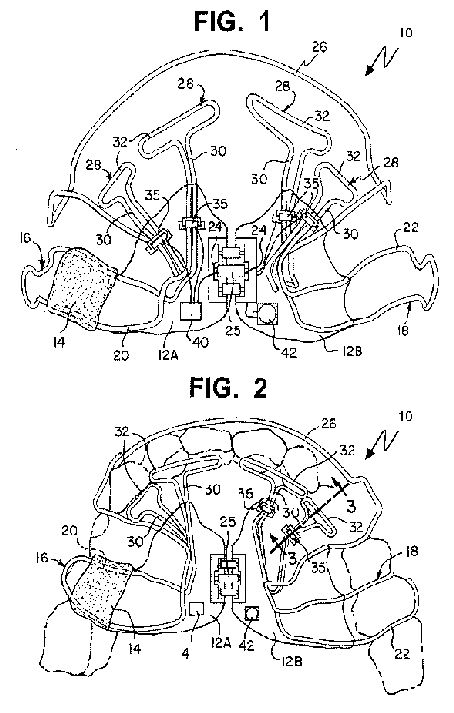
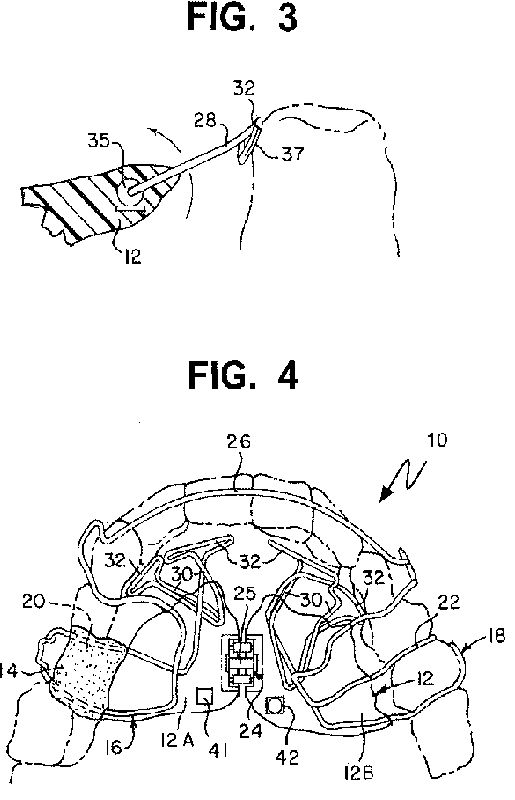
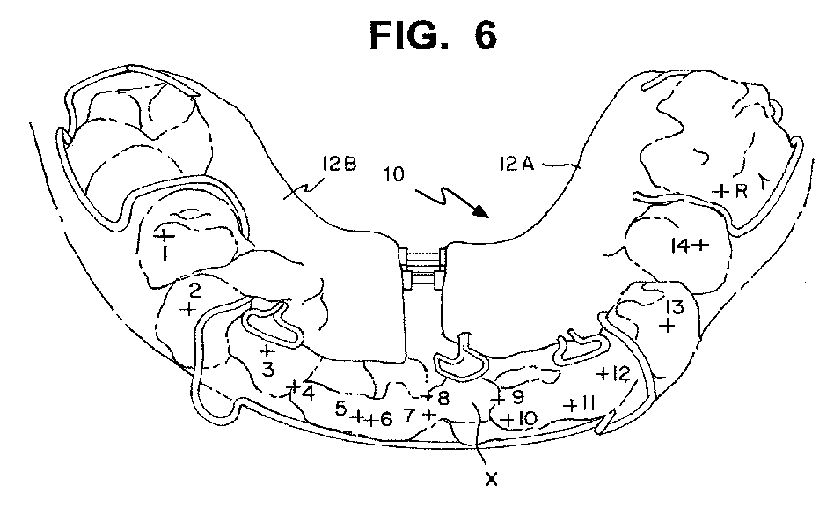
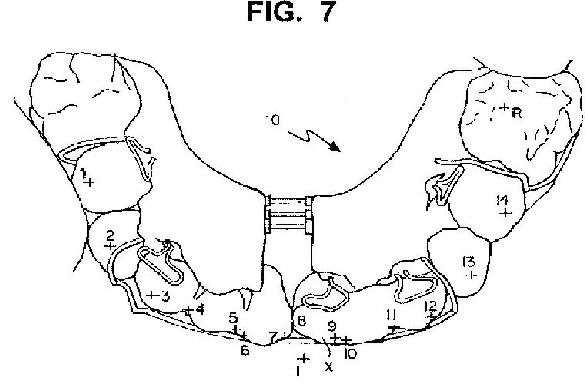
A split-palate orthodontic appliance that uses an expansion screw, flap springs, and an overlay to intermittently apply mechanical force to the jaw bones during functions such as swallowing. The device may be motor-driven and sensor-controlled, stimulating muscle activity and mechanotransduction to remodel bone, expand the dental arches, align teeth, and enhance facial aesthetics.
Detailed Description
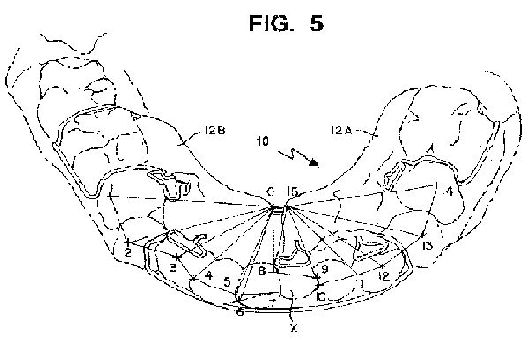
The appliance consists of a plastic (acrylic) plate body in two halves joined by an expansion screw, flap springs that press against selected teeth, and an overlay that prevents full jaw closure. A micro-motor (or manual screw) adjusts the separation of the plate halves, while sensors on the springs feed force data to an onboard microprocessor that can auto-adjust the motor. The device is worn at night; the patient manually turns the screw weekly to keep up with bone widening. By intermittently loading the periosteum during swallowing, the device aims to trigger bone remodeling via the functional matrix hypothesis, increasing airway space and improving facial symmetry.
Principles
- Mechanotransduction
- Functional matrix hypothesis
- Bone remodeling under intermittent load
- Orthodontic force application
Scientific Domains
Materials
- Acrylic plastic (plate body)
- Metal flap springs (T-shaped, I-shaped, L-shaped)
- Metal expansion screw
- Electronic micro-motor components
Mechanisms of Action
- Intermittent mechanical force via expansion screw
- Muscle activation during swallowing
- Flap spring pressure on teeth
- Sensor-guided motor adjustment
Energy Sources
Applications
- Adult orthodontic treatment
- Facial cosmetic enhancement
- Sleep-apnea mitigation
- Airway space improvement
Claimed Performance
Broader smiles, fuller lips, more prominent cheekbones, reduced facial lines and wrinkles, elimination of snoring and sleep-apnea symptoms, and overall more youthful appearance.
Experimental Evidence
The article provides qualitative claims and illustrative photographs/finite-element diagrams but no quantitative clinical trial data or peer-reviewed studies.
Limitations
- Requires nightly patient compliance
- Potential discomfort from overlay
- Long treatment duration (weeks to months)
- Lack of peer-reviewed clinical efficacy data
Red Flags
- Strong anti-aging claims without supporting clinical data
- Potential overstatement of cosmetic benefits