Goal
Provide a self-charging battery system that yields net energy gain (overunity) and can power a motor/generator without external power.
Problem
Batteries lose charge and require external charging; conventional chargers waste energy and cannot sustain continuous operation.
Concept Summary
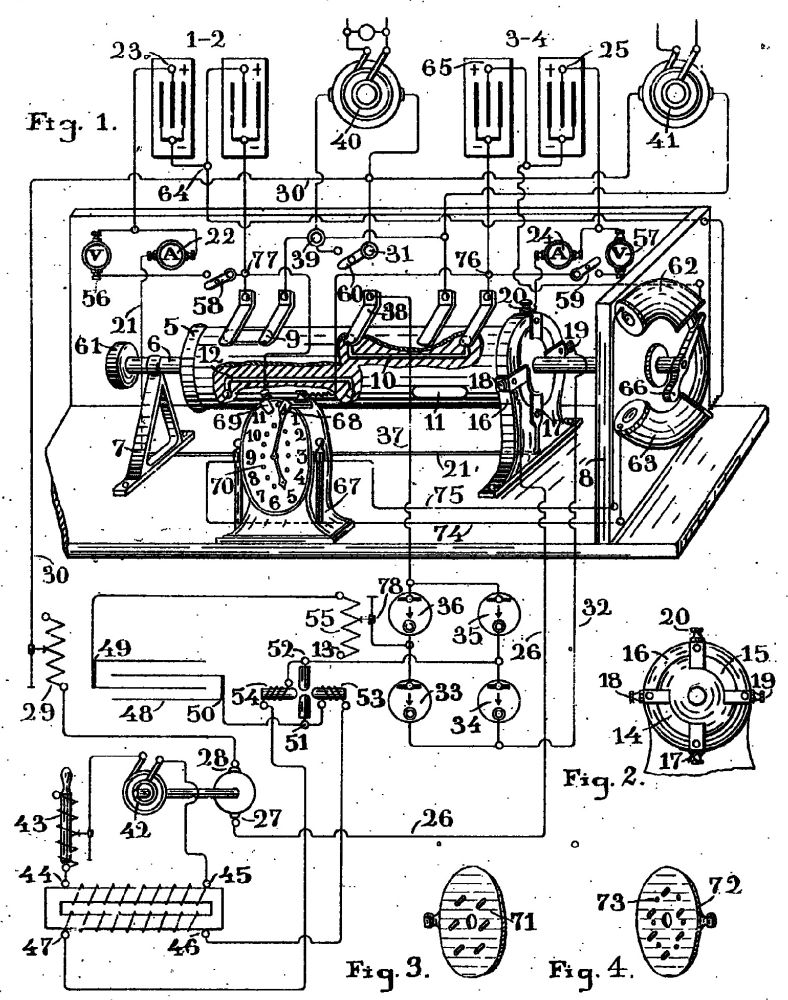
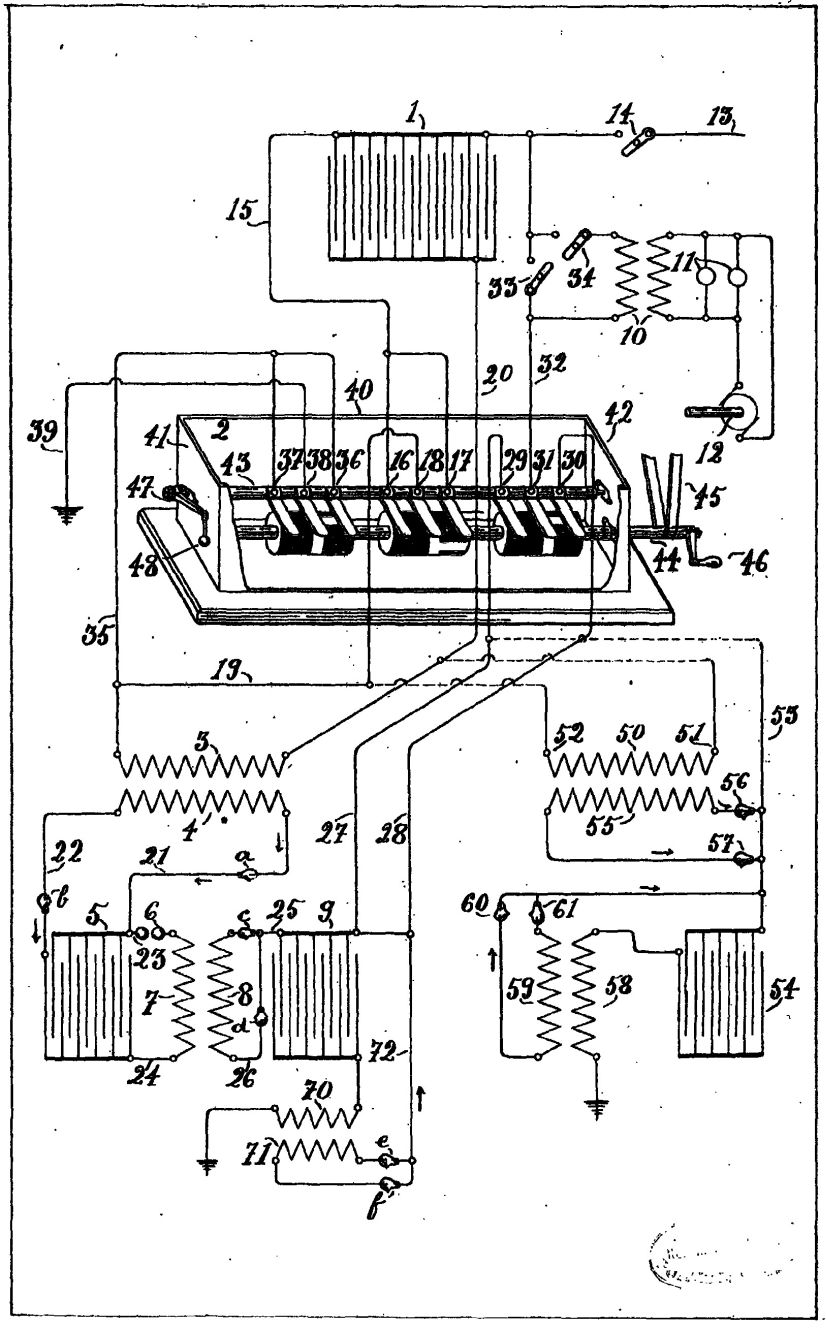
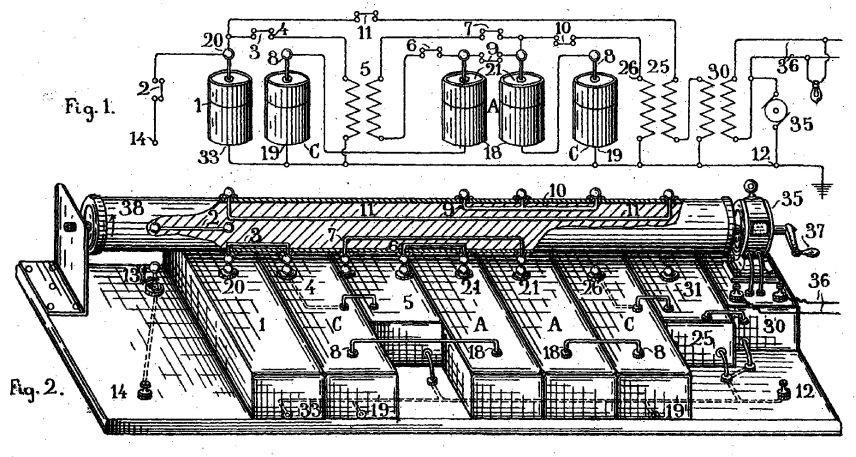
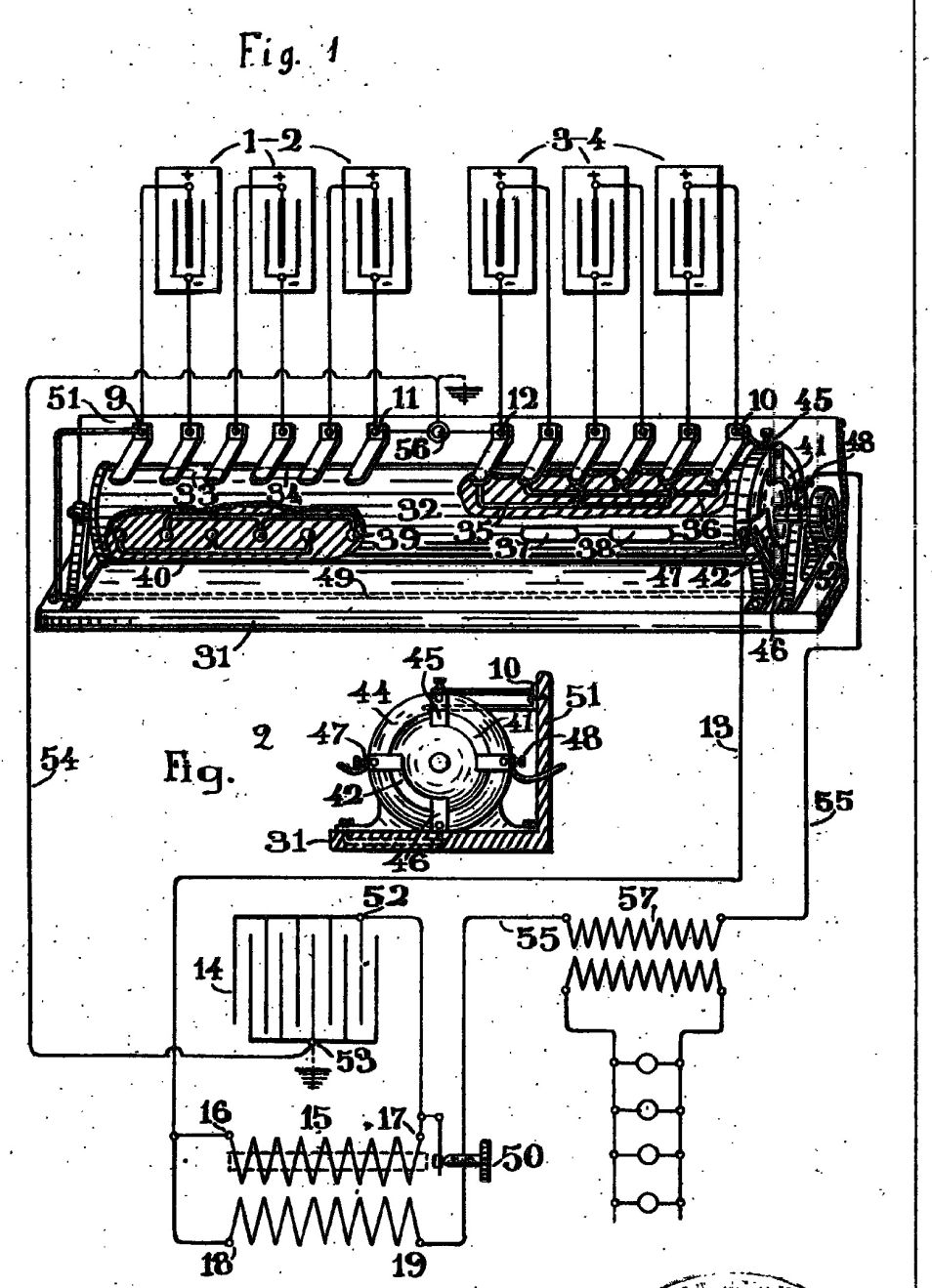
The Benitez system uses a network of condensers (capacitors), transformers, a rotary commutator, and switching circuitry to repeatedly transfer energy between two battery banks. By charging one set of batteries while discharging the other, and by employing high-frequency oscillations and resonant transformer coupling, the system claims to charge the batteries more than they are depleted, producing a net energy surplus.
Detailed Description
Patented designs (GB191417811, GB191505591, GB191514311, GB121561) describe a primary condenser charged from a supply, a rotary commutator that alternately connects the condenser to transformer primaries and to earth, and secondary windings that charge additional condensers. The commutator rotates in steps, causing sequential discharge and recharge cycles that drive a motor/generator and a the excess energy through additional transformers. The circuit includes rectifiers, a spark-gap, and a "Benitez-plug" that couples high-impedance AC to earth. Demonstrations by Peter Lindemann (2018 ESTC) and RS Stafford used low-quality garden start batteries and reported that the batteries charged more than they discharged, especially when low-impedance deep-cycle batteries are used.
Principles
- capacitive energy storage and transfer
- magnetic coupling via transformers
- high-frequency resonant oscillations
- rotary commutator switching
- overunity energy recycling
Scientific Domains
Materials
- condensers (capacitors)
- transformer cores and windings
- copper wiring
- rotary commutator drums (insulating material with conductive strips)
- brushes (metallic contacts)
- rectifier diodes
- spark-gap electrodes
- galvanic batteries (lead-acid, deep-cycle, garden start types)
Mechanisms of Action
- alternating charging/discharging of capacitors
- inductive energy transfer through transformer windings
- synchronous commutator rotation to sequence energy flow
- rectification and spark-gap pulse generation
- use of low-impedance batteries as energy reservoirs
Energy Sources
Applications
- autonomous battery charging
- off-grid power generation
- motor/generator drive
- potential low-cost energy supplement
Claimed Performance
Batteries charged more than they discharged; net energy gain demonstrated with low-quality garden start batteries and expected to improve with deep-cycle batteries.
Experimental Evidence
Peter Lindemann demonstrated the system at the 2018 ESTC, showing one battery bank charging while another powered a motor/generator. RS Stafford replicated the setup using inexpensive hardware store breakers and reported a net positive energy balance. Several members of the Energetic Forum claim to have achieved overunity with the Benitez method.
Replication Status
Few successful replications reported (Peter Lindemann, RS Stafford, a handful of Energetic Forum members). No large-scale commercial deployment.
Limitations
- Requires low-impedance batteries for optimal performance
- Battery degradation reported in related Tesla Switch systems
- Lack of peer-reviewed quantitative data
- Complex timing and commutator synchronization
Red Flags
- Overunity claims without independent verification
- Reliance on anecdotal demonstrations
- Potential for battery damage ("battery killer" effect)
- Marketing language suggesting "free energy"