Goal
Increase plant growth and yield while reducing pesticide and fertilizer use; improve animal health by reducing airborne pathogens.
Problem
Low agricultural yields, heavy reliance on chemical pesticides and fertilizers, disease spread in crops and livestock (e.g., African swine fever).
Concept Summary
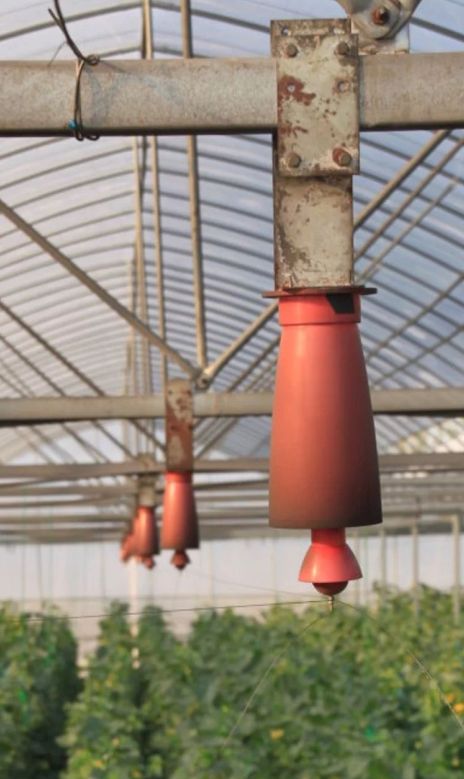
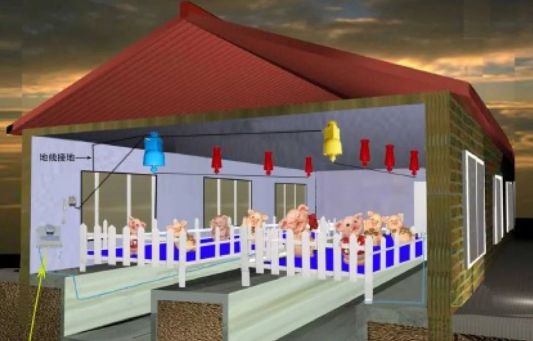
High-voltage electric fields are generated by copper wires strung above greenhouse crops or animal pens. The electric field (up to 50 kV, micro-ampere currents) kills bacteria and viruses, reduces water surface tension on leaves, and accelerates ion transport within plants, thereby boosting photosynthesis and growth while suppressing disease.
Principles
- High-voltage electric field exposure
- Ion transport acceleration
- Surface tension reduction on leaf water films
- Electrostatic pathogen in
Scientific Domains
Materials
- Copper wire
- Insulating supports
- Power cables
Mechanisms of Action
- Electric field induces rapid movement of charged ions (e.g., bicarbonate, calcium) within plant tissues
- High-frequency discharge kills airborne bacteria and viruses
- Reduced water surface tension accelerates leaf vaporisation and gas exchange
- Static electric field generates negatively charged particles that bind airborne pollutants
Energy Sources
Applications
- Commercial greenhouse vegetable production
- Urban kitchen-scale growing chambers
- Livestock pen sanitation
Claimed Performance
Yield increase of 20-30 %; pesticide use reduced 70-100 %; fertilizer consumption reduced >20 %; electricity consumption ~=15 kWh / ha / day.
Experimental Evidence
Large-scale field trial covering >3 600 ha of greenhouses across China reported the above performance metrics; a separate high-voltage pig-sty experiment claims 50-90 % reduction in biological aerosol.
Replication Status
Technology deployed in multiple Chinese provinces and exported to the Netherlands, United States, Australia, and Malaysia; similar high-voltage setups are being tested for livestock.
Limitations
- High installation cost (tens of thousands of yuan per hectare)
- Dependence on reliable electricity supply
- Mechanistic understanding still speculative
Red Flags
- Claims largely based on government-funded reports rather than peer-reviewed literature
- Potential overstating of yield gains without independent replication