Goal
Detect and study the alleged N-Ray radiation
Problem
Claimed existence of a new low-intensity radiation that could affect vision and other senses
Concept Summary
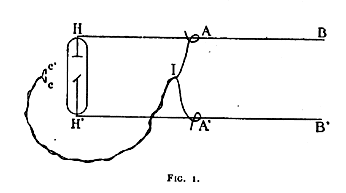
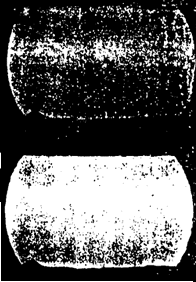
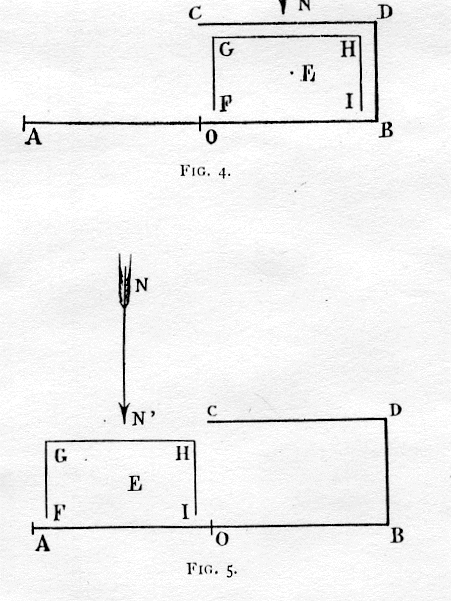
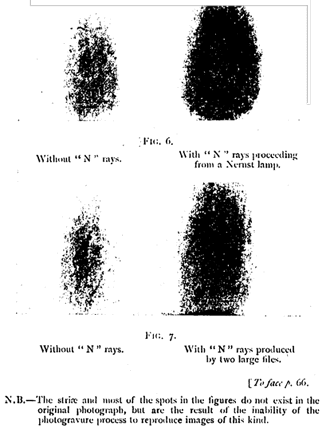
Blondlot and contemporaries reported a spurious radiation called N-Rays that could be observed by subjective visual cues such as increased brightness of a spark or phosphorescence of calcium sulfide films. Various sources (x-ray tubes, flames, sunlight) and detectors (small sparks, gas flames, calcium-sulfide coated plates) were described, along with alleged properties like penetration of thin metal, storage in solids, and physiological effects. The phenomenon was later shown to be non-reproducible and attributed to suggestion and experimental bias.
Principles
- Subjective visual observation of low-intensity light
- Photoluminescence enhancement of calcium sulfide
- Thermal emission from heated metals
Scientific Domains
Materials
- calcium sulfide
- collodion
- ether
- rare earth salts
- platinum
- steel
- copper
- dry cigarette paper
- wet paper
Mechanisms of Action
- Increased brightness of a spark when exposed to N-Rays
- Enhanced phosphorescence of calcium sulfide films
- Perceived strengthening of retinal sensitivity
Claimed Performance
N-Rays allegedly passed through 4 mm of platinum but not 3 cm of rock; increased visual sensitivity; could be stored in certain solids; produced 'heavy emission' of minute particles.
Experimental Evidence
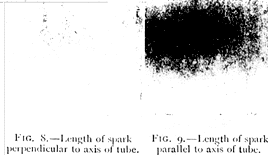
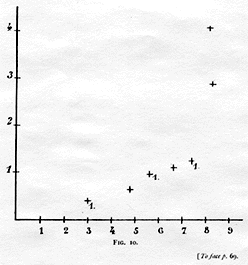
Historical reports, photographs of alleged effects, and subjective observations recorded in dozens of early-20th-century papers.
Replication Status
Failed replication by many physicists (Rayleigh, Langevin, Rubens, Drude) and later demonstrated as a psychological artefact by R. W. Wood.
Limitations
- Reliance on subjective visual cues
- No reproducible, controlled experiments
- Lack of quantitative measurements
Red Flags
- Spurious radiation claim
- Mass suggestion and psychological bias
- No independent verification