Goal
Provide a smoother, faster ride in rough water by using adjustable hydrofoil angles that follow wave crests.
Problem
Excessive motion and drag of boats in choppy seas.
Concept Summary
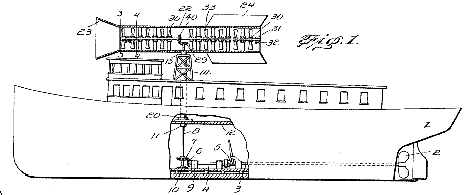
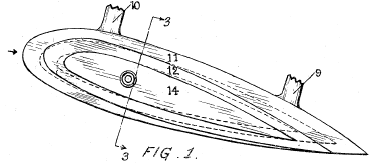
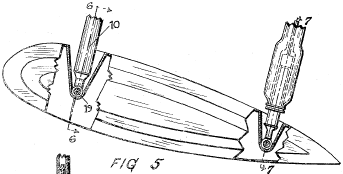
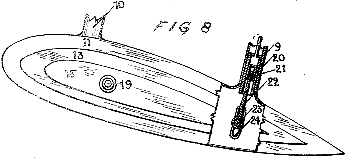
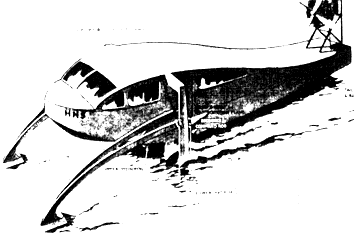
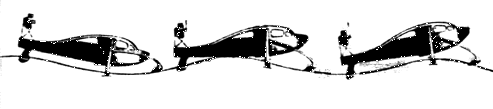
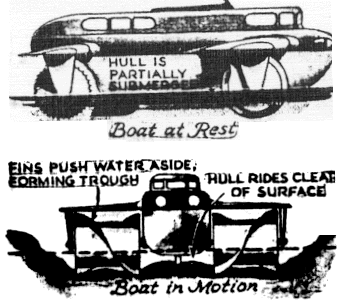
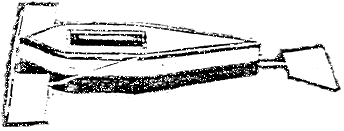
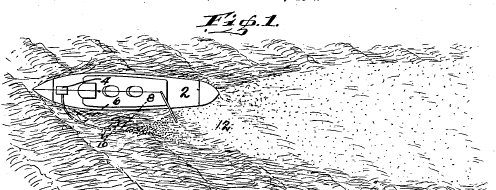
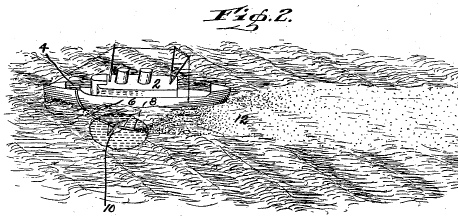
A hull equipped with a series of "jockey" beams that adjust the angle of underwater hydrofoils in response to wave motion, allowing the boat to ride the crests and maintain lift.
Detailed Description
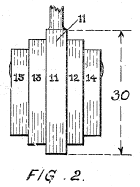
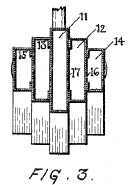
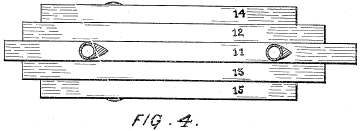
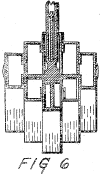
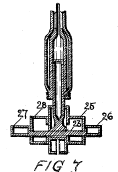
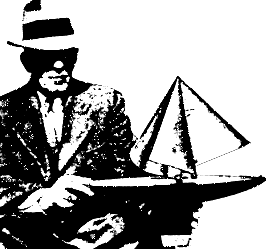
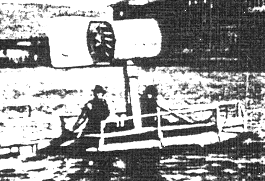
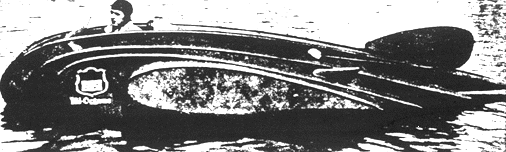
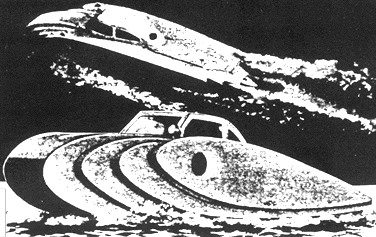
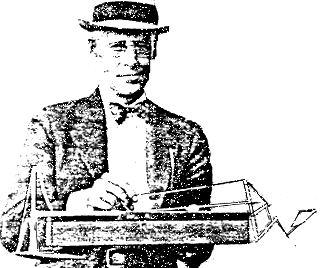
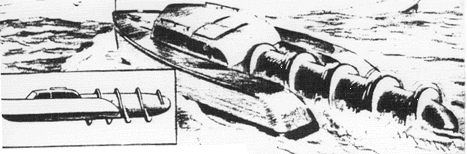
The Hydrofin uses a set of forward-projecting feelers (jockey beams) that sense the rise and fall of waves. These beams mechanically change the pitch of attached hydrofoils, increasing lift when a wave crest arrives and reducing drag on troughs. The first commercial model is 30 ft long, carrying up to 14 passengers plus crew.
Principles
- Hydrofoil lift
- Passive wave-following control
Scientific Domains
Materials
- Aluminum (hydrofoils)
- Steel (hull)
- Wood/metal (jockey beams)
Mechanisms of Action
- Variable-angle hydrofoils generate lift proportional to wave height
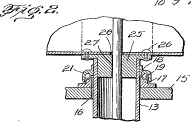
- Mechanical linkages translate wave-induced motion into foil pitch changes
Applications
- Coastal passenger transport
- Recreational craft
Claimed Performance
Smoother, faster ride in rough water; comparable to a car climbing a hill.
Experimental Evidence
Popular Science article (Dec 1947) describing a prototype and its expected commercial launch.
Replication Status
No independent replication reported.
Limitations
- Requires precise mechanical linkage
- Effectiveness depends on wave conditions