Goal
Clean laundry using high-frequency acoustic vibrations rather than mechanical agitation.
Problem
Conventional washing machines require rotating parts that wear out and ultrasonic cleaners are bulky and expensive for domestic use.
Concept Summary
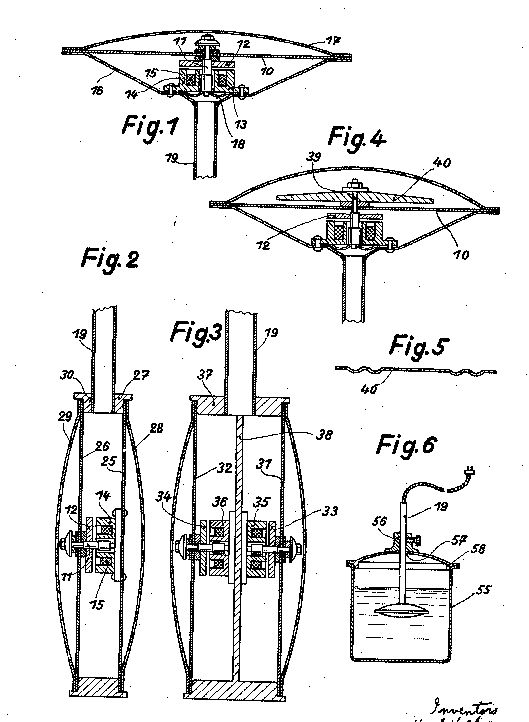
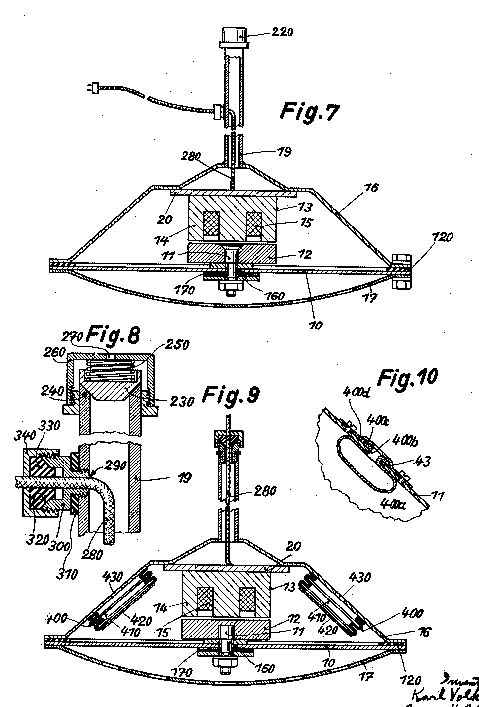
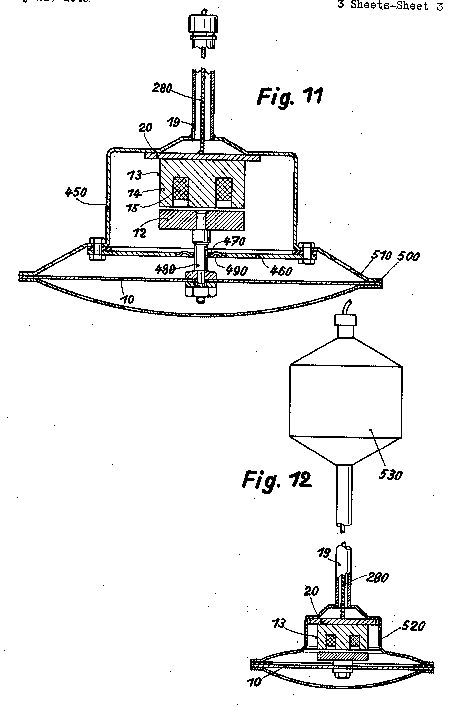
An electrically powered appliance uses an electromagnetically driven diaphragm sealed inside a waterproof casing. The diaphragm's motion is abruptly stopped by a mechanical stop, creating sharp, high-frequency acoustic pressure waves in the surrounding water. These waves accelerate water particles, dislodging dirt from fabrics. The device may include additional harmonic vibrators and pressure-compensation mechanisms.
Principles
- Electromagnetic actuation of a diaphragm
- Abrupt stopping of diaphragm motion to generate steep acoustic pressure waves
- Superposition of harmonic vibrations
- Sealed casing with pressure compensation
Scientific Domains
Materials
- Metal diaphragm (iron/steel)
- Laminated iron body
- Copper coil
- Steel casing
- Rubber sealing ring
- Thin sheet-metal bellows
- Rubber or similar flexible bag
Mechanisms of Action
- Acoustic pressure generation in liquid
- Vibration of a metal diaphragm
- Harmonic wave superposition
- Pressure sealing to prevent air ingress
Energy Sources
Applications
- Domestic laundry cleaning
- Small-scale industrial cleaning of textiles
Claimed Performance
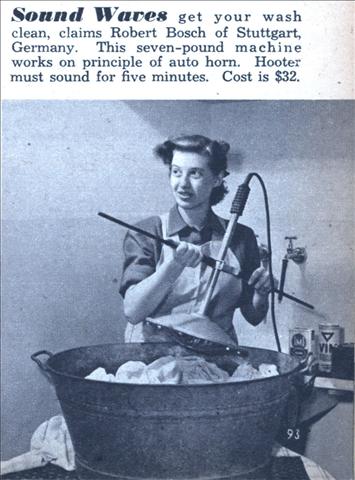
Cleans laundry in about five minutes of horn-like sound; the machine weighs seven pounds and cost $32 in 1951.
Experimental Evidence
The patent description explains the operating principle and shows a pressure-wave curve, but no quantitative cleaning data or independent test results are provided.
Limitations
- Requires a sealed, airtight casing
- Performance not quantified in the patent
- May be limited to small loads due to device size
Red Flags
- Lack of experimental data or independent verification
- Potential overstated performance claims (e.g., cleaning in five minutes)