Goal
Provide a low-cost, air-powered electric propulsion system for rail vehicles
Problem
High fuel costs and reliance on external electricity sources for rail transport
Concept Summary
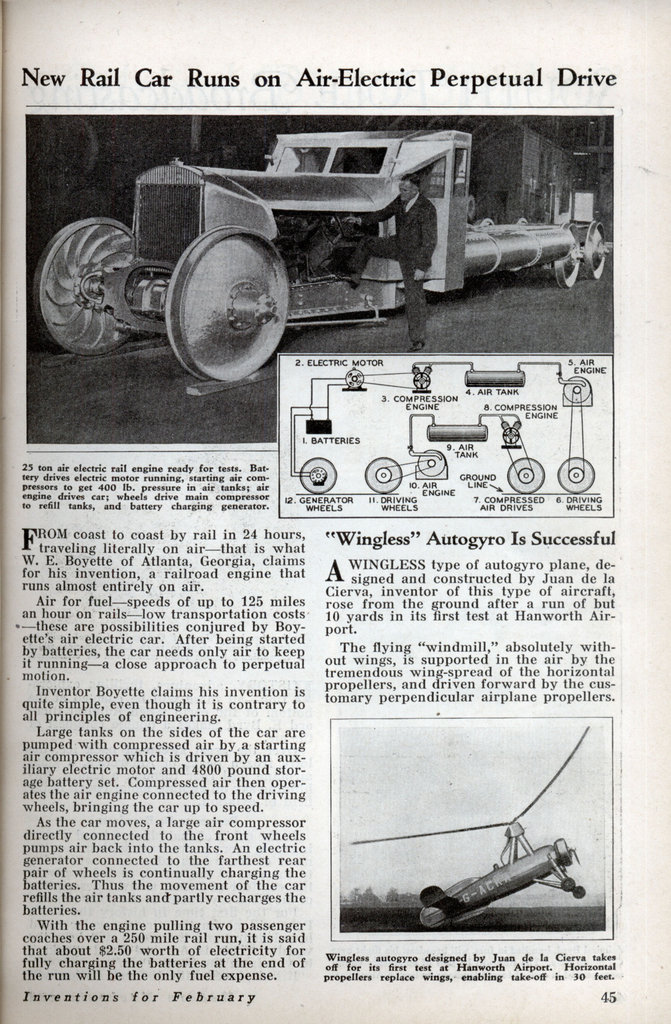
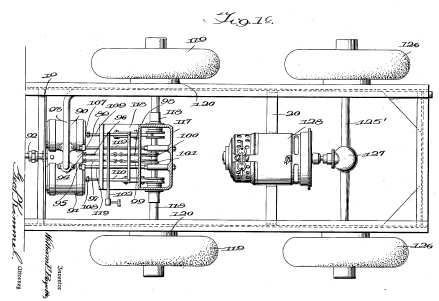
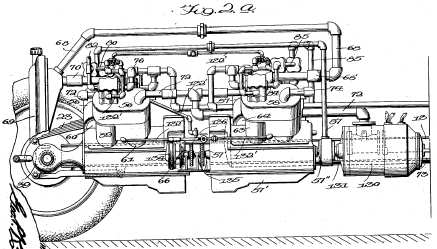
A 25-ton rail vehicle uses a 400 psi compressed-air engine to drive its wheels, a compressor, and an alternator that charges onboard batteries, achieving a claimed operating cost of about one cent per mile.
Detailed Description
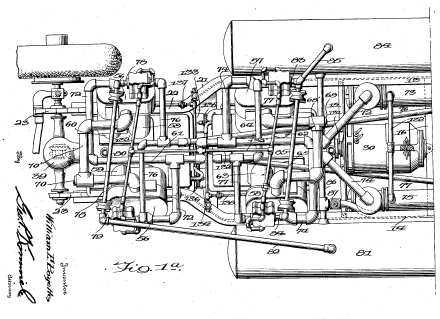
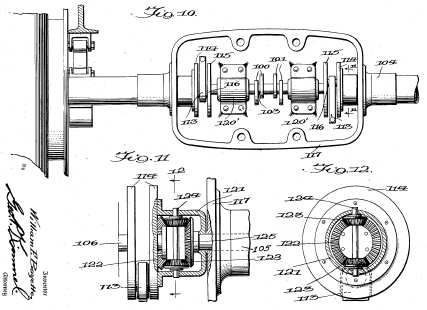
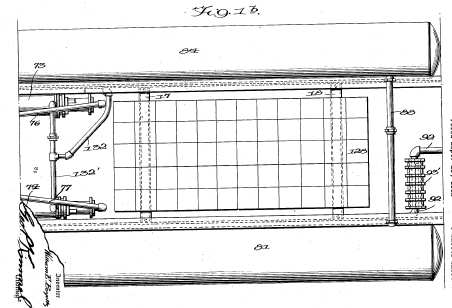
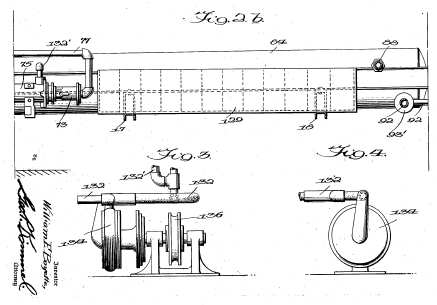
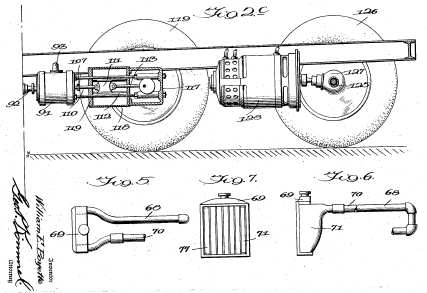
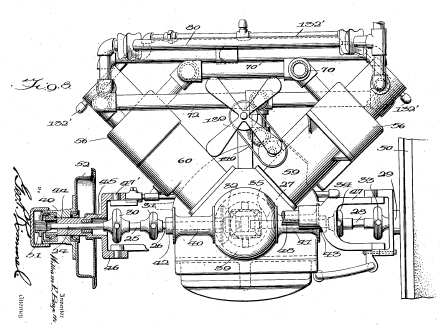
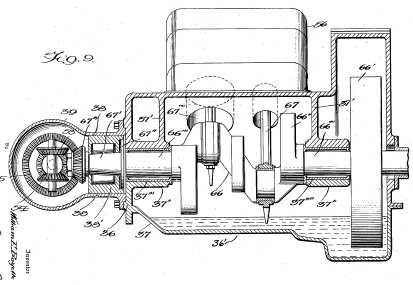
The system consists of a high-pressure air tank feeding a pneumatic engine that directly powers the drive wheels. The engine also runs a compressor to replenish the air supply and an alternator that generates electricity to charge a battery bank, providing supplemental electric power. The design was publicised in a 1934 Modern Mechanics article and patented as US1904611.
Principles
- Compressed air expansion
- Mechanical to electrical energy conversion
- Hybrid pneumatic-electric drive
Scientific Domains
Materials
- Steel
- Copper
- Lead-acid battery components
Mechanisms of Action
- Pneumatic engine converts high-pressure air into rotary motion
- Rotary motion drives wheels and a compressor
- Alternator generates electricity to charge batteries
Energy Sources
Applications
- Rail transport
- Heavy-load vehicle propulsion
Claimed Performance
Operating cost of ~1 cent per mile
Experimental Evidence
Article states the rail car 'runs' on the air-electric system
Limitations
- Limited energy density of compressed air
- Need for high-pressure storage tanks
- Unclear efficiency data
Red Flags
- Use of term 'perpetual drive' suggests unrealistic efficiency claims