Goal
To attenuate or break up surface water waves and create a calm water zone for protecting structures, harbors, and enabling ship-borne aircraft operations.
Problem
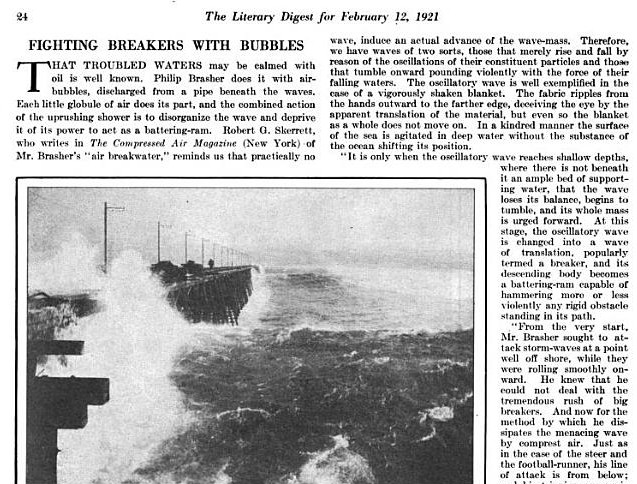
Wave action that damages coastal installations, hinders ship operations, and creates hazardous conditions for marine activities.
Concept Summary
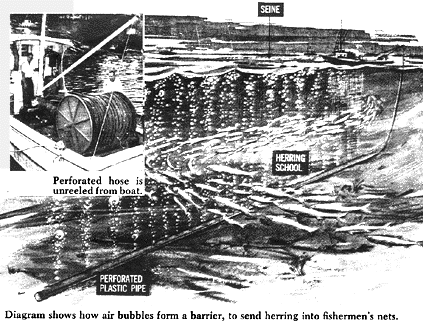
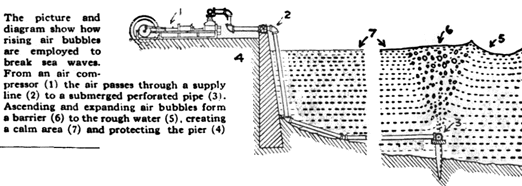
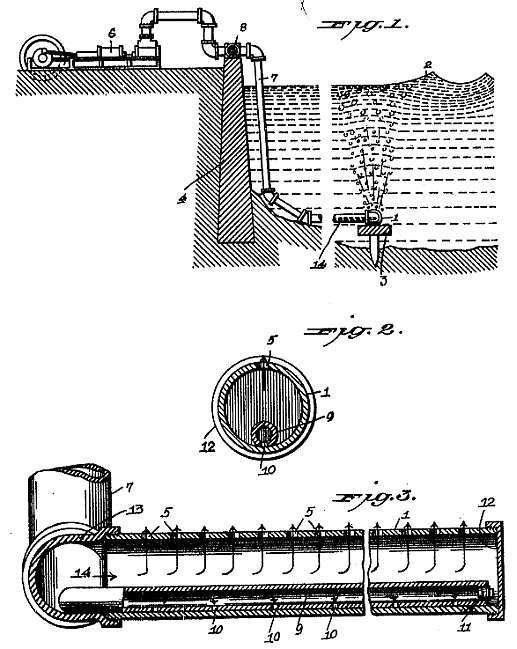
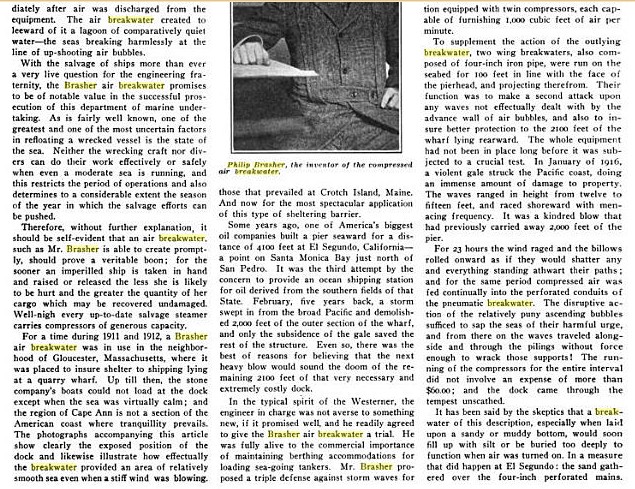
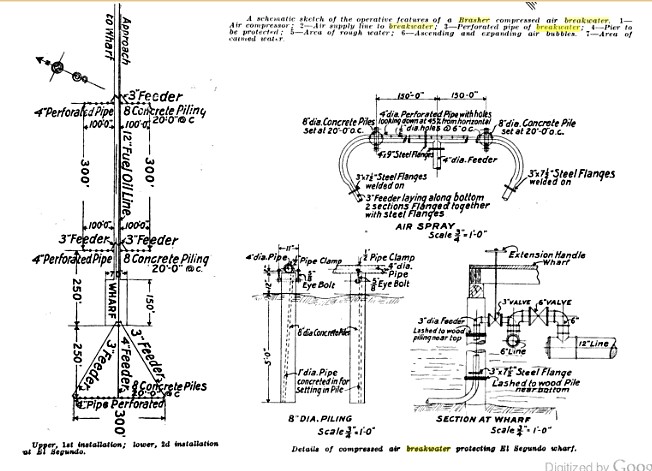
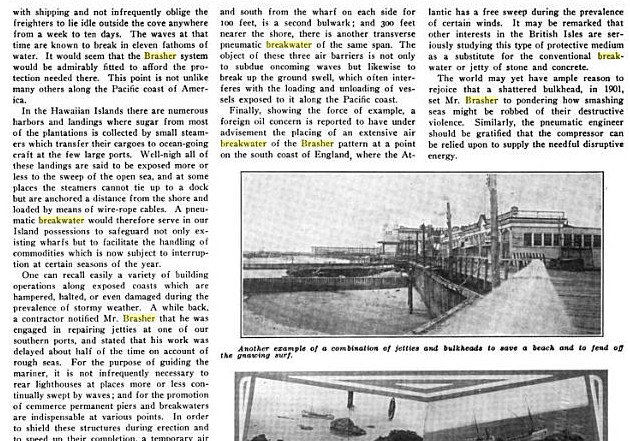
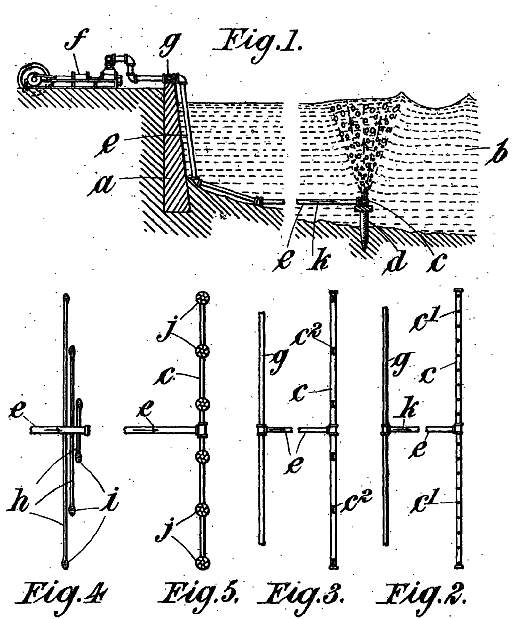
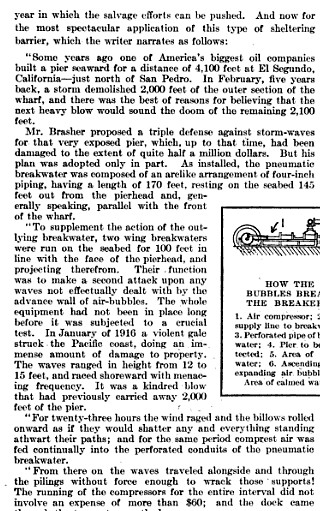
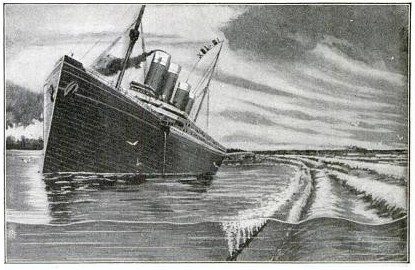
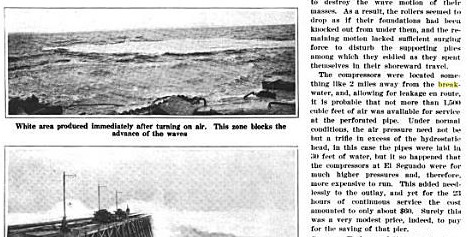
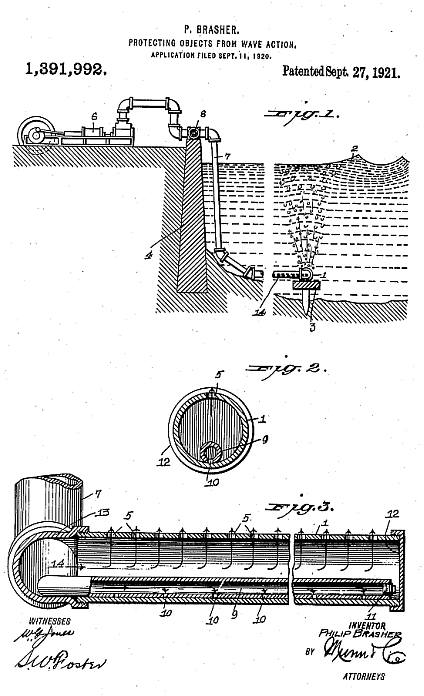
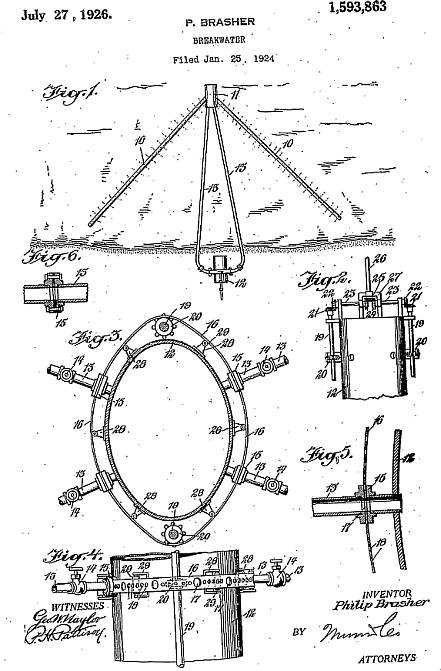
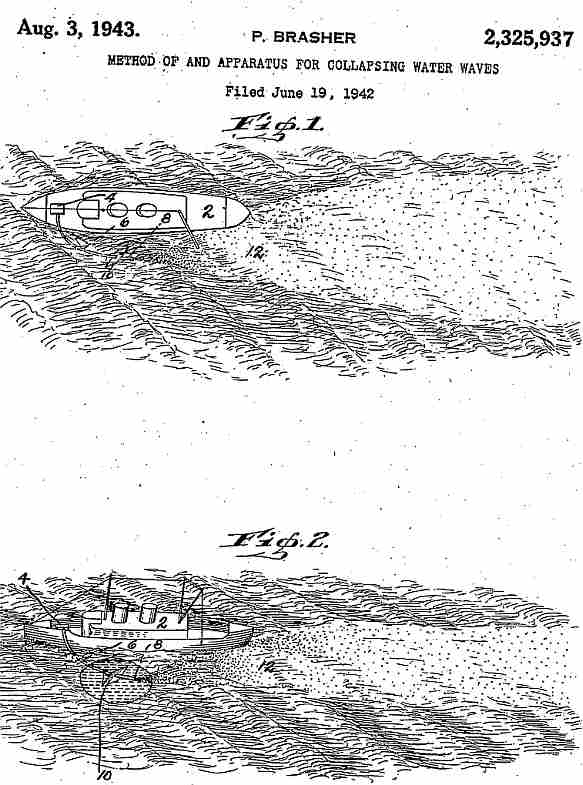
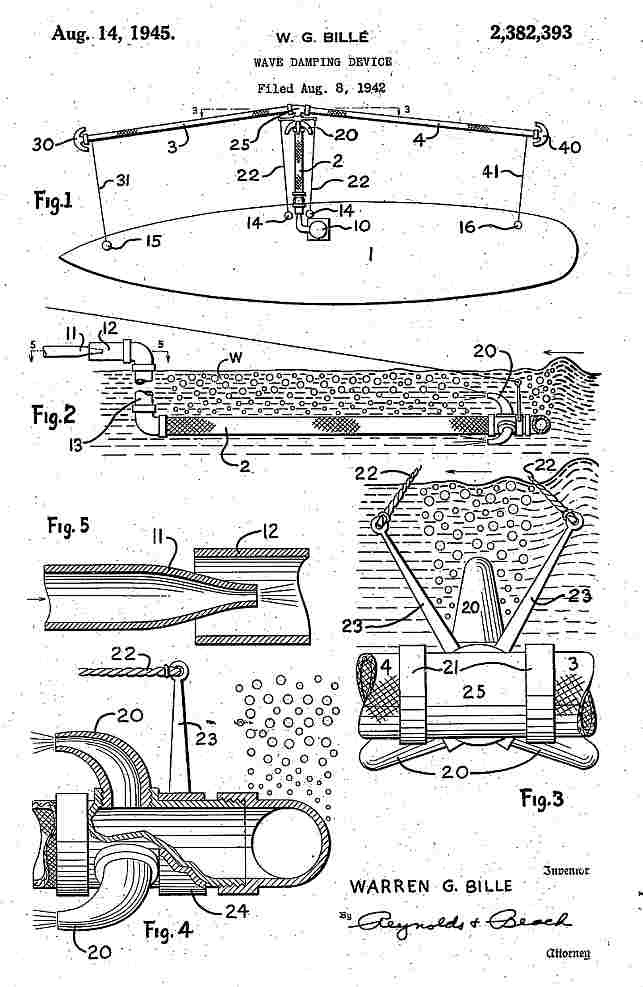
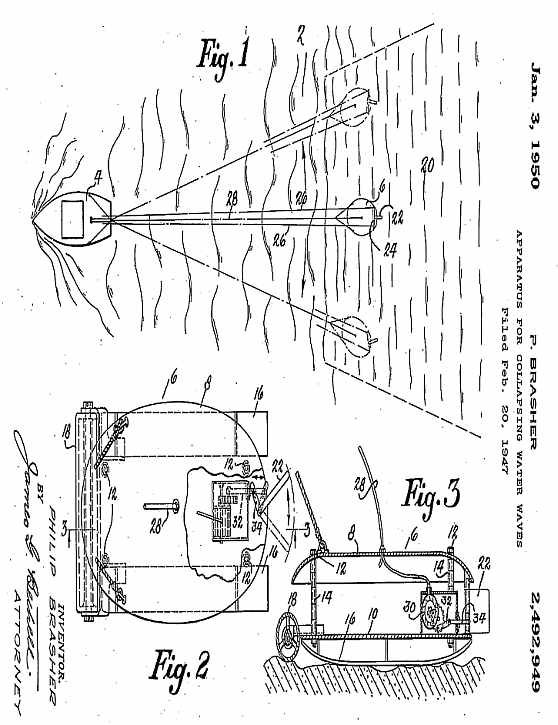
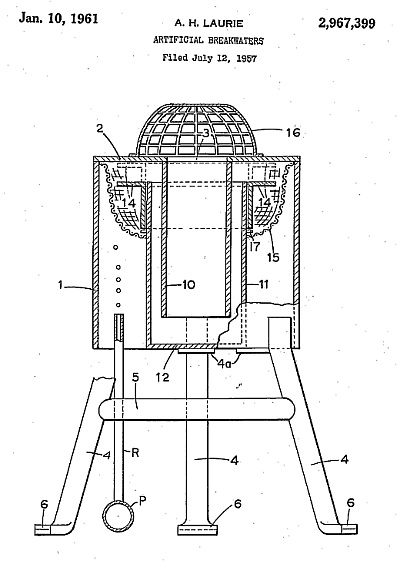
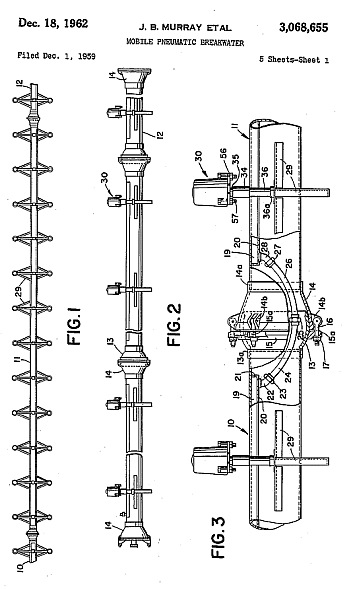
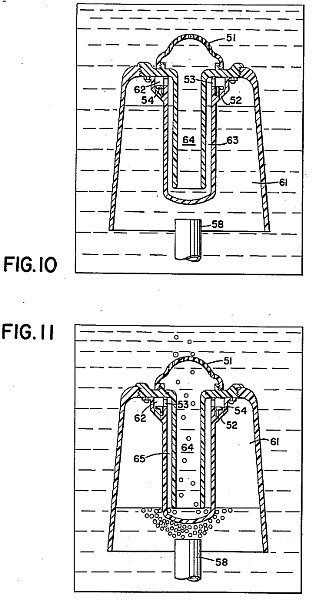
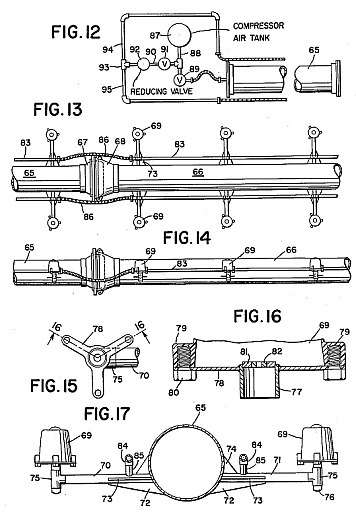
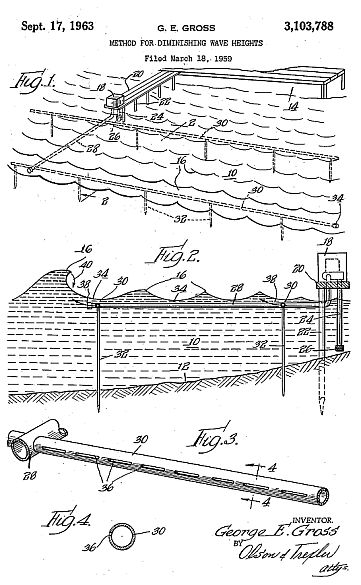
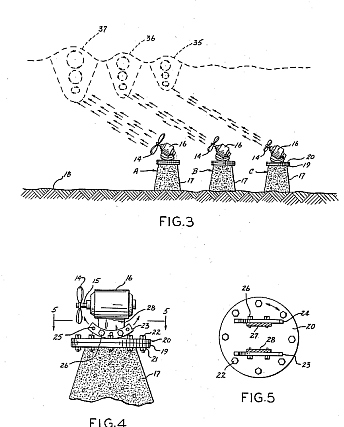
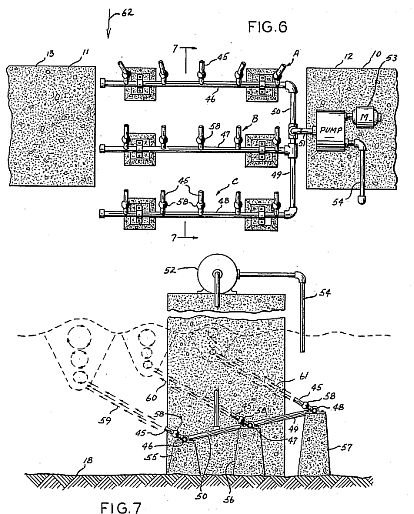
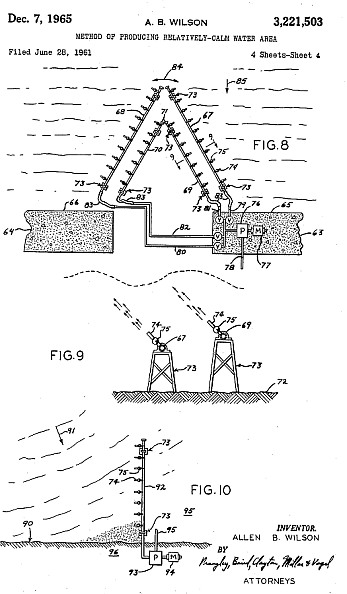
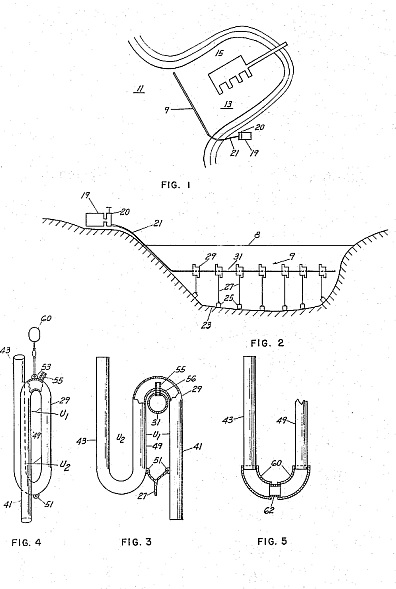
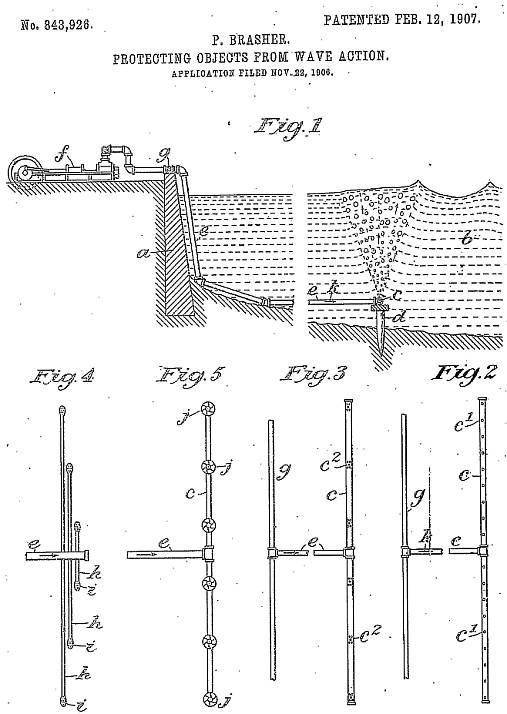
A perforated pipe laid on the sea floor is connected to a land-based air compressor. Compressed air is released through the pipe's holes, producing a rising curtain of air bubbles. The bubble wall disrupts incoming waves, reducing their height and forward momentum, and leaves a quiescent area behind the curtain.
Detailed Description
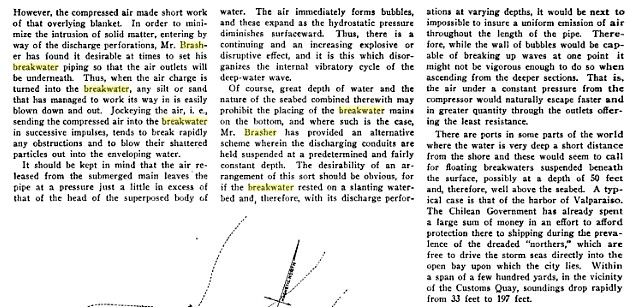
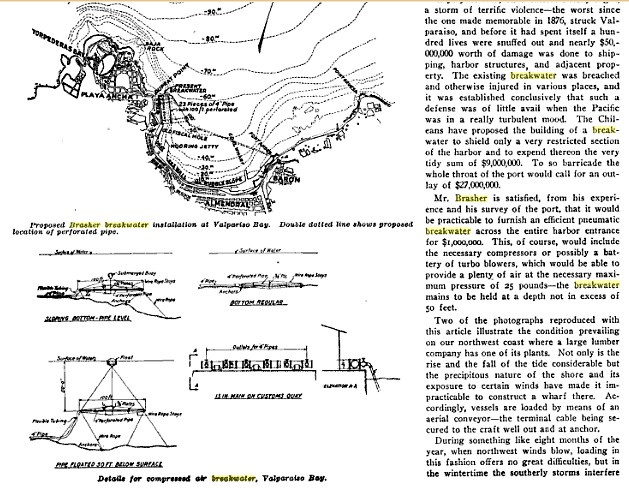
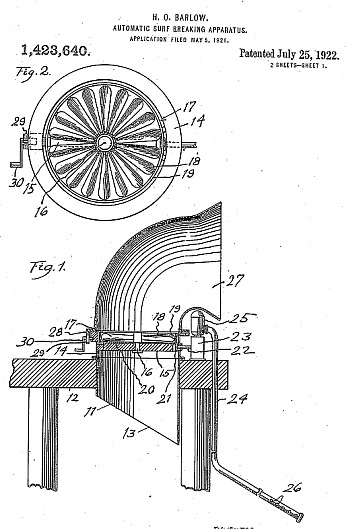
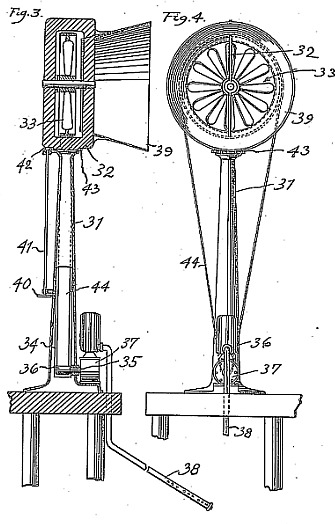
The system consists of a flexible hose or pipe with multiple perforations that is towed or anchored on the seabed. An air-compressing station on land (or on a ship) forces air into the pipe, creating a continuous stream of bubbles that ascend to the surface. The bubble curtain acts as a dynamic breakwater, breaking up wave fronts and allowing the water behind it to become relatively still. The effect persists for a few minutes after the compressor is shut off, enabling temporary calm zones for activities such as aircraft launch/recovery or pier protection.
Principles
- Fluid dynamics
- Air-bubble injection
- Wave energy dissipation
- Surface turbulence generation
Scientific Domains
Materials
- Steel
- Air
Mechanisms of Action
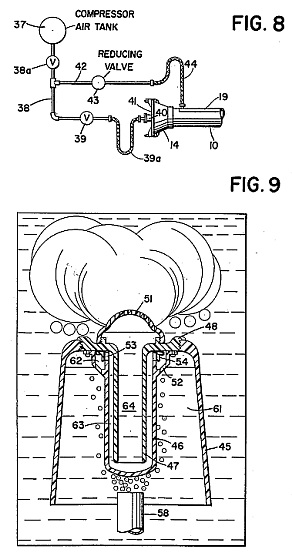
- Rising air bubbles create a surface current that impedes wave propagation
- Bubble curtain introduces turbulence that converts wave kinetic energy into heat and acoustic energy
- Resulting pressure differential reduces wave amplitude
Energy Sources
Applications
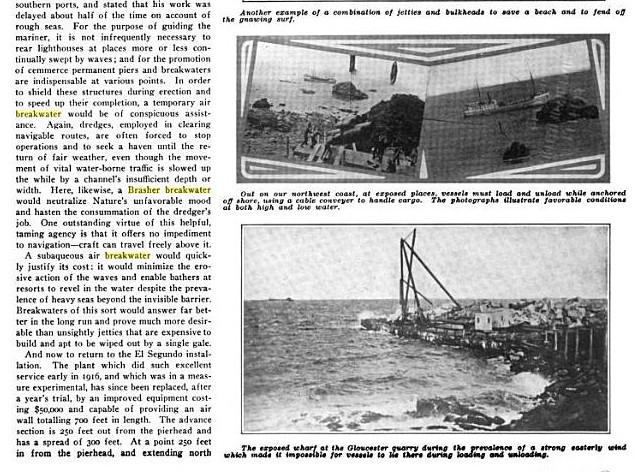
- Harbor and pier protection
- Coastal erosion control
- Ship-borne aircraft launch and recovery
- Temporary calm zones for marine operations
Claimed Performance
The bubble wall is said to break up waves and retard their forward motion; a quiescent area can extend half to three-quarters of a mile in length and persist for two to three minutes after the compressor is shut off.
Experimental Evidence
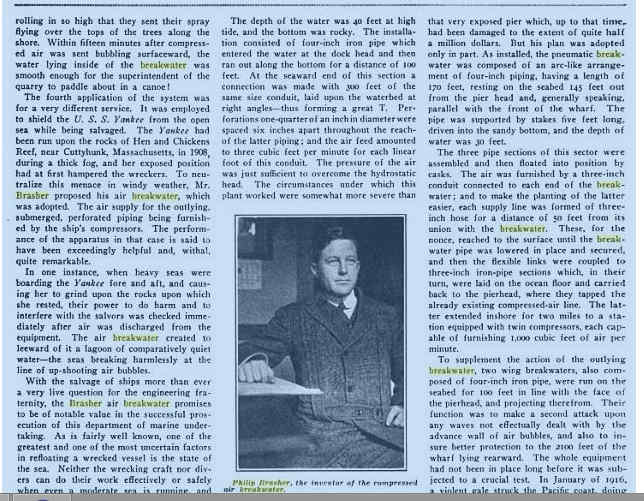
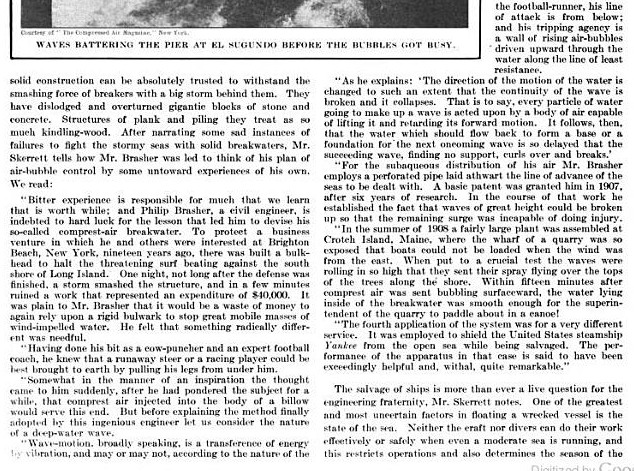
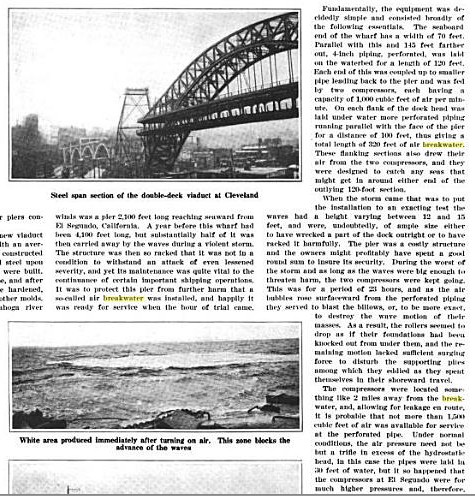
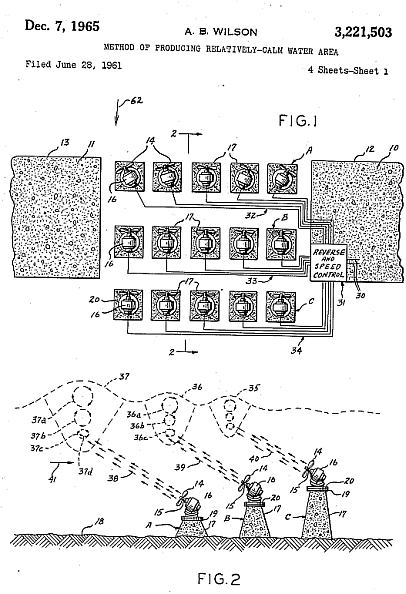
A unit was reportedly operated successfully at El Segundo, California, protecting a concrete pier. The method was described in Popular Science (December 1924) and supported by several U.S. patents (e.g., 2,325,937; 2,492,949; 1,593,863).
Replication Status
Only the El Segundo installation is explicitly mentioned; no independent replication is documented in the article.
Limitations
- Requires continuous supply of compressed air and power
- Effectiveness depends on bubble density, water depth, and wave conditions
- Installation and maintenance of submerged pipe infrastructure