Goal
Provide affordable, high-efficiency solar electricity together with potable water and cooling air for remote, sunny locations.
Problem
Current solar PV and solar-thermal technologies are too expensive, require rare-earth materials, and cannot simultaneously supply electricity, desalinated water and cooling.
Concept Summary
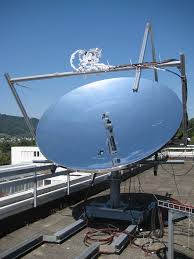
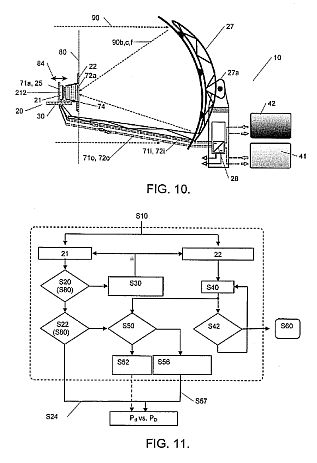
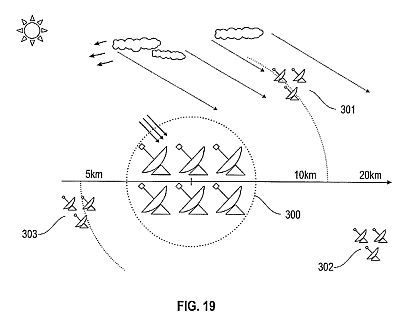
A solar-concentrating dish (~=2000x) focuses sunlight onto micro-channel-cooled triple-junction photovoltaic chips. The liquid cooling removes waste heat, which is then used for membrane-distillation desalination and for a thermal-driven adsorption chiller, delivering electricity, clean water and cool air from a single platform.
Detailed Description
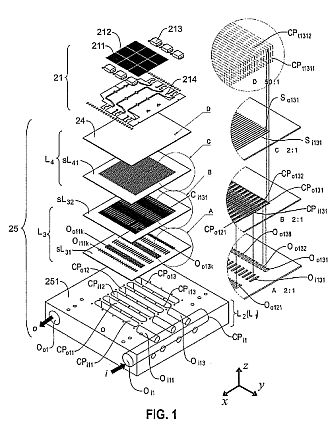
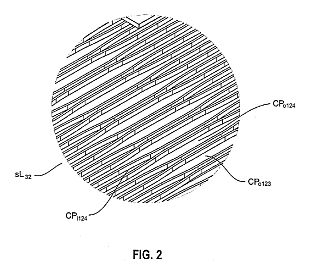
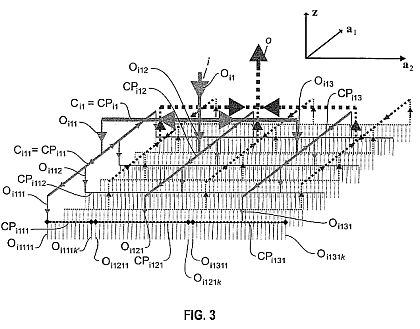
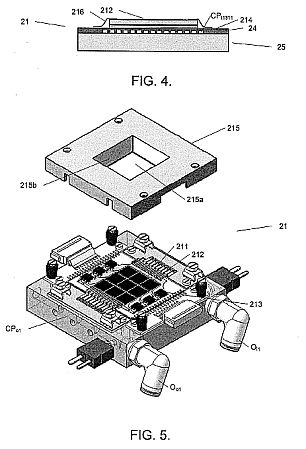
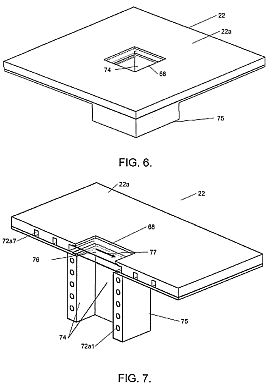
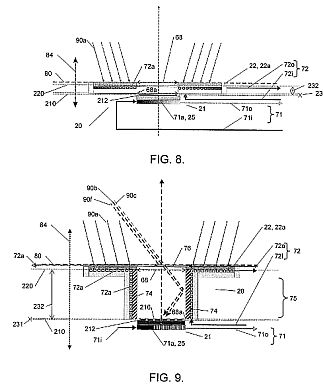
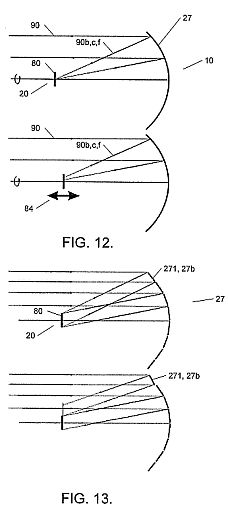
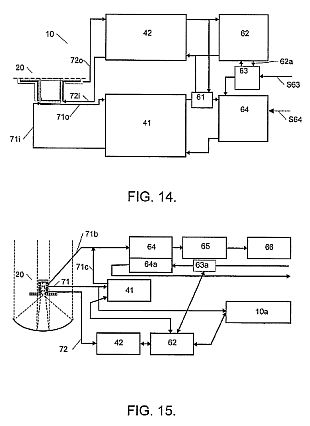
The prototype uses a large parabolic dish composed of inexpensive pneumatic metal-foil mirrors mounted on a sun-tracking system. Light is reflected onto a receiver that holds hundreds of 1 cm^2 triple-junction PV cells mounted on micro-structured layers with embedded micro-channels. A low-power pump circulates coolant (water) through the channels, keeping the cells near ambient temperature even at 2000-sun concentration. The heated coolant (~=90 deg C) is routed to a porous-membrane distillation unit for water desalination (30-40 L m^-^2 day^-^1) and to an adsorption chiller (silica-gel based) for air-conditioning. The system is built from lightweight high-strength concrete for structural parts, metalized foils for mirrors, and standard semiconductor PV cells, aiming for an aperture cost below $250 m^-^2 and a levelized electricity cost < $0.10 kWh^-^1.
Principles
- Solar concentration (parabolic dish, 2000x)
- Micro-channel liquid cooling
- Triple-junction photovoltaic conversion
- Heat recovery for membrane distillation
- Thermal adsorption cooling
Scientific Domains
Materials
- High-strength concrete
- Pneumatic metal-foil mirrors
- Triple-junction semiconductor PV cells (III-V compounds)
- Silicon/metal micro-channel structures
- Water (coolant)
- Porous polymer membrane
- Silica gel (adsorbent)
Mechanisms of Action
- Concentrated sunlight raises photon flux on PV cells
- Micro-channels transport coolant directly under the cells, removing heat
- Coolant absorbs waste heat and transfers it to downstream thermal processes
- Hot water drives membrane-distillation for desalination
- Heat powers a silica-gel adsorption chiller for cooling
Energy Sources
Applications
- Remote power generation
- Potable water production in arid regions
- Air-conditioning for hot climates
- Tourism resorts on small islands
Claimed Performance
2000x solar concentration, up to 80 % of incoming solar energy converted to useful forms, 25 kW electrical output from a prototype receiver, 30-40 L m^-^2 day^-^1 potable water, > 25 % electrical yield per m^2, cost per aperture < $250 m^-^2, levelized electricity cost < $0.10 kWh^-^1.
Experimental Evidence
Prototype HCPVT system tested at IBM Research - Zurich; earlier multi-chip receiver demonstrator built with Egypt Nanotechnology Research Center; video demonstration on YouTube; patents filed (US2013255753).
Replication Status
Prototype being tested; additional prototypes planned for Biasca and Rueschlikon, Switzerland.
Limitations
- Requires precise sun-tracking and high-quality mirrors
- Water supply needed for cooling and desalination
- Potential material degradation under 5000x concentration
- Scale-up cost and logistics of large parabolic dishes
Red Flags
- Efficiency claims (80 % useful energy) are based on prototype estimates, not independent peer-reviewed data
- No published quantitative performance data beyond the prototype description