Goal
Reduce water and energy consumption in domestic laundry while maintaining stain-removal performance.
Problem
Conventional washing machines consume large amounts of water (~=21 L per day per household) and electricity for heating that, contributing to household utility bills and environmental impact.
Concept Summary
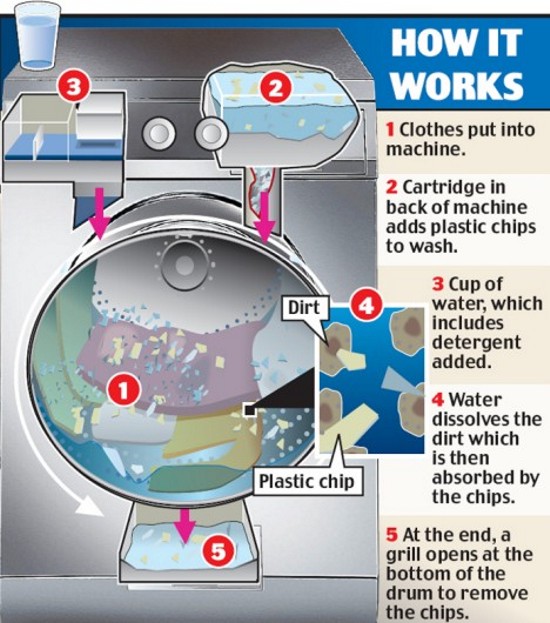
The Xeros system replaces most of the wash water with a large quantity of small polymer (nylon) beads. A cup of water and detergent is added to wet the clothes; the beads absorb the water, pick up stains through surface chemistry and diffusion, and are continuously circulated through the drum. After the cycle the beads are collected, cleaned, and reused for many loads, allowing a near-dry wash and eliminating the need for a rinse or spin cycle.
Detailed Description
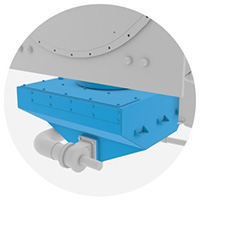
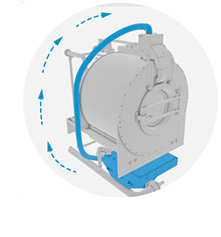
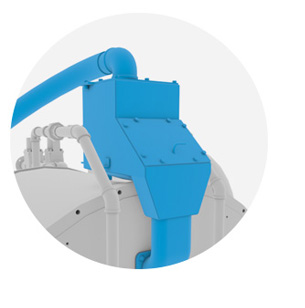
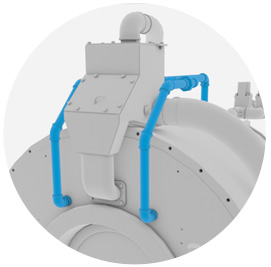
The machine contains a wet sump that stores polymer beads. During a wash a bead pump lifts the beads with a small amount of transport water to a separator that deposits them into the drum. The beads tumble with the garments, providing gentle mechanical agitation and a tailored chemistry (nylon surface coated with surfactant) that draws stains into the bead bulk when the polymer becomes amorphous at high humidity. After washing the beads fall back through holes in the drum wall to the sump, where they are recirculated. A spray-rinse system finishes the cycle with minimal water. Used beads can be collected at the bottom grill, cleaned, and reused for up to ~100 loads; end-of-life beads may be recycled into other products such as automotive dashboards.
Principles
- Polymer bead water absorption
- Stain diffusion into amorphous nylon
- Gentle mechanical agitation by bead tumbling
- Low-water spray rinsing
Scientific Domains
Materials
- Nylon polymer beads (plastic)
- Detergent (surfactant)
- Water (small volume)
Mechanisms of Action
- Beads absorb water and swell, creating a moist environment that allows stains to diffuse into the polymer matrix
- Surface-tension-driven attraction of hydrophobic stains to nylon bead surface
- Continuous bead circulation provides uniform mechanical scrubbing
- Surfactant coating on beads enhances soil lift
Energy Sources
Applications
- Domestic laundry
- Commercial laundry (future)
Claimed Performance
Uses <2 % of the water and energy of a conventional washing machine; up to 90 % water reduction; ~30 % overall cost saving; stain removal comparable to dry-cleaning performance; beads last for ~100 loads.
Experimental Evidence
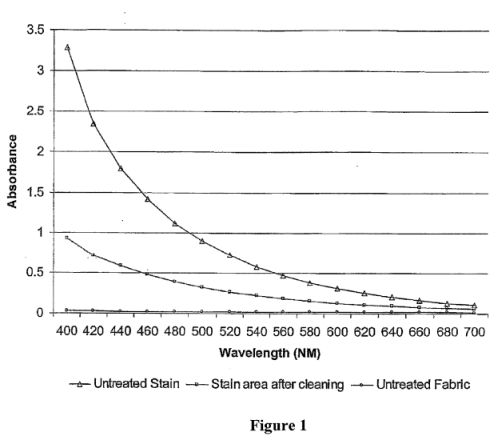
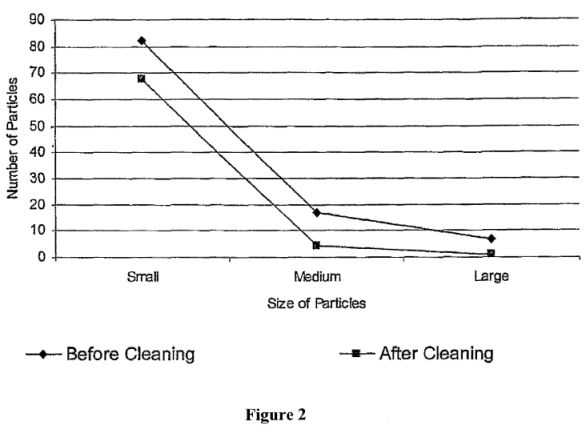
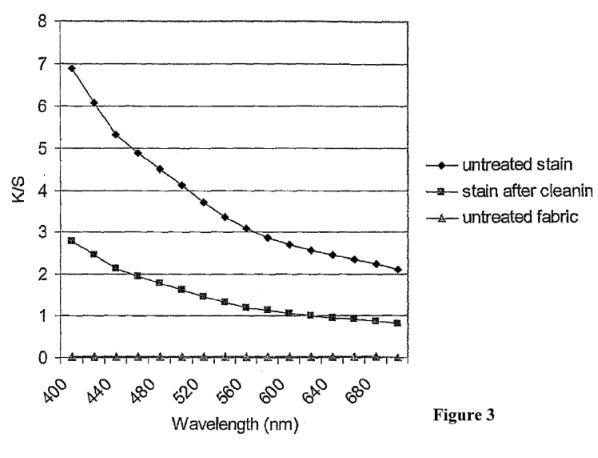
Prototype testing demonstrated removal of everyday stains (coffee, lipstick, mud, red wine, curry, ink) with a single cup of water; independent reports from the Energy Saving Trust cite potential household energy savings; Xeros claims successful trials on a range of fabrics.
Replication Status
Prototype built and tested; no commercial scale production reported at the time of the article.
Limitations
- Exact composition and disposal/recycling method for beads not disclosed
- Initial cost of bead replacement may affect consumer acceptance
- Long-term durability of beads after many cycles is uncertain
Red Flags
- Lack of independent peer-reviewed data
- No detailed material safety data sheet for the polymer beads
- Claims based primarily on prototype demonstrations